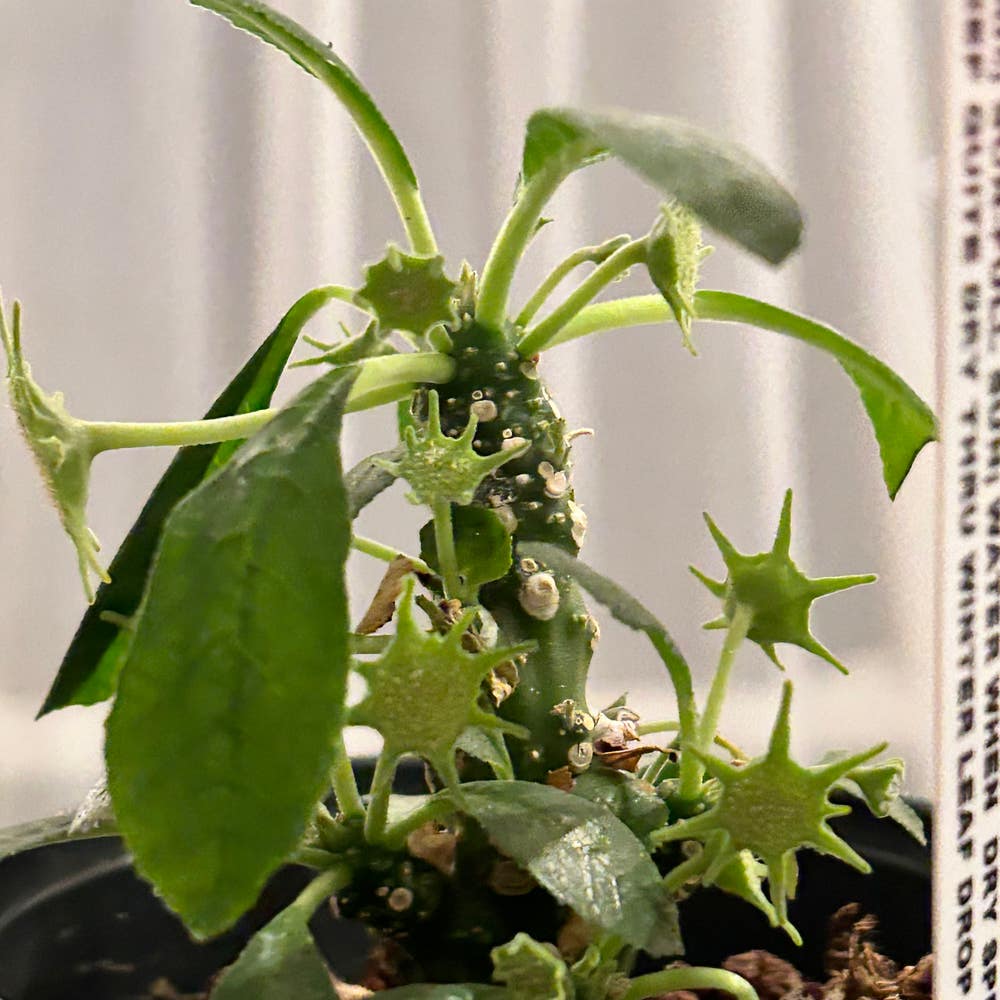
Best Potting Soil Mix for Dorstenia 🪴
Dorstenia psilurus
By the Greg Editorial Team
Nov 07, 2024•5 min read
This article was created with the help of AI so we can cover more plants for you. May contain errors. See one? Report it here.
- 🌱 Moldy soil signals overwatering; improve air circulation to protect your Dorstenia.
- 🏺 Repot in spring if leaves yellow or wilt, ensuring healthy growth.
- 🧪 Maintain soil pH between 6.0-7.0 for optimal nutrient availability in Dorstenia.
Identifying Unhealthy Soil
🦠 Signs of Unhealthy Soil
Moldy soil is a clear indicator that something is off. If you notice a white or gray mold on the surface, it’s likely due to excess moisture and poor air circulation.
Compaction is another common issue. If the soil feels hard and dense, and water pools on the surface, it’s a sign that root growth and water absorption are being limited.
💧 How to Test Soil Moisture Levels
To ensure your Dorstenia is thriving, regularly check soil moisture levels. The finger test is simple: insert your finger into the soil up to 2 inches. If it feels wet, hold off on watering.
For a more precise measurement, consider using a soil moisture meter. This handy tool provides accurate readings, helping you avoid overwatering.
🌱 Common Soil Problems Specific to Dorstenia
Dorstenia plants are particularly sensitive to overwatering, which can lead to root rot. Additionally, if the soil retains too much moisture, your plant may show stress symptoms like wilting.
Recognizing these issues early can save your plant from serious damage. Stay vigilant and adjust your care routine as needed to keep your Dorstenia healthy and happy.
Resolving Soil Issues
🦠 Solutions for Moldy Soil
Moldy soil can be a sign of excess moisture and poor air circulation. To tackle this, start by removing the affected top layer and replacing it with fresh soil.
Next, improve air circulation around your Dorstenia. This can be done by repositioning the plant or using a fan to promote airflow. Lastly, adjust your watering schedule to prevent moisture buildup, ensuring the soil dries out adequately between waterings.
🛠️ How to Amend Compacted Soil
Compacted soil can hinder your plant's growth, but there are simple techniques to amend it. Begin by gently aerating the soil using a fork or chopstick to break up dense areas.
Incorporate perlite or coarse sand into the mix to improve texture and drainage. This will create a more hospitable environment for your Dorstenia's roots.
🌱 When to Repot Dorstenia Due to Soil Issues
Knowing when to repot your Dorstenia is crucial for its health. Look for signs like persistent wilting or yellowing leaves, even with proper care, as these indicate stress.
If the soil remains soggy after watering, it's time to repot. The best time to do this is in spring, during the active growing season, when your plant can bounce back more effectively.
By addressing these soil issues, you'll set your Dorstenia up for success, allowing it to thrive in a healthy environment. Next, let's explore how to create a homemade soil mix tailored specifically for your plant's needs.
Creating a Homemade Soil Mix
🪴 Ingredients for a DIY Soil Mix
Creating the perfect soil mix for your Dorstenia is essential for its health. Start with these base components:
- 50% cactus soil or succulent mix: This provides the necessary nutrients and structure.
- 25% perlite: This ingredient enhances aeration, allowing roots to breathe.
- 25% coarse sand: Sand improves drainage, preventing water retention.
🛠️ Step-by-Step Guide to Mixing Soil for Dorstenia
Making your own soil mix is straightforward and rewarding. Follow these easy steps:
- Gather materials: You’ll need cactus soil, perlite, and coarse sand.
- Combine cactus soil and perlite: In a large container, mix these two ingredients thoroughly.
- Add coarse sand: Gradually incorporate the sand until it’s evenly distributed throughout the mix.
- Check the texture: The final mix should feel light and crumbly, perfect for your plant's roots.
⚖️ Adjusting Soil pH for Dorstenia Needs
Maintaining the right pH is crucial for your Dorstenia’s growth. Aim for a pH range of 6.0 to 7.0 for optimal health.
- To lower pH: Incorporate peat moss or sulfur into your mix.
- To raise pH: Add lime or wood ash to adjust the acidity.
By ensuring your homemade soil mix meets these specifications, you’ll create a thriving environment for your Dorstenia. This proactive approach not only enhances plant health but also fosters a deeper connection with your gardening journey.
Next, we’ll explore the soil pH requirements in detail, ensuring your plant gets the nutrients it needs to flourish.
Soil pH Requirements
Ideal pH Range for Dorstenia 🌱
For healthy growth, Dorstenia thrives in soil with a pH range of 6.0 to 7.0. This balance is crucial as it directly influences nutrient availability and overall root health.
How to Test and Adjust Soil pH 🧪
To ensure your Dorstenia is in the right pH zone, you can use pH test strips or digital pH meters for accurate readings. Based on your results, you can adjust the pH by incorporating specific amendments.
Effects of pH on Dorstenia Growth 📉
A low pH (acidic) environment can lead to nutrient deficiencies, hindering your plant's growth. Conversely, a high pH (alkaline) can cause nutrient lockout, negatively impacting your Dorstenia's health.
Understanding and managing soil pH is essential for nurturing your Dorstenia. With the right adjustments, you can create an optimal environment that promotes vibrant growth and resilience. Next, we will explore how to create a homemade soil mix tailored specifically for Dorstenia.
⚠️ Safety First
This content is for general information and may contain errors, omissions, or outdated details. It is not medical, veterinary advice, or an endorsement of therapeutic claims.
Always consult a qualified healthcare professional before using any plant as food, medicine, or supplement.
Never eat any plant (or feed one to pets) without confirming its identity with at least two trusted sources.
If you suspect poisoning, call Poison Control (800) 222-1222, the Pet Poison Helpline (800) 213-6680, or your local emergency service immediately.
Spotted an error? Please report it here.
Keep your Dorstenia thriving 🌱 by using Greg's tailored moisture reminders and soil tips to create the perfect potting mix for success!