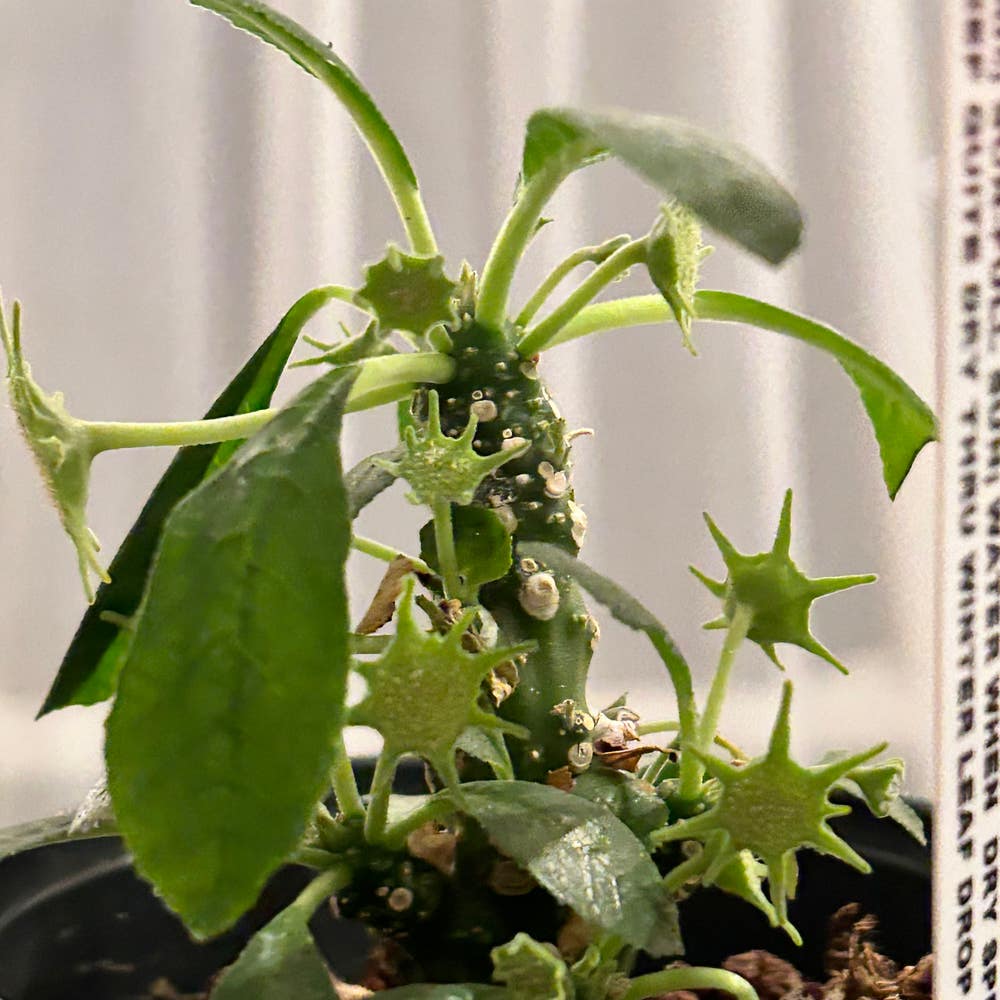
Best Tips for Dealing with Curling Leaves on Dorstenia
Dorstenia psilurus
By the Greg Editorial Team
Nov 07, 2024•7 min read
This article was created with the help of AI so we can cover more plants for you. May contain errors. See one? Report it here.
- 🌡️💧 Curling leaves indicate environmental stress; maintain 20-30°C and 50-70% humidity.
- 🚰 Overwatering or underwatering causes leaf issues; check soil moisture regularly.
- 🐛 Pests like mealybugs and spider mites can curl leaves; inspect and manage promptly.
Causes of Curling Leaves
🌪️ Environmental Stress Factors
Curling leaves on your Dorstenia can often be traced back to environmental stress. These plants thrive in a temperature range of 20°C to 30°C (68°F to 86°F), so fluctuations outside this zone can lead to curling.
Humidity is another critical factor. Dorstenia prefers humidity levels between 50% to 70% for optimal leaf development. If the air is too dry, you might notice your leaves curling as they struggle to retain moisture.
Light exposure also plays a significant role. While Dorstenia enjoys bright conditions, too much direct sunlight can scorch leaves, causing them to curl and become unsightly.
💧 Watering Issues
Overwatering Symptoms
Overwatering is a common culprit behind curling leaves. Signs include yellowing leaves, mushy stems, and even root rot. Excess moisture creates stress, leading to curling as the plant tries to cope with the saturated conditions.
Underwatering Symptoms
Conversely, underwatering can also cause problems. If you see dry, crispy leaves or wilting, your plant is likely not getting enough water. Insufficient moisture causes leaves to curl inward as a defense mechanism against dehydration.
🐛 Pest Infestations
Common Pests Affecting Dorstenia
Pests can wreak havoc on your Dorstenia, leading to curling leaves. Mealybugs are notorious for leaving white, cotton-like masses on leaves, which can result in curling and yellowing.
Spider mites are another concern. They thrive in low humidity and create fine webbing on the leaves, causing stippling and curling. Lastly, aphids, those small green sap-sucking insects, can distort and curl leaves as they feed.
🥦 Nutrient Deficiencies
Nutrient deficiencies can significantly impact leaf health.
- Nitrogen is crucial for leaf growth; a deficiency can lead to yellowing and curling.
- Magnesium is vital for chlorophyll production; without it, leaves may curl and brown.
- Potassium helps regulate water; a lack of potassium can result in weak, curling leaves.
Understanding these causes can help you take proactive steps to maintain the health of your Dorstenia. Next, we’ll explore how to diagnose curling leaves effectively.
Diagnosing Curling Leaves
🌿 Identifying Symptoms of Leaf Curl
When diagnosing curling leaves on your Dorstenia, start by observing the visual signs. Pay attention to the direction of the curl—leaves curling inward may indicate underwatering, while those curling outward could suggest overwatering.
Discoloration and texture changes are also key indicators. Yellowing leaves often accompany curling, signaling potential nutrient deficiencies or stress.
📍 Importance of Leaf Position
The position of the leaves matters significantly. Lower leaves may exhibit different symptoms compared to upper leaves, which can help pinpoint the issue. For instance, if only the lower leaves are curling, it might be a sign of nutrient deficiency or root problems.
🔍 Differentiating Between Causes
Next, differentiate between potential causes of curling leaves. Inspect your plant for pests like mealybugs or spider mites, which can cause significant damage. Look for signs such as webbing or sticky residue on the leaves.
Environmental stress is another common culprit. Assess the conditions around your plant, including temperature fluctuations and light exposure.
💧 Watering Issues
Watering practices are crucial in diagnosing leaf curl. Check the soil moisture levels to determine if you’re overwatering or underwatering.
- Overwatering: If the soil feels soggy and the leaves are yellowing, you may be giving your plant too much water.
- Underwatering: Conversely, if the soil is dry and the leaves are crispy, it’s time to increase your watering frequency.
By carefully observing these symptoms and conditions, you can effectively diagnose the cause of curling leaves on your Dorstenia. This understanding will pave the way for implementing the right solutions to restore your plant's health.
Solutions for Curling Leaves
🌊 Adjusting Watering Practices
Proper watering is crucial for the health of your Dorstenia. Start by checking soil moisture regularly; a moisture meter or simply using your finger can help determine if it's time to water.
Next, establish a watering frequency that allows the top inch of soil to dry out before adding more water. This prevents overwatering, which can lead to root rot and curling leaves. Additionally, ensure your pots have drainage holes to avoid water accumulation, which can stress your plant.
🐞 Pest Management Strategies
Pest infestations can wreak havoc on your Dorstenia, leading to curling leaves. For natural pest management, consider introducing beneficial insects like ladybugs, which can help control pest populations. Neem oil is another effective option that can deter pests without harming your plant.
If the infestation is severe, chemical options like insecticidal soaps may be necessary. These targeted treatments can help eliminate pests while minimizing damage to your plant.
🌬️ Improving Humidity and Temperature Conditions
Humidity and temperature play significant roles in leaf health. To increase humidity, use a humidifier or place pebble trays filled with water near your plant. This creates a more favorable environment for your Dorstenia.
Temperature control is equally important. Keep your plants away from drafts and heat sources to maintain a stable environment. Ideally, aim for temperatures between 20°C to 30°C (68°F to 86°F) for optimal growth.
🌱 Fertilization Tips for Healthy Leaves
Fertilization is key to promoting healthy leaves. During the growing season, use balanced NPK fertilizers to provide essential nutrients. Applying fertilizer every 4-6 weeks during active growth will help your Dorstenia thrive.
By following these fertilization tips, you can ensure your plant receives the nutrients it needs to prevent curling leaves and support overall health.
🏁 Conclusion
Addressing curling leaves on your Dorstenia involves a multifaceted approach. By adjusting watering practices, managing pests, improving humidity and temperature, and fertilizing appropriately, you can restore your plant's health and vitality. Next, let’s explore how to prevent leaf curl in the first place, ensuring your Dorstenia remains vibrant and thriving.
Preventing Leaf Curl
🌱 Best Practices for Care
To keep your Dorstenia thriving, establish a regular watering schedule. This routine should adapt to the environmental conditions, ensuring your plant receives just the right amount of moisture.
Placement is equally crucial. Choose spots that provide optimal light and humidity levels, avoiding direct sunlight that can scorch the leaves.
🔍 Regular Monitoring and Maintenance Tips
Make it a habit to conduct weekly inspections of your plant. Look for pests and any signs of stress, as early detection can save your Dorstenia from serious issues.
Additionally, regularly check the soil moisture. This simple practice helps prevent the pitfalls of overwatering or underwatering, keeping your plant healthy and happy.
🌦️ Seasonal Considerations for Health
As seasons change, so should your care routine. In winter, for instance, consider increasing humidity levels to combat dry indoor air, and always monitor temperature fluctuations to protect your plant from stress.
By implementing these preventative measures, you can significantly reduce the risk of leaf curl and ensure your Dorstenia remains vibrant and robust. Next, let's explore when to seek professional help for your plant care challenges.
When to Seek Professional Help
🚨 Signs That Indicate Severe Issues
If your Dorstenia exhibits persistent leaf curl despite your best care efforts, it may be time to seek professional help. Additionally, look out for severe pest infestations or diseases that threaten the overall health of your plant.
🧑🌾 Consulting with Plant Care Experts
Professional advice can be invaluable for tackling complex plant issues. Local plant care experts and specialized nurseries can provide tailored guidance to help restore your Dorstenia to its vibrant self.
Finding the right resources can make all the difference. Consider reaching out to local gardening clubs or online forums dedicated to plant care for recommendations on trusted professionals in your area.
With the right support, you can ensure your Dorstenia thrives, turning those curling leaves back into a lush display of health.
⚠️ Safety First
This content is for general information and may contain errors, omissions, or outdated details. It is not medical, veterinary advice, or an endorsement of therapeutic claims.
Always consult a qualified healthcare professional before using any plant as food, medicine, or supplement.
Never eat any plant (or feed one to pets) without confirming its identity with at least two trusted sources.
If you suspect poisoning, call Poison Control (800) 222-1222, the Pet Poison Helpline (800) 213-6680, or your local emergency service immediately.
Spotted an error? Please report it here.
Keep your Dorstenia thriving 🌿 by using Greg's tailored watering and humidity reminders to prevent curling leaves and ensure your plant gets the care it deserves!