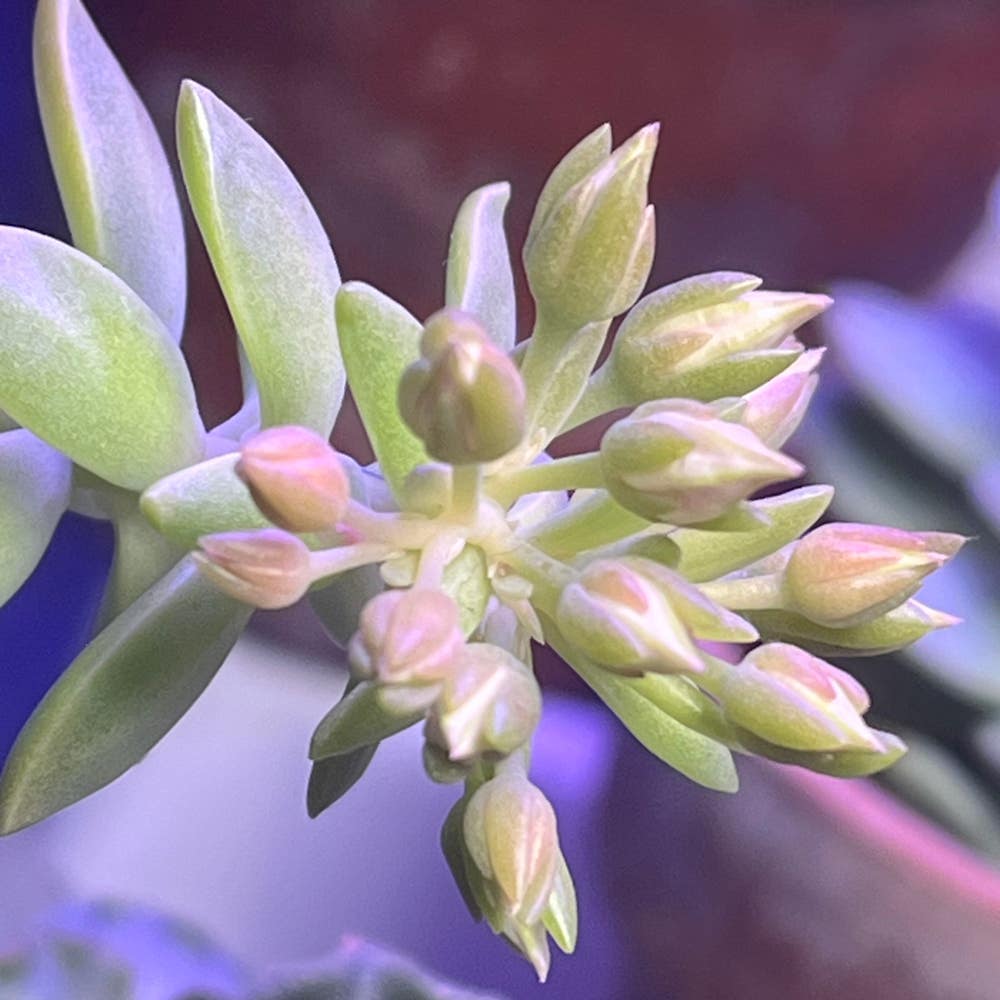
Why Are My California Sunset Leaves Droopy? 😔
Graptosedum 'California Sunset'
By the Greg Editorial Team
Jun 18, 2024•3 min read
This article was created with the help of AI so we can cover more plants for you. May contain errors. See one? Report it here.
- Watering woes? Over or under-watering can cause droopiness.
- 🌞 Bright, indirect light keeps leaves perky; direct sun may harm.
- Consistent care routine with proper soil and pot ensures plant health.
Spotting the Signs of Droopy Leaves
🥀 Identifying Droopy Leaves
Wilting leaves are the plant's SOS. Look for leaves that have lost their usual perky posture, hanging limply or bending at odd angles. Texture changes are another distress signal; if leaves feel less firm or look different than usual, take note.
📉 Assessing the Severity
The range of droopiness can vary from a slight wilt to a full-on plant collapse. Assess whether the issue is isolated to a few leaves or if it's a widespread problem. Stems that can't hold up leaves are a sign that your plant's structural integrity is compromised.

Pinpointing the Culprits
💧 Water Woes: Too Much or Too Little
Overwatering turns your plant's roots into a swampy mess. Leaves droop as they drown in excess moisture. On the flip side, underwatering leaves them thirsty, wilted, and weak. Check the soil before watering; it should feel like a barely damp sponge, not a soaked one.
☀️ Light Levels: Finding the Sweet Spot
Your California Sunset craves bright, indirect light. Direct sun scorches leaves, leaving them as crispy as overcooked bacon. Too little light, and your plant stretches out like it's reaching for the last cookie on the shelf. Rotate your plant regularly to ensure even light distribution.
🌡️ Temperature Tangles: Avoiding Extremes
Sudden temperature changes are like unexpected ice baths or saunas for your plant. Consistent temperatures keep leaves perky. Avoid placing your California Sunset near drafty windows or heat sources, which can cause leaves to droop like a disappointed parent.

Turning the Tide on Droopiness
🚰 Fine-Tuning Your Watering Technique
Consistency is your plant's best friend when it comes to watering. Use the finger test or a moisture meter to check soil moisture; if it's dry, it's time to water. Aim for a watering rhythm that's as steady as a metronome. Remember, overwatering leads to soggy despair, while underwatering turns your plant into a crispy critter. Adjust with the seasons—your plant's thirst isn't static.
🌞 Lighting the Way to Perky Leaves
Bright, indirect light is the sweet spot for your California Sunset. Rotate your plant regularly to avoid the Leaning Tower of Pisa effect. As the sun's position shifts with the seasons, so should your plant's spot in your home. If natural light is scarce, consider grow lights, but don't overdo it—think of it as a gentle glow, not a spotlight.
🌡️ Keeping the Temperature Just Right
Stability is key when it comes to temperature. Avoid placing your plant near drafty windows or heat sources. Sudden changes are as welcome as a snowstorm in July. Aim for a cozy, stable environment where your California Sunset can bask in the equivalent of a mild spring day, every day.

Preventing Future Flop-overs
🌱 Establishing a Tailored Care Routine
Consistency is your California Sunset's best friend. To avoid future saggy situations, craft a care routine that's as regular as your morning coffee. Monitor your plant's response to watering and lighting, and tweak as necessary. Think of it as a dance where sometimes you lead, sometimes you follow.
🏡 Choosing the Right Home: Soil and Pot Tips
Drainage is crucial. Choose a pot with holes that could make a colander jealous. This ensures any overzealous watering doesn't turn into a root-rotting pool party. For soil, go for a mix that's as light and airy as a cloud—peat, perlite, and vermiculite are your go-to trio. This combo keeps the roots breathing easy and the water flowing through like a well-organized traffic system.
Remember, a stable home and a consistent routine are the secret sauce to keeping those leaves standing tall and proud.
⚠️ Safety First
This content is for general information and may contain errors, omissions, or outdated details. It is not medical, veterinary advice, or an endorsement of therapeutic claims.
Always consult a qualified healthcare professional before using any plant as food, medicine, or supplement.
Never eat any plant (or feed one to pets) without confirming its identity with at least two trusted sources.
If you suspect poisoning, call Poison Control (800) 222-1222, the Pet Poison Helpline (800) 213-6680, or your local emergency service immediately.
Spotted an error? Please report it here.
Ensure your California Sunset thrives with perky leaves 🍃 by using Greg's tailored reminders for the ideal watering rhythm and light conditions, based on your home environment.