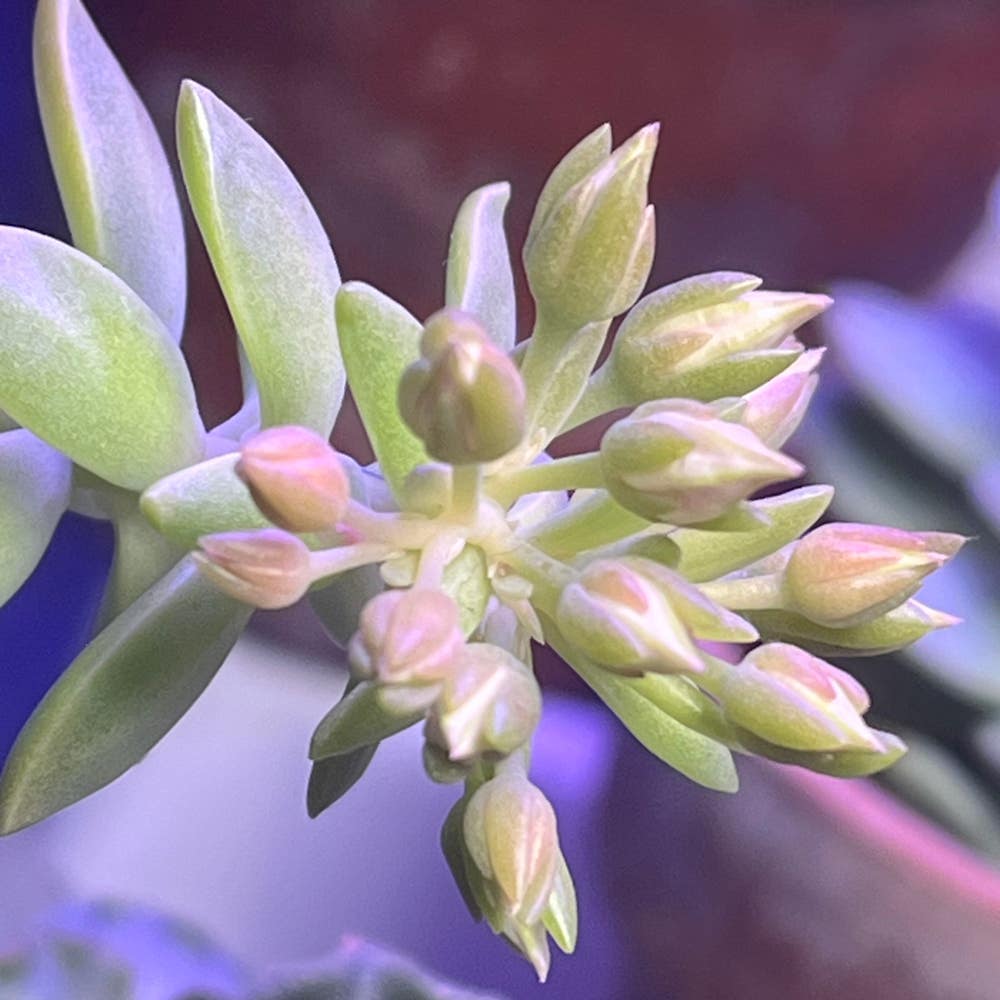
🌻 How to Get a California Sunset to Bloom
Graptosedum 'California Sunset'
By the Greg Editorial Team
Jun 18, 2024•4 min read
This article was created with the help of AI so we can cover more plants for you. May contain errors. See one? Report it here.
- Sunlight balance is key—direct and indirect light for optimal blooms.
- Keep it warm and humid—65°F to 80°F and 40-60% humidity for flowering.
- Prune and care regularly—healthy plants with strategic pruning bloom best.
Light It Up for Blooms
🌞 The Perfect Light for Perfect Blooms
Sunlight is the non-negotiable ticket to a California Sunset's blooming bonanza. Aim for a bright spot that bathes your plant in indirect light. Direct morning rays are a thumbs-up, but shield your green buddy from the harsh afternoon glare.
Positioning is everything. A south or west-facing window is the plant's best friend, but be wary of the summer's scorching touch. If indoor, play musical chairs with your plant to find that sweet spot where the light is just right.
💡 Mimicking Natural Light Cycles
Indoors and lacking that golden touch? Grow lights are your undercover agents for bloom encouragement. Red wavelengths? They're the secret handshake for budding.
Rotate your plant regularly to avoid a lopsided growth tragedy. No window, no worries; a well-placed grow light can be your ace in the hole. Remember, it's not just about the hours—it's the quality of light that counts. Set timers to echo the sun's rise and fall, because plants, like us, thrive on routine.

Temperature and Humidity: The Blooming Dance
🌡️ Warmth and Coolness: Finding the Balance
Temperature is a make-or-break factor for your California Sunset's blooming potential. The sweet spot lies between 65°F and 80°F (18°C and 27°C). Too hot, and your plant might boycott blooming. Too cold, and it could enter a vegetative slumber.
💦 Moisture in the Air: A Humidity How-To
Humidity is your plant's invisible companion, crucial for those coveted blooms. Aim for a humidity level of 40-60%. Any drier, and the leaves may crisp; any wetter, and you're in mold territory. Keep a hygrometer close to monitor these levels without playing a guessing game.

Feeding Your Plant for Fabulous Flowers
💧 The Right Soil for the Job
To kick off the blooming bonanza, well-draining soil is non-negotiable. Your California Sunset craves a mix akin to a cactus's dream—think cactus mix peppered with sand. This gritty concoction ensures your plant's roots stay as dry as a stand-up comedian's wit, avoiding the dreaded root rot.
🌸 Fertilizer: The Bloom Booster
When it comes to fertilizer, timing is as critical as a drummer's beat. During the growing season, treat your plant to a balanced, water-soluble fertilizer. It's like a pep talk that gears your California Sunset up for a floral show. But remember, moderation is key—overfeeding is the botanical equivalent of stage fright, leading to lush leaves but shy blooms.

Pruning and Care: Set the Stage for Blooming
🌸 Pruning Practices for Promoting Flowers
Pruning isn't just snipping willy-nilly; it's a strategic art. For your California Sunset, the goal is to encourage more blooms, not just to keep it from looking like an overgrown jungle. Early spring is your cue to start. Trim back any leggy branches by about a third, but don't get carried away—this isn't a topiary contest. Focus on removing dead or diseased growth to prevent resource drain and improve air circulation. It's like telling your plant, "Hey, put your energy here, not there." And always, always use clean, sharp tools—think surgical precision.
Keeping Your Plant Healthy and Ready to Bloom
Routine care for your California Sunset is like the backstage crew for a rock concert—unseen but essential. Water with the precision of a ninja, enough to quench but not drown. Ensure your plant gets adequate light; it's the main act for photosynthesis. And don't forget about pest control; sticky traps can be your best friend. Keep an eye out for brown spots or other distress signals and act fast—like catching a cold, the sooner you deal with it, the less havoc it wreaks. Remember, a healthy plant is a blooming plant.
⚠️ Safety First
This content is for general information and may contain errors, omissions, or outdated details. It is not medical, veterinary advice, or an endorsement of therapeutic claims.
Always consult a qualified healthcare professional before using any plant as food, medicine, or supplement.
Never eat any plant (or feed one to pets) without confirming its identity with at least two trusted sources.
If you suspect poisoning, call Poison Control (800) 222-1222, the Pet Poison Helpline (800) 213-6680, or your local emergency service immediately.
Spotted an error? Please report it here.
Achieve a blooming 🌅 California Sunset by leveraging Greg's PlantVision to ensure your plant gets the ideal light and care it craves.