Why Are There Brown Spots on My Border Carnation Leaves?
Dianthus caryophyllus
By the Greg Editorial Team
Jun 14, 2024•6 min read
This article was created with the help of AI so we can cover more plants for you. May contain errors. See one? Report it here.
- Fungal and bacterial diseases cause brown spots on Border Carnations.
- Environmental stressors like overwatering contribute to the issue.
- Early detection and treatment are crucial for healthy blooms.
Common Causes of Brown Spots on Border Carnation Leaves
Identifying the culprits behind the unsightly brown spots on Border Carnation leaves is crucial for the plant's health.
🍄 Fungal Diseases
Fungal foes like Rhizoctonia and Septoria are notorious for disfiguring Border Carnations. Rhizoctonia causes stem rot, but it doesn't stop there; it can also lead to brown spots on leaves when the fungus rears its ugly head in heavy soils. Septoria leaf spot, on the other hand, manifests as pale brown patches with a distinctive purple or violet border, often starting on the lower leaves.
🦠 Bacterial Diseases
Bacterial blight is another villain in this garden drama. It's less of a common cold and more of a plant pandemic, causing brown spots that can quickly turn into a full-blown leaf crisis.
🌿 Environmental Stressors
Overwatering is like giving your plants too much of a good thing, leading to root rot and those dreaded brown spots. On the flip side, poor air circulation is like a stuffy room for plants, promoting disease and stress. It's a delicate balance, like a seesaw that needs both kids to play nice.
🌍 Other Factors
It's not just living organisms causing chaos; environmental factors like frost damage can also leave a mark. Begonias may hate frost, but Border Carnations aren't fans either. And let's not forget the silent assassins: too much fertilizer or certain soil additives can cause brown spots as if the leaves are throwing a tantrum for being overfed.
By understanding these common causes, you're one step closer to restoring your Border Carnations to their spotless glory.

Diagnosing Brown Spots on Your Border Carnations
🔍 Visual Cues for Early Detection
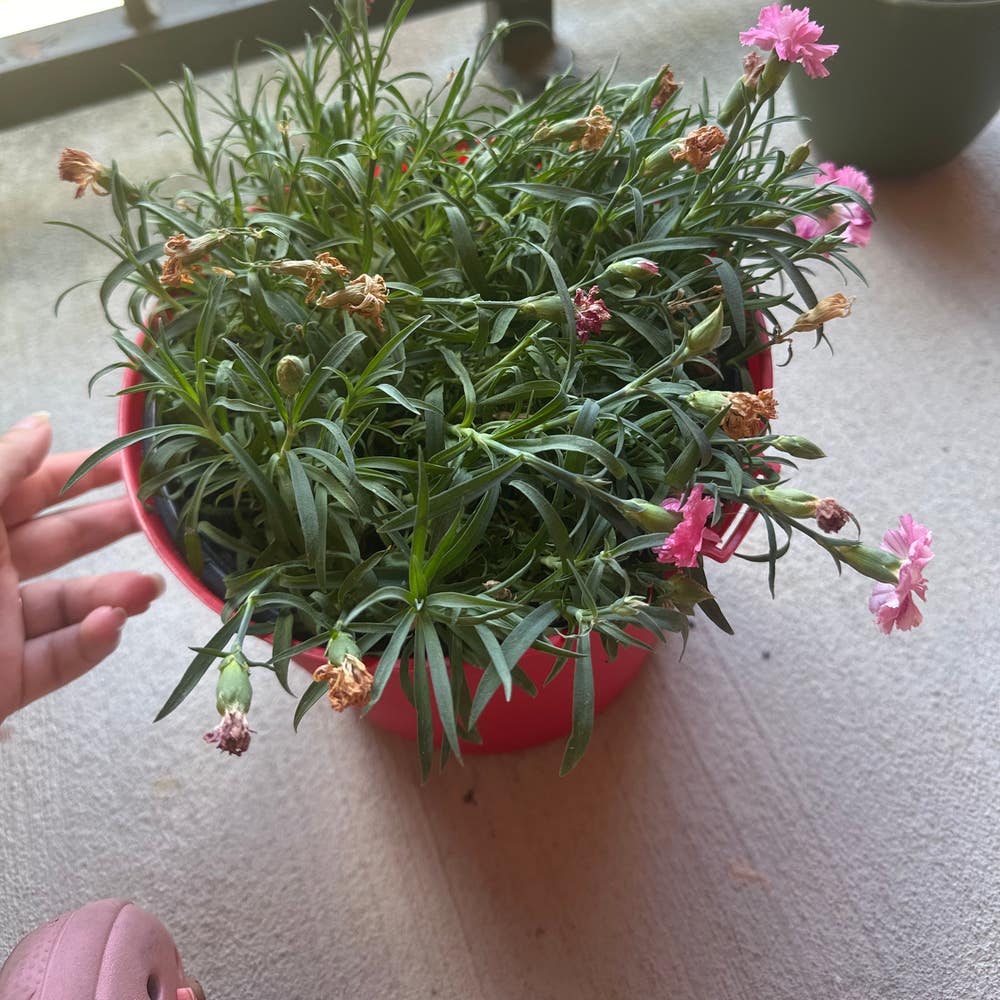
Early detection is crucial for managing brown spots on Border Carnations. Look for pale brown patches with purple or violet edges, often starting on the lower leaves. Tiny black spores may be nestled in the center, a telltale sign of Septoria leaf spot. Leaves bending awkwardly are also a red flag.
🦠 Fungal vs. Bacterial vs. Environmental Stress
Fungal infections like Septoria manifest as circular brown spots with a dark border. In contrast, bacterial issues may present as water-soaked spots with a yellowish halo. Environmental stress, such as overwatering, often leads to a more generalized browning. Don't be fooled by rusty patches; these could indicate nutrient deficiencies rather than pathogens.
🕵️ The Detective Work
Turn into a garden detective. Inspect not just the leaves, but also stems and roots for damage. Check the soil's moisture—overwatering is a common culprit. If you're stumped, a lab test might just be your new best friend. Remember, every spot is a clue to the plant's health.
🔍 Patterns Matter
Patterns are key. Circular spots often scream fungal woes, while irregular, water-soaked lesions hint at bacterial baddies. Unlike uniform yellowing from aging, these spots are distress flares from your plant. Spotting these signs early could mean the difference between a quick fix and a full-blown plant crisis.

Treating Brown Spots on Border Carnations
Treating brown spots on Border Carnations requires a two-pronged approach: addressing both infections and environmental stressors.
🍄 Fungal and Bacterial Infections
Act swiftly when you spot the telltale signs of infection. For fungal foes like Septoria, remove affected leaves and avoid wetting the foliage when watering. A fungicide may be your best ally, but use it judiciously and as a last resort. If bacteria are your culprits, ensure you sterilize your tools to prevent spread. Remember, a clean garden is your first line of defense.
🌿 Environmental Stressors
Overcrowding is a no-go. Space your carnations out to let them breathe and reduce humidity. Think of mulch as your garden's umbrella, keeping soil splash at bay. And if your plants are still throwing a brown spot bash, it might be time to rethink your watering schedule. Less is often more.
👩🌾 Cultural Practices
Cultural practices are your garden's lifestyle choices. Keep it healthy with good hygiene—remove debris and infected plant matter. Rotate your crops, because plants, like people, need a change of scenery to avoid old problems. And if you're not already, become a weather watcher; your watering routine should adapt to the whims of Mother Nature.
Remember, treating brown spots is not just about the now—it's about ensuring a spot-free future for your Border Carnations.

Preventing Future Brown Spots on Border Carnations
Preventing brown spots on Border Carnations is all about proactive care. Let's dive into the nitty-gritty of keeping your blooms spot-free.
💧 Proper Watering Techniques
Water at the base of your plants to keep the foliage dry. Overhead watering is a no-go—it's like inviting fungi to a buffet. Use mulch to stop soil from splashing up during a downpour. Remember, your watering can is not a shower head; aim low and go slow.
💨 Air Circulation is Key
Think of your carnations as needing personal space—crowding them is asking for trouble. Good air flow keeps the leaves dry and disease at bay. It's like social distancing for plants.
🧼 Plant Hygiene
Sanitation isn't just for humans. Remove and trash infected leaves pronto. Keep your garden bed cleaner than a hospital ward—debris and weeds are just hideouts for diseases.
👀 Regular Inspections
Make plant inspection a habit, like checking your teeth for spinach. Catch those brown spots early and you're halfway to saving your carnations.
🌱 Cultural Practices
Rotate your crops. If a spot showed up this year, next year's carnations should bunk elsewhere. It's like not revisiting a restaurant where you got food poisoning.
By sticking to these preventive measures, you're setting up a fortress against brown spots. Keep your defenses high and your carnations will thank you with spotless leaves and vibrant blooms.
The Effect of Brown Spots on Flowering and Plant Vigor
Brown spots on Border Carnations are like uninvited guests at a party; they can dampen the mood and affect the overall vibrancy of your blooms. These spots can signal underlying health issues that, if left unchecked, may lead to fewer and less vibrant flowers.
🌼 Impact on Blooming
When brown spots invade, they're not just a cosmetic blemish; they're a thief of nutrients and photosynthetic potential. The plant diverts resources to combat the stress, which can lead to a reduction in blooming.
🌱 Plant Vigor Compromised
Vigor in plants is like zest in life; it's essential. Brown spots can cause a plant to become more susceptible to further stress and disease, leading to a downward spiral of health.
🌺 Tips for Maintaining Healthy Flowering
Despite the presence of brown spots, all is not lost. Regular inspection and prompt treatment can save the day. Here's how to keep those blooms coming:
- Prune affected areas cautiously to prevent the spread of pathogens.
- Adjust watering habits to ensure you're not drowning your Carnations in love.
- Improve air circulation around your plants; they need to breathe too!
- Fertilize wisely—it's about giving the right amount, not a feast or famine.
Remember, brown spots might be a sign that your Border Carnations are throwing a tantrum for attention. Give them the care they crave, and they'll reward you with a flourishing display of flowers.
⚠️ Safety First
This content is for general information and may contain errors, omissions, or outdated details. It is not medical, veterinary advice, or an endorsement of therapeutic claims.
Always consult a qualified healthcare professional before using any plant as food, medicine, or supplement.
Never eat any plant (or feed one to pets) without confirming its identity with at least two trusted sources.
If you suspect poisoning, call Poison Control (800) 222-1222, the Pet Poison Helpline (800) 213-6680, or your local emergency service immediately.
Spotted an error? Please report it here.
Keep your Border Carnations thriving 🌺 by using Greg to swiftly detect and address brown spots with personalized care reminders and expert advice!