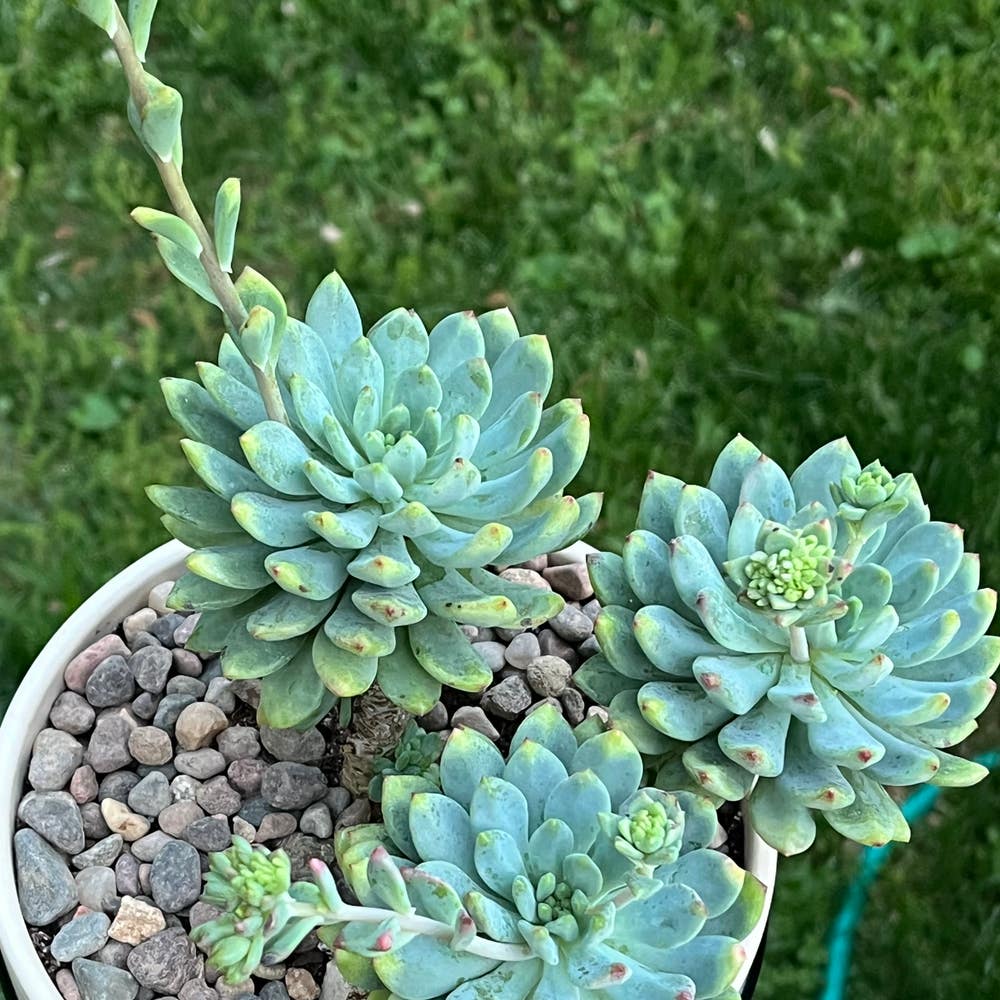
Why Are the Leaves on My Super Donkey Tail Turning Yellow? 🐴
Sedeveria 'Harry Butterfield'
By the Greg Editorial Team
Jun 18, 2024•5 min read
This article was created with the help of AI so we can cover more plants for you. May contain errors. See one? Report it here.
Solve the yellow leaf mystery 🌿 of your Super Donkey Tail and bring back its lush green splendor!
- Yellow leaves signal distress; early detection and correct diagnosis are key.
- Balance water and light to prevent over/underwatering and sunburn.
- Use balanced fertilizer to address and prevent nutrient deficiencies.
Spotting the Yellow Flags
🍋 Recognizing Early Signs of Yellowing Leaves
Yellow leaves on your Super Donkey Tail can be the plant's version of a distress signal. Early detection is crucial. If you see yellowing, it's time to get up close and personal with your plant. Check the soil moisture—is it too dry or soggy? This could be your cue to tweak your watering habits or soil composition.
🟡 Understanding the Patterns of Yellowing
Yellowing leaves aren't all created equal. Uniform yellowing could point to a systemic issue, like a nutrient deficiency. If it's just the tips, think sunburn. When older leaves yellow gradually, they might just be bowing out gracefully. But if new growth is turning yellow, your plant is likely crying out for help.
🌿 Spotting Nutrient Deficiencies
A lack of nitrogen often causes older leaves to yellow, while iron scarcity can pale the new ones. Balanced fertilizers are your go-to, but remember, more isn't always better. Stick to the recommended dose to avoid overfeeding.
🐜 Pest and Disease Control
Unwanted guests can turn leaves yellow too. Inspect the undersides and stems for pests. Insecticidal soap can give them the boot. To prevent fungal diseases, keep those leaves dry. Regular plant check-ups are your best defense.
🌞 Light Exposure: Finding the Sweet Spot
Too much sun can lead to leaf discoloration. If your Super Donkey Tail's leaves are bleaching, it's time to dial back on the light. A sheer curtain can work wonders to diffuse harsh rays without leaving your plant in the dark.

The Usual Suspects: Common Causes of Yellowing Leaves
💦 Overwatering and Its Consequences
Overwatering is the equivalent of plant waterboarding. If your Super Donkey Tail's leaves are yellow and have the texture of overcooked noodles, you're drowning the poor thing. Root rot is the silent killer here. To confirm, gently remove the plant from its pot and inspect the roots. Healthy roots are firm and white, while rotten ones are brown and mushy.
🏜️ When Thirst Turns Critical
On the flip side, dehydration makes your Super Donkey Tail's leaves crispier than autumn leaves. If the soil feels like the Sahara an inch down, it's time to water. But don't unleash a tsunami—consistent, moderate watering is the key to avoiding a drought or flood situation.
☀️ Sunburn and Light Exposure: Finding the Sweet Spot
Sunburn in plants doesn't come with a summer glow. If your plant is sporting yellow leaves with crispy brown edges, it's had too much sun. Aim for bright, indirect light. If your plant is getting a light overdose, relocate it or use a sheer curtain to filter the intensity.
🍽️ Hungry for Nutrients
Nutrient deficiency is like sending your plant to bed without dinner. Yellow leaves can be a cry for nitrogen or iron. A balanced fertilizer is the equivalent of a plant multivitamin. Apply it as directed—overfeeding can lead to nutrient burn, which is just as bad as starvation.

Turning Over a New Leaf: Remedial Actions
💧 Rescuing Overwatered Plants
Overwatering can turn your Super Donkey Tail's soil into a soggy mess. To rescue your plant, halt watering immediately. Allow the soil to dry out completely, which might take several days. If the roots are brown and mushy, you're dealing with root rot. Trim away the rotted parts and repot in fresh, dry soil.
💦 Rehydrating the Right Way
Underwatered Super Donkey Tails need a steady sip, not a deluge. Gradually increase watering frequency, ensuring the soil gets moist but not waterlogged. Stick your finger an inch into the soil; if it's dry, it's time to water. Remember, your plant craves consistency, not a flood.
🌞 Light Adjustment for Happy Leaves
Too much sun can scorch, while too little can stunt. Your Super Donkey Tail aims for bright indirect light. If leaves are bleaching or crisping, move the plant away from direct sunlight. Conversely, if it's stretching or fading, inch it closer to the light source. Watch for new growth as a sign of recovery.
🍽️ Feeding Your Super Donkey Tail
Nutrient deficiencies can lead to yellowing leaves. A balanced, water-soluble fertilizer can help, but go easy—overfeeding can burn the roots. Apply at half-strength every 4-6 weeks during the growing season. If you've overdone it, flush the soil with water to dilute excess fertilizer.

Keeping the Green: Preventative Tips
💧 Water Wisdom: Perfecting Your Watering Technique
Watering your Super Donkey Tail isn't rocket science, but it does require some finesse. Ditch the guesswork and use a soil moisture meter to know exactly when to water. Remember, your plant's thirst varies with the seasons—more in the summer, less in the winter. Keep your watering can in check and your plant's roots will thank you.
🌞 Light and Shade: Balancing Act for Vibrant Leaves
Getting the right light for your Super Donkey Tail is like finding the perfect pair of jeans; it's all about the fit. Bright, indirect light is your sweet spot. Rotate your plant regularly to ensure even exposure and prevent the dreaded one-sided growth. As the seasons change, so does the sun's intensity—adjust accordingly to avoid leaf tan lines.
🍽️ Nutrient Know-How: Preventing Deficiencies
Plants can't speak, but they sure can show. Yellow leaves might be crying out for nutrients. Stick to a regular feeding schedule with a balanced fertilizer, but don't overdo it—think of it as a diet, not an all-you-can-eat buffet. Signs of a well-nourished plant include vibrant color and robust growth. Keep an eye out, and you'll spot the difference.
⚠️ Safety First
This content is for general information and may contain errors, omissions, or outdated details. It is not medical, veterinary advice, or an endorsement of therapeutic claims.
Always consult a qualified healthcare professional before using any plant as food, medicine, or supplement.
Never eat any plant (or feed one to pets) without confirming its identity with at least two trusted sources.
If you suspect poisoning, call Poison Control (800) 222-1222, the Pet Poison Helpline (800) 213-6680, or your local emergency service immediately.
Spotted an error? Please report it here.
Prevent the yellowing of your Super Donkey Tail's leaves by relying on Greg's tailored watering schedules and light monitoring 🌞, ensuring your plant stays as lush and healthy as the day you got it.