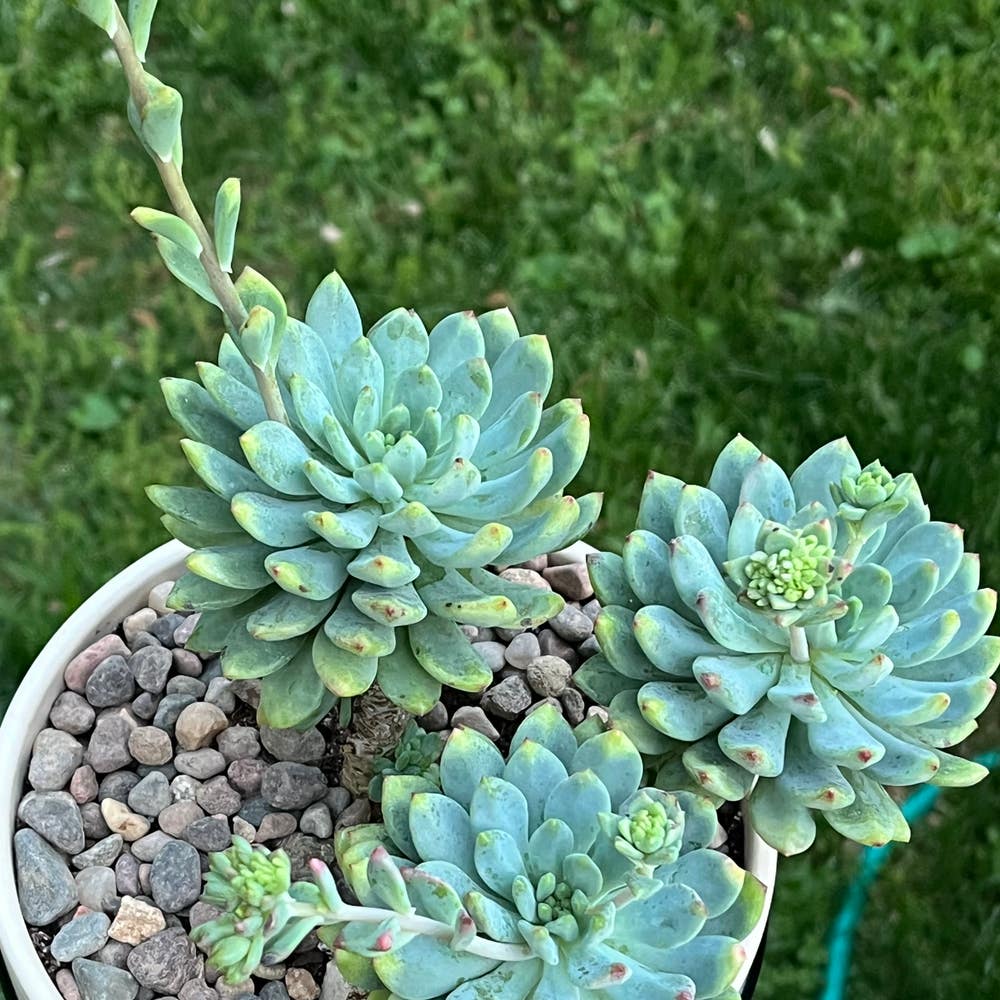
🐴 How Frequently Should I Water My Super Donkey Tail?
Sedeveria 'Harry Butterfield'
By the Greg Editorial Team
Jun 18, 2024•4 min read
This article was created with the help of AI so we can cover more plants for you. May contain errors. See one? Report it here.
Nurture a thriving super donkey tail 🌵 by mastering the delicate dance of its watering needs!
- Look for deflated leaves to gauge your plant's thirst.
- 🌵 Master the soak and dry method for optimal watering.
- Adjust watering with seasons and local climate.
When Thirst Strikes: Recognizing Your Plant's Needs
💧 Spotting the Signs of Thirst
In the realm of super donkey tail care, vigilance is key. Look for leaves that have lost their plumpness, appearing deflated and possibly wrinkled. This is your plant's way of whispering for water. The soil should be your truth-teller; if it's bone-dry to the touch, it's time for a drink.
💦 The Perils of Overindulgence
Conversely, too much love in the form of water can spell disaster. Overwatering is a silent killer, often presenting as yellowing leaves or a base that feels mushy to the touch. If your pot feels suspiciously heavy or the soil never dries out, you're likely dealing with waterlogged roots. To avoid this, ensure your super donkey tail's pot has excellent drainage and that the soil has a chance to dry out completely between waterings.

Soak and Dry: The Watering Dance
💧 Mastering the Soak and Dry Method
Watering your super donkey tail isn't a mindless chore—it's a ritual. Here's how to nail it:
- Wait for dryness: Patience is key. Let the soil completely dry out before even thinking about watering.
- Go deep: When it's time, drench the soil until water escapes freely from the drainage holes. This mimics a desert downpour.
- Back off: Now, give your plant some breathing room. Let the soil dry thoroughly before the next watering session.
📅 Seasonal Rhythms: Adjusting to the Calendar
Your plant's thirst changes with the seasons. Here's the scoop:
- Spring/Summer: This is go-time for growth. Water more frequently, but only when the soil is dry.
- Fall/Winter: Cooler temps mean less thirst. Ease up on the watering can and watch for slower drying soil.
Remember, your super donkey tail's water needs are as unique as your Netflix queue—tailor your approach accordingly.

The Tools of the Trade
🌱 Choosing the Right Soil and Pot
The foundation of successful watering begins with the right soil and pot. For super donkey tails, a well-draining potting mix is crucial. Mix potting soil with perlite or vermiculite to enhance drainage, ensuring roots aren't left soggy. As for pots, terracotta or ceramic options are your friends. Their porous nature helps wick away excess moisture, reducing the risk of waterlogged soil.
💧 Moisture Meters and Finger Tests
To avoid the guesswork in watering, consider a soil moisture meter. These gadgets provide a precise moisture level reading, making them a favorite among plant enthusiasts. If you're more hands-on, the finger test is a reliable classic. Insert your finger to the second knuckle; if the soil feels dry, it's time to water. For a quick check without getting your hands dirty, a chopstick or a wooden dowel will do—dry soil won't stick. Remember, a heavier pot means moisture is present; a lighter one signals thirst. Whether you're a gadget person or prefer a more tactile approach, keeping tabs on soil moisture will ensure your super donkey tail gets just the right amount of water.

Crafting the Perfect Watering Schedule
💧 Tailoring to Your Environment
Watering your super donkey tail isn't a one-size-fits-all deal. Local climate and indoor conditions demand a custom touch. If your living room mimics the Sahara's aridity or the Amazon's humidity, your watering can should follow suit. Airflow and humidity aren't just buzzwords—they're critical to your plant's vibe.
🕵️ Learning from Your Plant
Your super donkey tail won't text you when it's parched. You've got to be a bit of a plant detective, looking for clues. Droopy leaves scream for a drink, while yellow, squishy stems are a cry for water rehab. Balance is your mantra here. Keep a calendar but use it as a guideline, not gospel. Adjust your watering rhythm to the beat of your plant's needs and watch it thrive.
⚠️ Safety First
This content is for general information and may contain errors, omissions, or outdated details. It is not medical, veterinary advice, or an endorsement of therapeutic claims.
Always consult a qualified healthcare professional before using any plant as food, medicine, or supplement.
Never eat any plant (or feed one to pets) without confirming its identity with at least two trusted sources.
If you suspect poisoning, call Poison Control (800) 222-1222, the Pet Poison Helpline (800) 213-6680, or your local emergency service immediately.
Spotted an error? Please report it here.
Ensure your Super Donkey Tail is never thirsty or overwatered again with Greg's personalized reminders and care plans, making plant care as easy as a desert breeze 🌵.