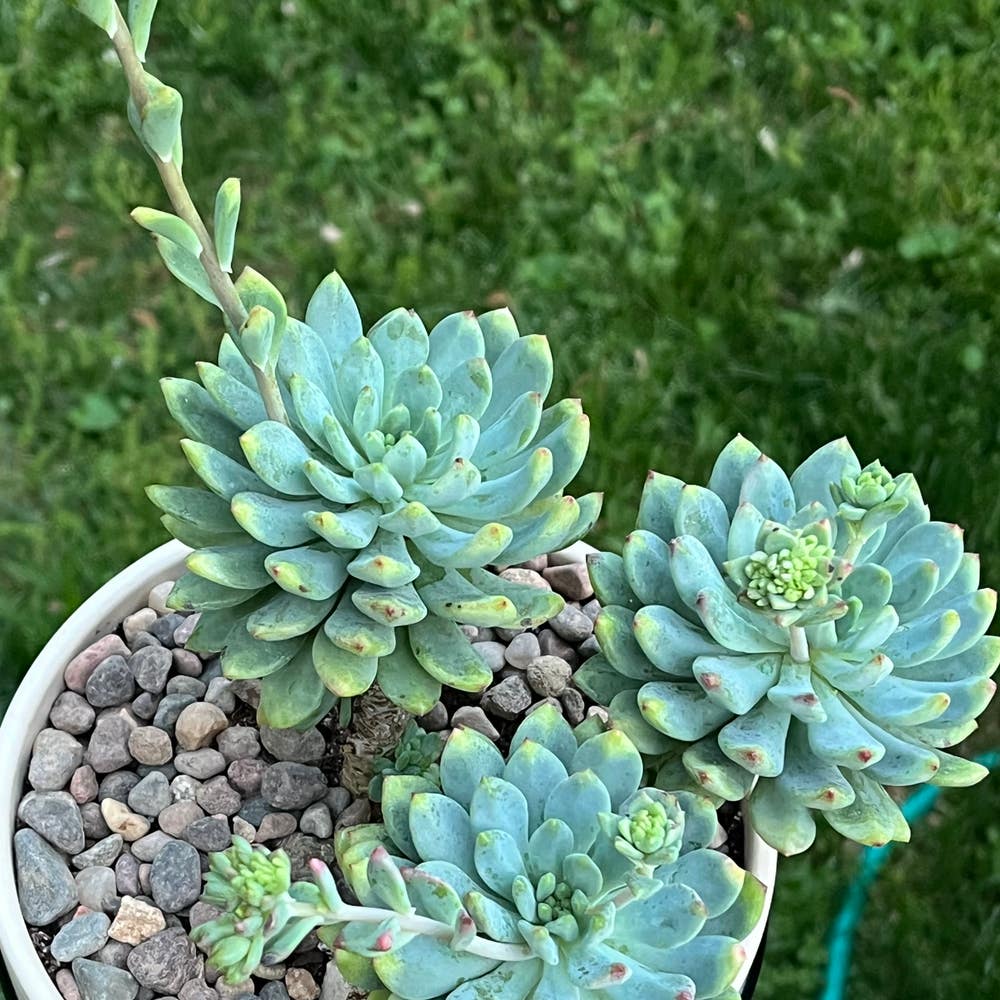
Why Are My Super Donkey Tail Leaves Mushy? 💧
Sedeveria 'Harry Butterfield'
By the Greg Editorial Team
Jun 18, 2024•4 min read
This article was created with the help of AI so we can cover more plants for you. May contain errors. See one? Report it here.
Stop the squish in your Super Donkey Tail 🌵—learn to spot and fix mushy leaves before it's too late!
- Mushy leaves mean distress; act quickly to prevent further damage.
- 🚱 Overwatering is the main culprit; adjust your watering routine.
- ✂️ Prune and choose well-draining soil to save your plant.
Spotting the Trouble Early
🚨 Telltale Signs of Distress
Mushiness in Super Donkey Tail leaves is a red flag. Early symptoms include leaves that feel soft or yield too easily to pressure. They should be firm, not reminiscent of overripe fruit. Discoloration, such as yellowing or browning, often accompanies the squishiness. It's a visual SOS.
Understanding the Difference
A healthy Super Donkey Tail leaf is robust and plump, with a succulent-like crispness. An unhealthy leaf, in contrast, is limp, discolored, and lacks vitality. It's the difference between a fresh vegetable and one that's been languishing in the fridge too long.
When to Take Action
Intervene at the first sign of trouble. If leaves are more marshmallow than crisp, it's time to act. Roots may be suffering in silence below, so consider a root inspection if leaf symptoms persist. Procrastination is not your friend here; early action can prevent a full-blown plant crisis.

Zeroing in on the Culprits
💦 Overwatering Woes
Overwatering is the archenemy of the Super Donkey Tail. This succulent's leaves turn to mush when they're waterlogged. Roots need oxygen, and too much water drowns them, leading to that unwanted squishiness.
🌱 Recognizing the Aftermath of Overwatering
Post-overwatering, the plant looks like it's had one too many. Leaves get bloated and lose their firmness. If your Super Donkey Tail is slumping over, it's a cry for help—time to reassess your watering habits.
🦠 The Root Rot Connection
Root rot is a stealthy saboteur, thriving in soggy conditions. It starts out of sight, attacking the roots, which leads to the visible symptom: mushy leaves. If your plant's roots are more brown and mushy than firm and white, you've got a case of root rot.
🚰 Linking Poor Drainage to Root Rot
Poor drainage is like a bad relationship—it's suffocating. Without a way out, water sticks around, and roots begin to rot. Ensure your pot has adequate drainage holes and consider a gritty soil mix to keep things well-aerated.

Turning Things Around
💧 Fine-Tuning Your Watering Routine
Feel the soil—it's your truth-teller. Moist like a wrung-out sponge? Perfect. Soggy? You've gone too far. Your Super Donkey Tail craves a Goldilocks watering schedule: not too much, not too little. Wait for the top inch of soil to dry out before the next watering. It's a simple touch test, no tech required, though a moisture meter can be your high-tech ally.
💦 Soil and Drainage: The Dynamic Duo
Choosing the right soil mix is like picking a good life partner—it's all about balance. A concoction that drains well yet holds onto just enough moisture is key. Mix in some perlite or sand to keep things light and airy. As for the pot, think of it as your plant's house—size matters, and drainage holes are non-negotiable. Terra cotta trumps plastic, letting the soil breathe and preventing water from overstaying its welcome.

Emergency Care for Mushy Leaves
✂️ Pruning: Not Just for Looks
Pruning your Super Donkey Tail isn't just about aesthetics; it's a vital rescue operation. With sterilized scissors, snip off the mushy leaves to prevent the spread of rot. Clean your tools after each cut to avoid introducing pathogens to fresh wounds. Post-trim, give your plant a breather—minimal water and good air flow are the equivalent of a plant ICU.
🚨 Can This Plant Be Saved?
Sometimes, despite your best efforts, the Super Donkey Tail might be too far gone. If the rot has taken over, it's a hard truth to swallow, but starting over might be the only option. Inspect the roots: if they're blackened and mushy, it's time for a plant eulogy. If there's healthy tissue, though, take cuttings to propagate and begin anew. Dispose of the infected plant material responsibly to avoid any future outbreaks.
⚠️ Safety First
This content is for general information and may contain errors, omissions, or outdated details. It is not medical, veterinary advice, or an endorsement of therapeutic claims.
Always consult a qualified healthcare professional before using any plant as food, medicine, or supplement.
Never eat any plant (or feed one to pets) without confirming its identity with at least two trusted sources.
If you suspect poisoning, call Poison Control (800) 222-1222, the Pet Poison Helpline (800) 213-6680, or your local emergency service immediately.
Spotted an error? Please report it here.
Keep your Super Donkey Tail robust 🌵 with Greg's custom watering plans that prevent overwatering and the dreaded mushy leaves!