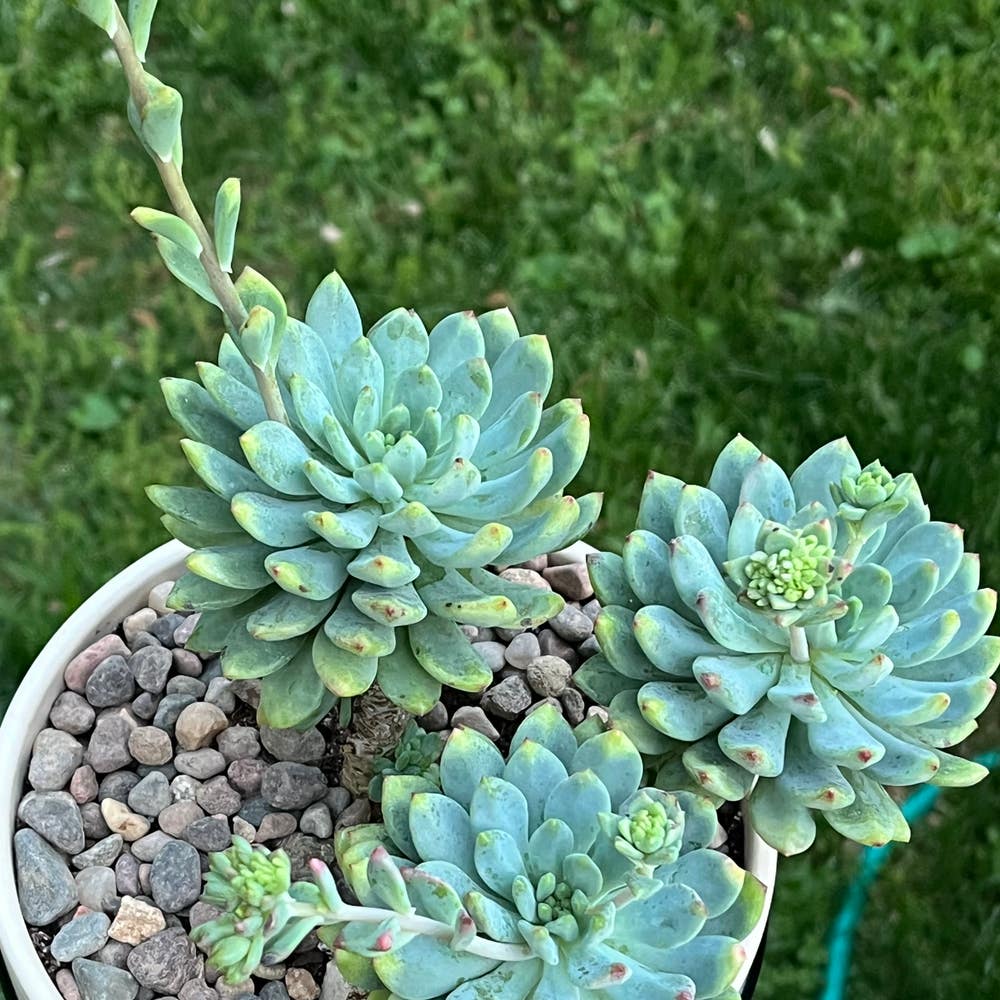
Why Are My Super Donkey Tail Leaves Curling?
Sedeveria 'Harry Butterfield'
By the Greg Editorial Team
Jun 18, 2024•5 min read
This article was created with the help of AI so we can cover more plants for you. May contain errors. See one? Report it here.
Unravel the secret to flat, healthy Super Donkey Tail leaves with our targeted care guide! 🌿🔍
[[Thoughts]]: The revised statement is concise, within the character limit, and includes emojis that are relevant to the topic. It promises a solution to a specific problem, which is likely to engage readers who are experiencing leaf curling in their Super Donkey Tail plants.
- 🌱 Overwatering and underwatering both lead to leaf curl; find the watering balance.
- 🌡️ Stable temperatures and humidity between 40-60% prevent environmental stress curling.
- 🐜 Combat pests and diseases with insecticidal soap and proper soil drainage.
When Thirst Goes Wrong: Watering Mishaps
💦 Too Much Love: Overwatering Woes
Yellow leaves and a funky soil smell are distress flares from your Super Donkey Tail, signaling it's had more than its fill. Overwatering is like throwing a pool party without an exit strategy. The soil feels like a bog, and the roots may start rotting, sending the plant's health into a downward spiral.
To adjust your watering routine, first unblock those drainage holes. They're as crucial as a clear windpipe. If they're clogged, your plant's basically drowning. Next, keep an eye on the soil moisture like it owes you money. If it's consistently soggy, stage a soil intervention. Remember, moderation is key – your plant isn't trying to win a wet t-shirt contest.
🏜️ Parched Plants: The Underwatering Problem
When your Super Donkey Tail starts resembling a wilted wallflower, it's a white flag for desperate hydration. Underwatering leaves the cells that keep leaves perky running on empty, causing them to collapse. If the soil's as dry as a stand-up comedian's wit, it's time to water.
Finding the watering sweet spot means checking the soil before you water; if it's clingy, skip the drink. If the pot feels lighter than your conscience on a cheat day, it's time to hydrate. Water slowly, allowing moisture to reach the roots without creating a flash flood. Stick to a consistent schedule to prevent your plant from turning into a desert wanderer.

It's Not You, It's the Climate: Environmental Stress
🌡️ Sunburn and Chill: Temperature Extremes
Super Donkey Tail plants can be dramatic when unhappy with their temperature. Leaf curling is a cry for help, signaling distress from too hot or too cold conditions. To prevent a temperature tantrum, keep your plant in a stable environment—think room temperature, not desert or tundra.
Adjusting plant placement is key. During hot spells, move your plant away from direct sunlight to a cooler spot. In winter, ensure it's not near drafty windows or heaters. Use a thermometer to monitor the temperature around your plant, aiming for a consistent range between 65-75°F (18-24°C).
💦 Humidity: Finding the Balance
Humidity plays a crucial role in the health of Super Donkey Tail leaves. Too dry, and they'll start to curl; too moist, and they risk rot. Strive for a balanced humidity level, typically between 40-60%.
To tweak humidity levels, consider a humidifier or a pebble tray with water beneath the plant pot. Alternatively, place your Super Donkey Tail in naturally humid areas like the kitchen or bathroom. Just be sure to avoid sudden humidity swings, as consistency is the name of the game.

Unwelcome Guests: Pests and Diseases
🐛 Bug Battles: Dealing with Pests
Super Donkey Tail plants are tough but not invincible. Pests like mealybugs and aphids sometimes sneak in. These critters are sap-suckers, draining your plant's energy and causing leaves to curl as a distress signal.
- Check for white, cottony spots—that's mealybug territory.
- Aphids are tiny but mighty, clustering on new growth or undersides of leaves.
Insecticidal soap or neem oil are your go-to weapons. Apply diligently, following label instructions, to send these pests packing.
🍄 Fungal Foes and Rotten Roots: Disease Prevention
Diseases can be stealthy, often going unnoticed until it's too late. Yellow leaves or odd growths? Your plant's waving a red flag.
- Fungal infections often start with subtle symptoms, so keep a keen eye.
- Root rot is a silent killer, thriving in overly moist soil.
Prevention is your best defense. Ensure proper drainage and avoid waterlogging. If disease strikes, isolate the affected plant and treat with a fungicide if necessary. Remember, a healthy plant is less likely to fall victim to these silent assailants.

Soil and Roots: The Foundation of Health
💧 The Right Mix: Soil Composition and Drainage
Soil composition directly impacts leaf curling in Super Donkey Tail plants. A well-draining mix is crucial; it's like the plant's personal water management system. Drainage is key—without it, you're inviting root rot to the party, and it's a guest that overstays its welcome.
To create the ideal soil environment, mix in perlite or coarse sand to improve aeration. This allows roots to breathe and prevents water from getting too cozy. Remember, your soil should be a buffet, not a straightjacket.
Keep your soil's nutrient game strong with regular additions of organic matter. It's like a top-up for your plant's health account. And don't forget to check those pot holes—proper drainage starts there.
🌱 Root Care: Ensuring a Strong Base
Healthy roots are the plant's secret service, working behind the scenes to keep everything in check. They should be firm and white, not mushy or discolored. Regular inspections are non-negotiable; it's like a health check-up for your plant.
For root maintenance, avoid overwatering like it's a bad habit. It's all about finding that watering sweet spot—moist but not waterlogged. And give your plants some breathing room—crowding them is a surefire way to stress them out.
Remember, a strong root system is the foundation of a thriving Super Donkey Tail. Treat your roots right, and they'll return the favor with flat, happy leaves.
⚠️ Safety First
This content is for general information and may contain errors, omissions, or outdated details. It is not medical, veterinary advice, or an endorsement of therapeutic claims.
Always consult a qualified healthcare professional before using any plant as food, medicine, or supplement.
Never eat any plant (or feed one to pets) without confirming its identity with at least two trusted sources.
If you suspect poisoning, call Poison Control (800) 222-1222, the Pet Poison Helpline (800) 213-6680, or your local emergency service immediately.
Spotted an error? Please report it here.
Ensure your Super Donkey Tail thrives with curl-free leaves 🍃 by leveraging Greg's custom reminders for watering, temperature, and pest management.