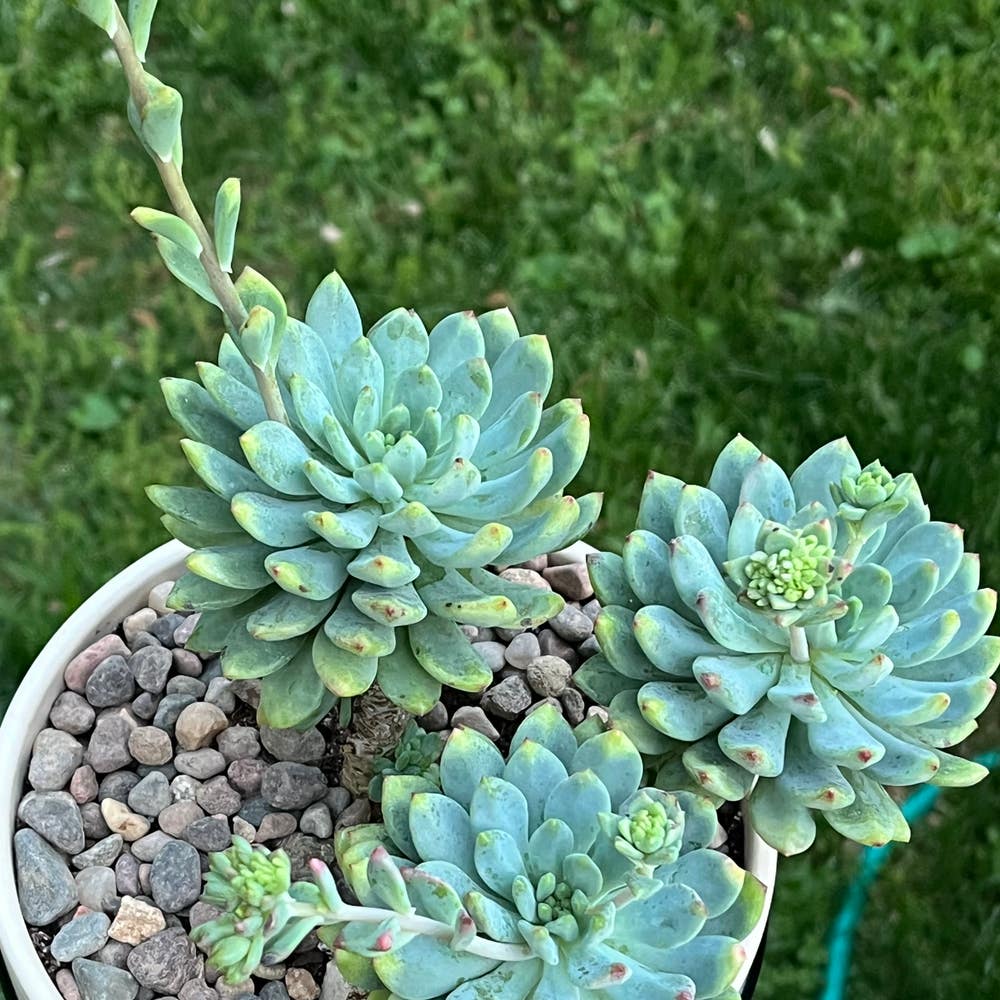
Black Spots on My Super Donkey Tail Leaves
Sedeveria 'Harry Butterfield'
By the Greg Editorial Team
Jun 18, 2024•4 min read
This article was created with the help of AI so we can cover more plants for you. May contain errors. See one? Report it here.
Banish black spots and keep your Super Donkey Tail 🌵 pristine with expert care tips! 🛡️
- Black spots signal trouble, often due to overwatering or poor air circulation.
- Inspect regularly for early detection; consider environmental factors like light and humidity.
- Prevent with proper watering, drainage, and environmental control to keep your plant healthy.
Spotting the Trouble: Recognizing Black Spots
🕵️ Visual Inspection
Black spots on Super Donkey Tail leaves are alarm bells. They're usually dark and circular, with potential feathery edges or concentric rings. Look for fungal fruiting bodies, tiny black dots within the spots, especially if a yellow halo is present. This isn't just a leaf's quirky feature; it's a cry for help.
Other symptoms to watch for include yellowing or wilting leaves. These aren't just aesthetic issues; they're signs of a plant's compromised health, affecting its ability to photosynthesize and thrive.
🕵️ Rooting Out the Causes
To pinpoint the culprits, assess your plant care routine. Overwatering and poor air circulation are common villains. Examine the spots' texture and color: fungal spots tend to be powdery, bacterial ones slimy.
Sun scorch or bruises? They leave their own marks. Sunburn shows up as brown spots with a scorched look, while physical damage often results in irregular black marks. Don't forget to check for pests, the silent saboteurs that can cause similar symptoms.
Remember, early detection is key. Regular inspections are like health check-ups for your plant. Catch issues early, and you'll save your Super Donkey Tail from becoming a polka-dotted spectacle.

The Detective Work: Diagnosing Black Spots
🔍 Environmental Check-Up
In the quest to diagnose black spots on your Super Donkey Tail, environmental factors take center stage. Lighting, humidity, and airflow are the usual suspects. Too much humidity and poor circulation invite fungal gatecrashers, while excessive direct sunlight acts like a magnifying glass, scorching leaves into submission.
🌱 Soil and Water Probe
Soil moisture and drainage aren't just dirt talk; they're critical clues in the black spot whodunit. Overly damp soil is a fungal fiesta waiting to happen. Your watering routine should be more rhythm than blues – consistent, measured, and mindful of the plant's actual thirst levels.

The Fix: Treating Black Spots
💧 Watering Wisdom
Watering is more art than science. Fine-tune your schedule; roots should sip, not swim. Check the soil's dryness before watering—think of it as a plant's thirst meter. Water at the base to avoid leaf wetness, and do it in the morning so the sun can work its drying magic.
🍄 Fungal Foes: Fight Back!
Fungi are the uninvited guests at your plant's party. Prune affected areas with tools as clean as a surgeon's scalpel. Aloe vera isn't just for sunburns; it's a post-op salve for your plant. For severe cases, bring out the fungicides or insecticidal soap. Remember, cleanliness is your plant's best friend—keep it all clean, from shears to soil.
💨 Airflow and Humidity Hacks
Airflow is the unsung hero in the fight against fungi. Ensure your plant's space isn't a fungal fiesta by promoting circulation. Think of it as social distancing for plants. If humidity is the enemy, your plant's dance floor needs to be less sticky and more breezy.
☀️ Sunburn Shielding
Sunburn isn't just a human hassle; plants suffer too. Gradually introduce your Super Donkey Tail to brighter spots, avoiding the midday scorch. Use shade cloths if the sun's rays are too harsh. It's about finding that sweet spot where your plant can bask without baking.

Keeping Spots at Bay: Prevention Tactics
💡 Environment Mastery
Lighting is crucial for your Super Donkey Tail. It craves bright, indirect sunlight. Too much direct sun can scorch leaves, while too little leaves it vulnerable to pests and disease. Find a sweet spot where the light is just right, like the glow from a north-facing window.
Air circulation should be on your radar. Stagnant air is a fungal party waiting to happen. Ensure there's enough airflow to discourage any spore shenanigans. A gentle fan or an open window can work wonders.
Humidity levels need monitoring. Your Super Donkey Tail isn't a fan of the tropics. Aim for a dry, comfortable atmosphere. If your bathroom feels like a sauna, it's time to rethink your plant's location or invest in a dehumidifier.
🚰 Watering Savvy
Watering is a balancing act. Too much, and you're inviting root rot; too little, and you'll have a dehydrated plant on your hands. Water when the top inch of soil feels dry, but don't let the plant sit in water. Think of it as a controlled sip, not a gulp.
Drainage is non-negotiable. Your Super Donkey Tail's roots hate wet feet. Ensure your pot has drainage holes, and the soil mix is gritty enough to let excess water escape. It's like wearing breathable shoes—comfort is key.
Cleanliness is a must. Keep your plant's area tidy to prevent pests and disease. Fallen leaves are an open invitation for trouble. Regularly inspect your plant and its pot, maintaining a clean environment like you would your own living space.
By mastering these prevention tactics, you're not just reacting to problems; you're setting the stage for a thriving, spot-free Super Donkey Tail. It's proactive plant parenting at its best.
⚠️ Safety First
This content is for general information and may contain errors, omissions, or outdated details. It is not medical, veterinary advice, or an endorsement of therapeutic claims.
Always consult a qualified healthcare professional before using any plant as food, medicine, or supplement.
Never eat any plant (or feed one to pets) without confirming its identity with at least two trusted sources.
If you suspect poisoning, call Poison Control (800) 222-1222, the Pet Poison Helpline (800) 213-6680, or your local emergency service immediately.
Spotted an error? Please report it here.
Keep your Super Donkey Tail spotless 🌿 with Greg's personalized care plan, ensuring perfect watering and environmental harmony for your plant's needs!