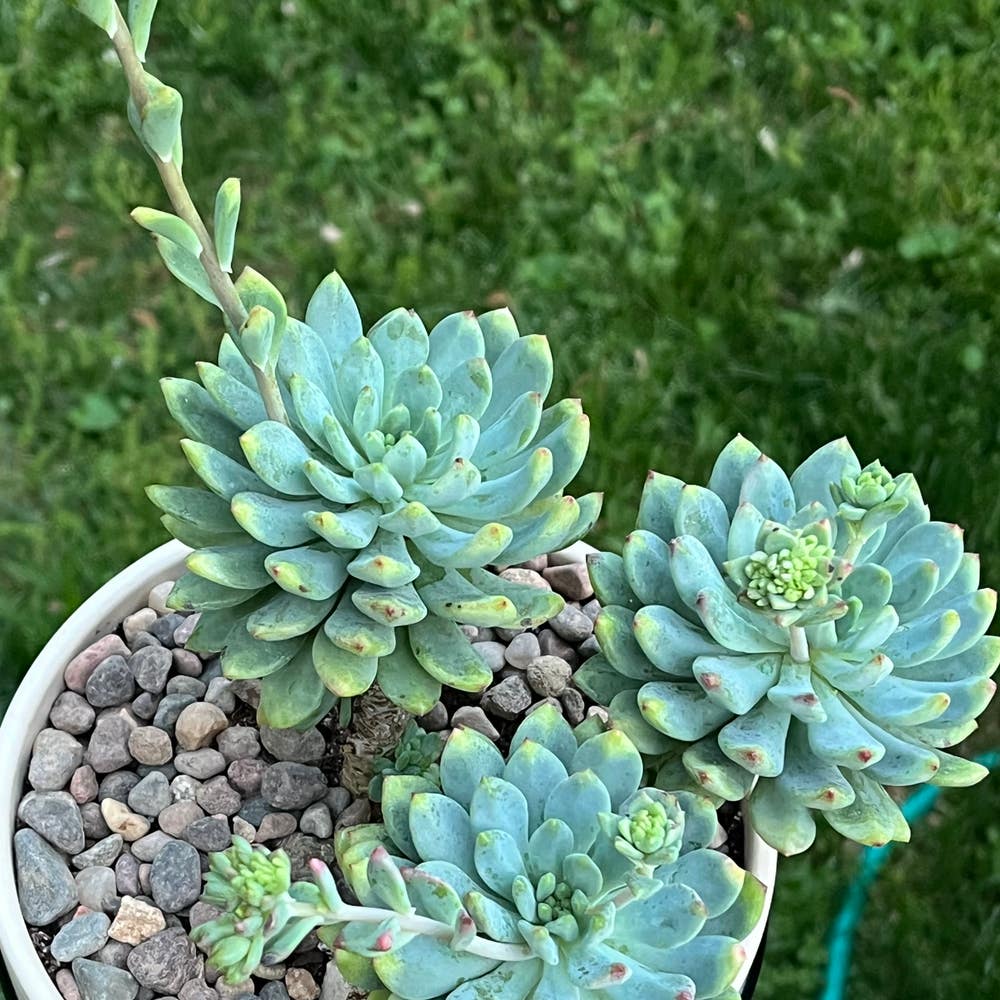
Why Are There Brown Spots on My Super Donkey Tail?
Sedeveria 'Harry Butterfield'
By the Greg Editorial Team
Jun 18, 2024•4 min read
This article was created with the help of AI so we can cover more plants for you. May contain errors. See one? Report it here.
Banish brown spots on your Super Donkey Tail 🌵 and keep it thriving with these proven plant care fixes! 🛠️
- Overwatering? Check for soggy soil and wilted leaves with brown spots.
- Sunburn spots are irregular, crispy, and faded, not a uniform tan.
- Fungal issues? Look for concentric rings or spots with a yellow halo.
Spotting the Culprit: Causes and Identification of Brown Spots
💧 Overwatering Woes
How to Tell if You're Overdoing the H2O
Overwatering is like giving your plant an unwanted bath. Check for soggy soil and a musty smell. Your Super Donkey Tail might have leaves that feel soft and look darker than the rest. These are the SOS signals of too much love in the liquid form.
Signs of Drowning Discontent
The lower leaves are the first to complain, sporting brown spots as their protest signs. If the leaves are more wilted than a forgotten salad, it's time to rethink your watering schedule.
☀️ Sunburn Scars
Spotting the Solar Overdose
Sunburn on plants is like a bad beach day – the top leaves get the brunt of it. Look for crispy edges and faded colors where the sun hits hardest. It's a clear sign your Super Donkey Tail has had too much fun in the sun.
Distinguishing Sun Damage from Other Culprits
Unlike the uniform tan of a sun-lover, sunburn spots are irregular and localized. They're the plant equivalent of forgetting to reapply sunscreen. If the spots are flat and lack a yellow halo, it's probably not a fungal fiesta.
🍄 Fungal Foes
Recognizing the Fungal Patterns
Fungal infections are like unwanted party crashers. They leave behind a mess of concentric rings or wet-looking spots. These are the graffiti tags of the fungal underworld on your Super Donkey Tail.
Visuals of Fungal Felons
If you see brown spots with a yellow halo or black ring, it's time to play detective. These are the footprints of a fungal invasion, and they mean business. Your plant's leaves might look like they've been in a tiny, leafy brawl.

Turning Over a New Leaf: Remedies for Brown Spots
💧 Fine-Tuning Your Watering Technique
Overwatering can turn your Super Donkey Tail's life into a soggy mess. Check the soil before you water—top inch dry? Go ahead. Make sure your pot has drainage holes; they're like escape routes for excess water. If you're unsure, use a chopstick as a makeshift moisture meter. Dry stick, thirsty plant. Remember, less is often more.
🌤 Shading from the Sun's Sharp Rays
Too much sun can barbecue your plant's leaves. Bright, indirect light is the sweet spot. If your plant's leaves are getting bleached, it's time to dial back on the sunbathing. Use a sheer curtain to soften harsh rays, or reposition your plant to a spot that gets filtered light. Gradual exposure is key; think of it as a slow dance rather than a mosh pit.
🦠 Fungicide to the Rescue
When fungi crash your plant's party, it's time for fungicide. Choose the right one for your plant's specific issue. Apply it as directed, and don't skimp on the aftercare. Improve airflow around your plant; it's like giving it room to breathe. Keep leaves dry and ensure the environment isn't a petri dish for future outbreaks.

Proactive Plant Parenting: Preventing Future Brown Spots
⏰ Consistent Care Schedule
Crafting a watering and lighting schedule is like setting an alarm clock for your plant's needs. It's not about drenching on a whim; it's about precision. Check the soil—if the top inch feels like a desert, it's time to water. If it's damp, hold off. Your Super Donkey Tail craves consistency, not surprises.
🌿 Environmental Harmony
Creating the ideal home environment is about more than just aesthetics. It's about crafting a space where your plant can thrive without the threat of brown spots. Ensure good airflow; stagnant air is a no-go. Keep humidity levels steady, aiming for that 40-60% sweet spot. And temperature? Avoid the rollercoaster—keep it stable. Your plant's not looking for thrills; it wants a chill life.

⚠️ Safety First
This content is for general information and may contain errors, omissions, or outdated details. It is not medical, veterinary advice, or an endorsement of therapeutic claims.
Always consult a qualified healthcare professional before using any plant as food, medicine, or supplement.
Never eat any plant (or feed one to pets) without confirming its identity with at least two trusted sources.
If you suspect poisoning, call Poison Control (800) 222-1222, the Pet Poison Helpline (800) 213-6680, or your local emergency service immediately.
Spotted an error? Please report it here.
Eradicate those brown spots on your Super Donkey Tail by letting Greg schedule 📅 your watering and care, ensuring a healthy, spot-free plant.