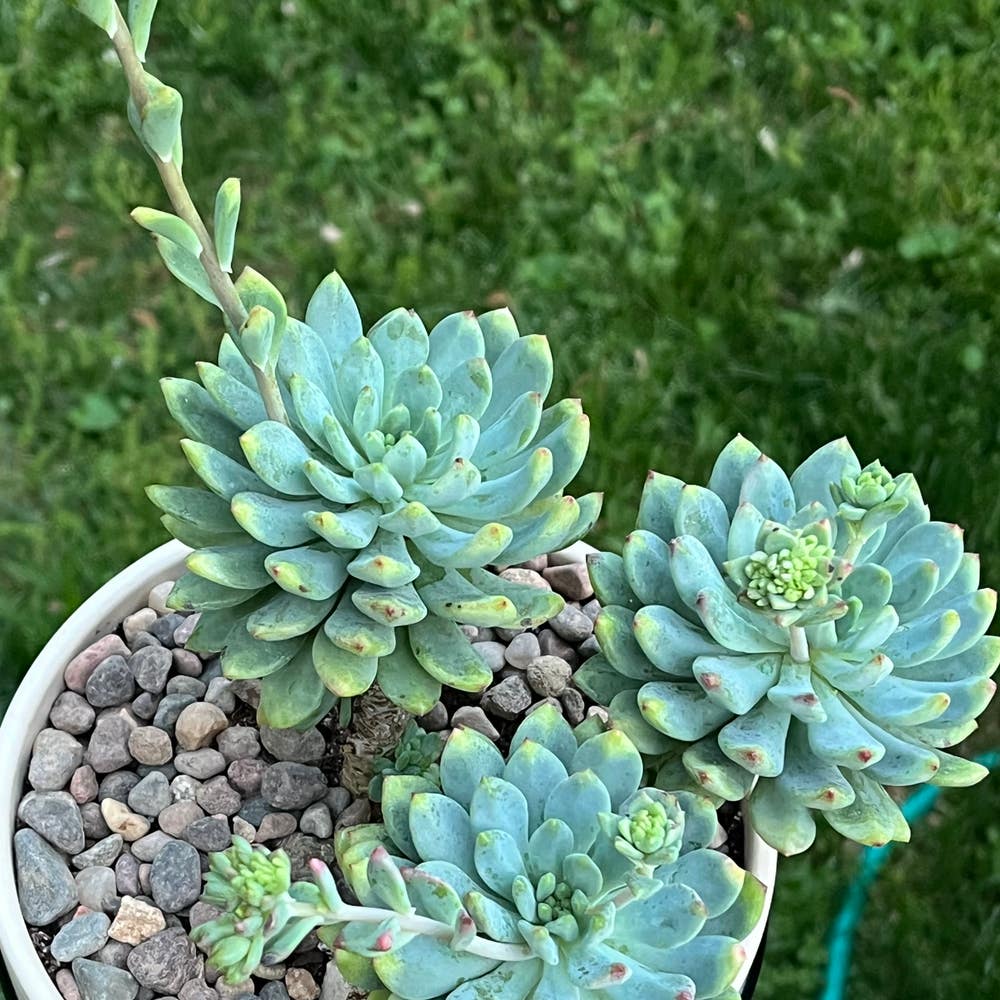
How Do I Fix Super Donkey Tail Root Rot?
Sedeveria 'Harry Butterfield'
By the Greg Editorial Team
Jun 18, 2024•3 min read
This article was created with the help of AI so we can cover more plants for you. May contain errors. See one? Report it here.
Rescue your Super Donkey Tail from root rot's clutches 🌵 with these vital recovery steps!
- 🍂 Yellow leaves and mushy stems signal root rot in Super Donkey Tail.
- ✂️ Trim damaged roots and use sterilized tools for plant recovery.
- 🌱 Well-draining soil and pot with drainage holes prevent future rot.
Spotting the Trouble: Signs of Root Rot in Your Super Donkey Tail
🚩 Visual Red Flags
Yellowing leaves and mushy stems are your Super Donkey Tail's cry for help. These symptoms are the plant's equivalent of a white flag, signaling that all is not well beneath the soil.
Roots should be firm and white, but if you're seeing dark, soft roots, it's time to take action. This is the root rot red alert, and it means your plant's health is compromised.
👃 Smell and Texture: Confirming Your Suspicions
A foul odor emanating from the pot is the stench of decay, and it's as bad as it sounds for your succulent's roots.
When you touch the roots, they should be resilient, not soggy. If they feel like they've been soaking in a swamp, it's a tactile testament to root rot's presence.

First Aid for Root Rot: Emergency Care Steps
🌱 Getting Your Hands Dirty: Unpotting and Root Inspection
Gently unpot your Super Donkey Tail, being mindful of its delicate state. Brush away the soil to inspect the roots. Look for firm, white roots; dark, mushy ones signal trouble.
🏥 Surgical Precision: Trimming the Damage
With sterilized scissors, cut away the rotten roots. It's a delicate operation: remove only the damaged parts to give your plant a fighting chance.
🏡 Rehoming Your Plant: Soil and Pot Considerations
Choose a well-draining soil mix and a pot with adequate drainage holes. This new environment will support recovery and discourage future root rot.

Water Wisely: Adjusting Your Watering Routine
💧 The Goldilocks Principle: Not Too Much, Not Too Little
Finding the sweet spot for watering your Super Donkey Tail is crucial. Check the soil; if the top two inches are dry, it's time to water. Be flexible and adjust to your plant's needs, which can change with the environment.
🕰 The Art of Drying Out: Timing Is Everything
To determine when your Super Donkey Tail is thirsty, feel the soil. It should be dry about an inch down before you water again. This simple test helps avoid both underwatering, which can lead to wilt, and overwatering, which risks root rot.

Future-Proofing Against Root Rot
🌱 The Right Foundation: Soil and Pot Essentials
Soil mix is your Super Donkey Tail's best defense against root rot. Aim for a light and airy blend—think perlite, coco coir, or vermiculite. These additions prevent compaction, allowing roots to dance freely without drowning.
Drainage holes are a must. No ifs, ands, or buts. Ensure they're clear of obstructions. A pot's bottom without holes is like a pool without a drain—trouble waiting to happen.
🌿 Creating the Ideal Environment
Humidity and airflow are the yin and yang of your plant's world. Too much moisture in the air? You're asking for trouble. Keep it balanced—enough to keep the leaves perky, not so much that the roots get soggy.
Airflow is the silent guardian of root health. A gentle breeze, natural or from a fan, can ward off moisture build-up. No need for gale-force winds, just a whisper of movement to keep things fresh.
Remember, it's about creating a throne for your succulent, not a swamp. Keep these tips in mind, and your Super Donkey Tail will be less 'help me' and more 'look at me thrive'.
⚠️ Safety First
This content is for general information and may contain errors, omissions, or outdated details. It is not medical, veterinary advice, or an endorsement of therapeutic claims.
Always consult a qualified healthcare professional before using any plant as food, medicine, or supplement.
Never eat any plant (or feed one to pets) without confirming its identity with at least two trusted sources.
If you suspect poisoning, call Poison Control (800) 222-1222, the Pet Poison Helpline (800) 213-6680, or your local emergency service immediately.
Spotted an error? Please report it here.
Combat root rot and ensure your Super Donkey Tail thrives with Greg's timely watering reminders 🚿, tailored to keep your soil just right.