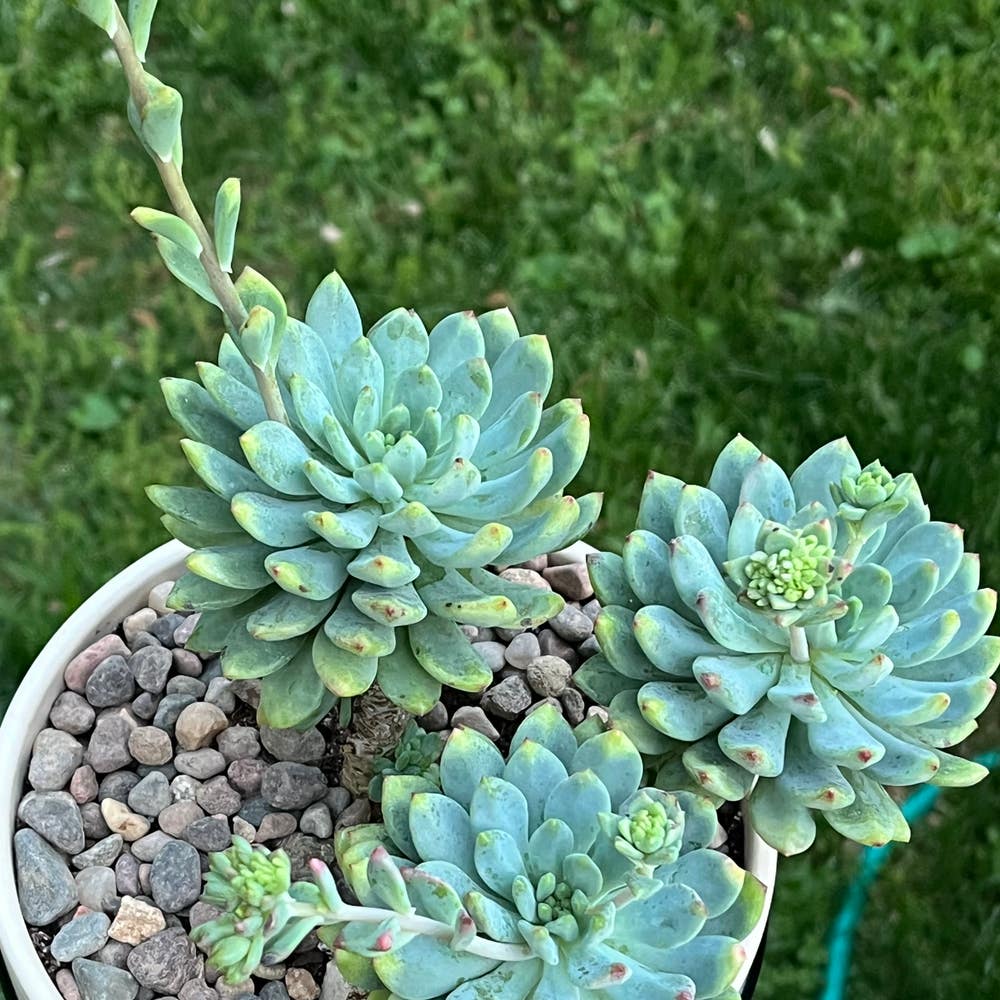
🌞 Is My Super Donkey Tail Getting Too Much Direct Sunlight?
Sedeveria 'Harry Butterfield'
By the Greg Editorial Team
Jun 18, 2024•5 min read
This article was created with the help of AI so we can cover more plants for you. May contain errors. See one? Report it here.
Shield your Super Donkey Tail from sunburn by mastering the art of perfect light balance. 🛡️🌞
- 🌞 Brown/white patches on leaves indicate Super Donkey Tail sunburn.
- 4-6 hours of sunlight daily is ideal; direct sun can harm.
- East-facing windows are best; adjust location with seasons for optimal light.
Spotting Sunburn on Your Super Donkey Tail
🌞 Tell-tale signs of too much sun
Sunburn on your Super Donkey Tail manifests as brown or white patches on the leaves. These discolored areas may start off yellow or white and gradually turn brown, indicating damage. Crispy edges or spots are another red flag, showing that the plant's tissues have been fried by excessive sunlight.
How sunburn differs from other plant stress symptoms
Unlike other stress symptoms, sunburn is localized to the areas most exposed to the sun. Overwatering, for example, often leads to uniformly yellow leaves, while sunburnt leaves have blotchy, sun-kissed spots. If your plant's leaves are looking more bleached than vibrant, it's a sign to reassess its sunbathing habits. Remember, sunburn is irreversible but preventable, so keep an eye out for these warning signs and act quickly to adjust your plant's exposure to sunlight.

Sunlight Needs of Super Donkey Tail
🌞 Super Donkey Tail's natural love for light: How much is just right?
Super Donkey Tail plants are sunlight aficionados. They thrive with at least 4-6 hours of sunlight daily. Yet, there's a catch. While they bask in the glory of bright rays, direct sunlight can be a double-edged sword. It's essential to strike a balance to prevent the dreaded sunburn.
🌅 The fine line between basking and baking: Tolerance levels
The Super Donkey Tail's tolerance for sunlight is not infinite. Direct light is their cocktail of choice, but too much can lead to a nasty hangover in the form of leaf burn. Indirect light is the hydration they need to keep from drying out. Keep your plant close to a window, but not so close that it's baking in the sun's full force. It's about finding that sweet spot where the plant can soak up the rays without withering away.

The Window Dilemma: Where to Place Your Plant
🌅 Decoding Window Directions for Super Donkey Tail's Best Tan
East-facing windows are your Super Donkey Tail's morning coffee spot. They serve up a gentle sunrise that warms without scorching. It's the kind of light that says, "Rise and shine," not "I'm going to fry you alive."
South-facing windows in the Northern Hemisphere are the solar equivalent of a beach vacation—intense and direct. Your plant might enjoy it for a bit, but too long without shade, and you'll have a sunburnt succulent on your hands.
West-facing windows come with a plot twist: an afternoon of drama. They start off mild and then BAM!—afternoon blaze. It's like a surprise workout for your Super Donkey Tail that it didn't sign up for.
North-facing windows are the chill zone. Consistent, indirect light that won't stress your plant out. It's like a steady job that pays the bills without the burnout.
🌐 Hemisphere Highlights: Adjusting for Your Location
In the Southern Hemisphere, flip everything upside down. South-facing windows are now the laid-back ones, and north-facing is where the sun throws its party.
Seasons are fickle friends. They change the sun's angle, so play musical chairs with your plant. Closer to the window in winter, a step back in summer. It's like adjusting your seat at a concert for the best sound—only it's for light.
Sheer curtains can be your Super Donkey Tail's sunscreen. They filter the harsh rays, giving your plant that glow without the threat of a sunburn.
Proximity matters. A few feet from the window can be the difference between thriving and diving. It's like finding the right spot in a pool to get just enough sun without turning into a lobster.
Remember, your home is unique. That big oak tree outside, the size of your windows, the color of your walls—all these factors play into where your Super Donkey Tail should sunbathe. It's a personal touch to plant care that makes all the difference.

Protecting Your Super Donkey Tail from Sun Overdose
🎨 Creative Shading Techniques: When and How to Use Them
Shade cloth is your Super Donkey Tail's new best friend. It's like sunscreen for plants. Drape it when the sun's relentless, especially during peak hours.
Adjustable blinds or sheer curtains? They're not just for your privacy. Use them to diffuse that harsh midday glare.
Got a patio umbrella? It's not just for your lemonade breaks. Pop your plant under it to give it a break from the solar beatdown.
🚚 The Relocation Rescue: Moving Your Plant to a Happier Spot
If your Super Donkey Tail is crisping up, it's time for a change of scenery. Morning light is the golden hour for these succulents.
Rotate regularly. Every side deserves its moment in the sun, minus the sunburn.
Is it leaning like it's trying to escape? Shift it a few inches back from the window. It's a simple move that can save your plant from a meltdown.
Observe and act. Brown tips? Droopy leaves? Your plant is crying out for a cooler spot. Listen to it.
Remember, your Super Donkey Tail isn't a cactus. It doesn't want to live in the desert. Keep it happy and hydrated, with just the right amount of sunbathing.
⚠️ Safety First
This content is for general information and may contain errors, omissions, or outdated details. It is not medical, veterinary advice, or an endorsement of therapeutic claims.
Always consult a qualified healthcare professional before using any plant as food, medicine, or supplement.
Never eat any plant (or feed one to pets) without confirming its identity with at least two trusted sources.
If you suspect poisoning, call Poison Control (800) 222-1222, the Pet Poison Helpline (800) 213-6680, or your local emergency service immediately.
Spotted an error? Please report it here.
Ensure your Super Donkey Tail thrives 🌞 with Greg's PlantVision, which helps you find the perfect spot with just the right light, preventing those pesky sunburns!