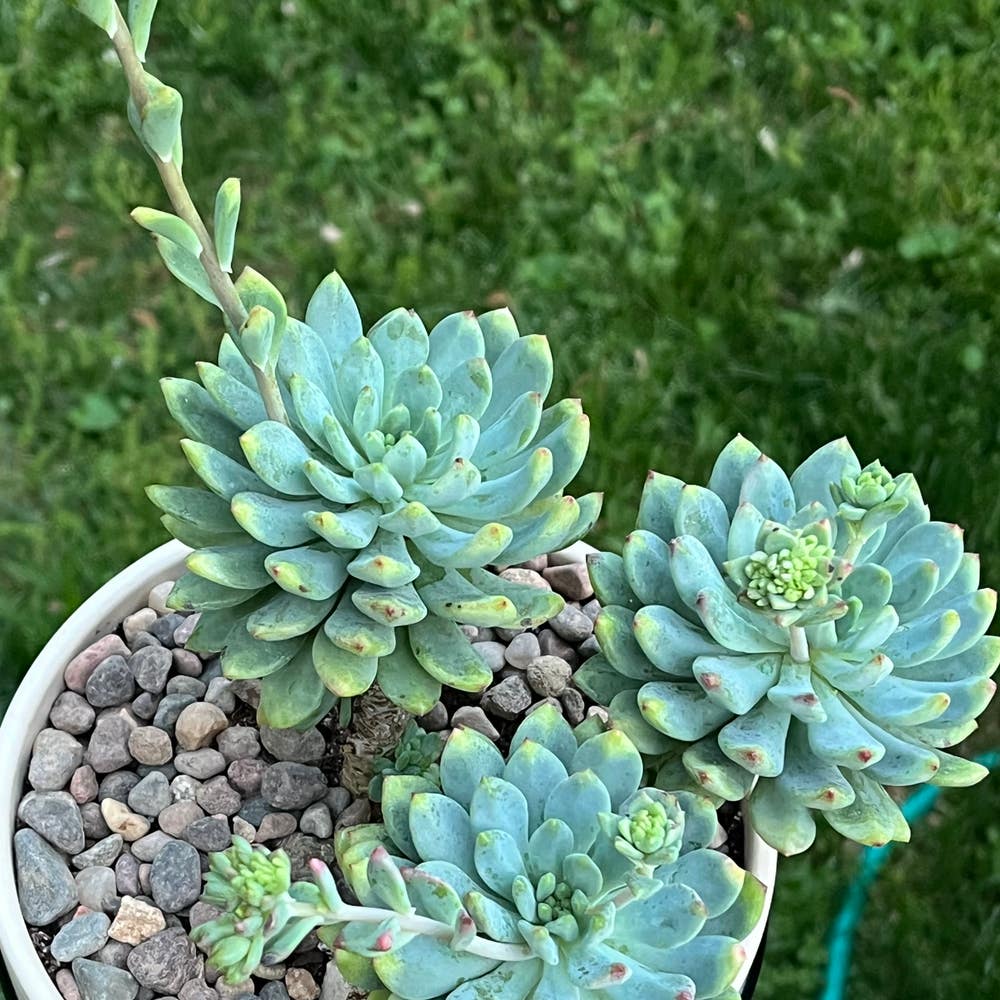
🍂 Why Is My Super Donkey Tail Dropping Leaves?
Sedeveria 'Harry Butterfield'
By the Greg Editorial Team
Jun 18, 2024•5 min read
This article was created with the help of AI so we can cover more plants for you. May contain errors. See one? Report it here.
Prevent leaf loss and perk up your Super Donkey Tail 🌵 with these essential care tips!
- Mass leaf drop signals distress, while natural shedding is normal.
- Overwatering causes soft stems, underwatering leads to wilted, crispy leaves.
- Bright, indirect light and 65-75°F keep Super Donkey Tail happy.
Spotting Trouble: Signs Your Super Donkey Tail Is Unhappy
🚨 Natural vs. Unnatural Leaf Drop
Natural leaf drop is part of the Super Donkey Tail's life cycle, especially in the lower leaves. However, when leaves fall en masse or from all over the plant, it's a red flag.
🚑 Telltale Symptoms of Distress in Super Donkey Tail
Discoloration or spotting on leaves often signals distress. Look for brown or yellow patches, which can indicate sunburn, overwatering, or fungal issues.
Shriveled leaves near the bottom or smaller leaves than usual suggest dehydration. If your plant's leaves are reaching for the window like sun-starved zombies, it's craving more light.
Gray or dull green leaves hint at too much direct sunlight, while a waxy appearance is the plant's built-in SPF.
Stems turning soft or leaves wilting without dry soil are classic overwatering symptoms. Conversely, leaves that shrivel and shrink are crying out for water.
Pests like mealybugs or aphids can also cause leaf drop. They're uninvited guests that overstay their welcome, so show them the door with insecticidal soap or a manual eviction.
Remember, the Super Donkey Tail is a drama queen that will drop leaves at the slightest discomfort. Stay observant and act fast to keep it from throwing a full-blown tantrum.

Water Woes: Striking the Right Balance
🌊 The Perils of Overwatering
Overwatering is like giving your plant a never-ending bath. Root rot can sneak in when the soil is more waterlogged than a sunken ship. Look for leaves that droop more than a teenager on Monday morning. If the soil sticks to your fingers as if begging for mercy, it's time to ease up on the H2O.
🏜️ The Thirsty Plant: Signs of Underwatering
On the flip side, underwatering turns your Super Donkey Tail into a desert dweller without the survival skills. Watch for wilting leaves that crisp up faster than bacon in a hot pan. If the soil is so dry it repels water like a bad joke, your plant is sending an SOS for hydration.
💧 Tips for Perfect Watering Practices
To hit the watering sweet spot, soak the soil until it runs free from the drainage holes—think of it as a mini monsoon for your pot. Then, let it drain like you're straining pasta; soggy bottoms are a no-no. Keep tabs on the soil's thirst level; if it's parched, it's time for a drink. Forgetful? Set a reminder or consider a self-watering pot to keep your plant's drinking schedule on track. Remember, your plant's thirst isn't ruled by the calendar but by conditions. Use a moisture meter if you want to take the guesswork out of the game.

Light and Temperature: Creating the Ideal Environment
⛅️ The Goldilocks of Sunlight: Not Too Much, Not Too Little
Super Donkey Tail plants are like that friend who can't decide if they're too hot or too cold. Bright, indirect light is their jam. Stick them in a spot that gets a solid 4-6 hours of sunlight, but keep those rays gentle. Direct sunlight is a big no-no—it's the equivalent of a leafy sunburn.
🌡️ Keeping It Cozy: Temperature Tips for Super Donkey Tail
When it comes to temperature, Super Donkey Tail plants are pretty chill, but they do have their limits. Aim for a comfort zone between 65-75°F (18-24°C). Anything below 50°F (10°C) and you're entering risky business. And remember, consistency is key—avoid placing your plant near drafty windows or heating vents that could cause sudden temperature swings.

Root and Pot Patrol: Ensuring a Healthy Foundation
🌱 Unearthing Root Health: Avoiding Root Rot
Root rot is the silent killer of Super Donkey Tail plants. It's a stealthy issue that arises from overwatering or poor drainage. To prevent this soggy disaster, ensure your soil is more like a sieve and less like a swamp. Check for mushy stems—they're a red flag. If you find them, it's surgery time: cut off the rot, dip the remains in fungicide, and give it a fresh start in airy soil.
🏡 The Right Home: Potting and Soil Selection
Choosing the right pot is like picking a house with good bones—it's all about the foundation. Drainage holes are a must; think of them as your plant's lifeline. Adding a layer of pebbles at the bottom of the pot isn't just for looks; it's like the plumbing system that prevents root rot floods.
When it comes to soil, aim for the perfect mix. It should be the plant equivalent of a comfy bed—rich in nutrients, but with enough grit, perlite, or pumice to keep things light and breathable. Remember, a well-draining home is a happy home for your Super Donkey Tail's roots.
Regularly check if your plant is becoming rootbound. If the roots are taking over the pot like an overgrown garden, it's time to upgrade to a larger pot. Think of it as moving to a bigger house with more room to grow.
Keep your soil well-aerated and avoid compaction. Mix in some organic matter regularly to keep it fluffy. Your plant's roots need to breathe, not be squished like sardines in a can.
In summary, keep those roots dry and the soil life-supportive, and your Super Donkey Tail will thank you with vibrant health.
⚠️ Safety First
This content is for general information and may contain errors, omissions, or outdated details. It is not medical, veterinary advice, or an endorsement of therapeutic claims.
Always consult a qualified healthcare professional before using any plant as food, medicine, or supplement.
Never eat any plant (or feed one to pets) without confirming its identity with at least two trusted sources.
If you suspect poisoning, call Poison Control (800) 222-1222, the Pet Poison Helpline (800) 213-6680, or your local emergency service immediately.
Spotted an error? Please report it here.
Ensure your Super Donkey Tail stays lush and robust 🍃 by letting Greg tailor a care schedule that prevents overwatering and optimizes light exposure, warding off those pesky leaf drops.