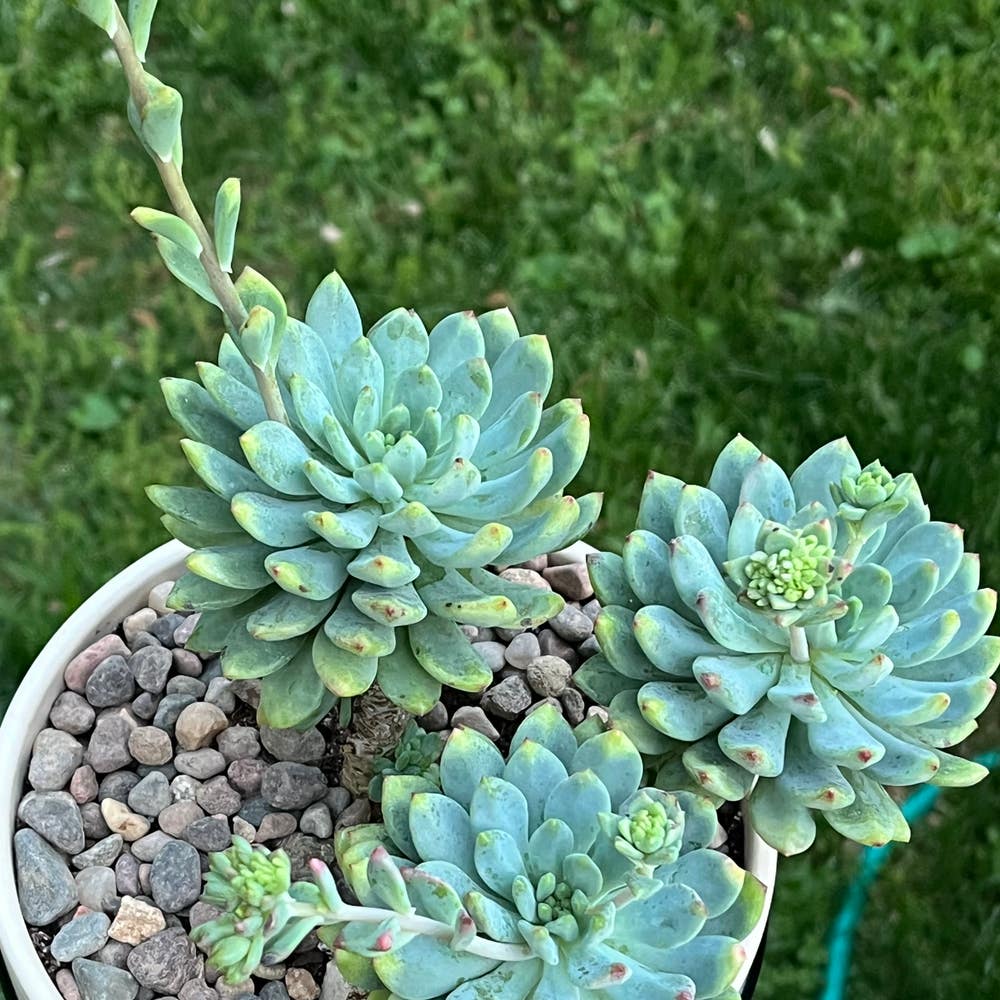
🐴 How and When Should I Cut Back My Super Donkey Tail?
Sedeveria 'Harry Butterfield'
By the Greg Editorial Team
Jun 18, 2024•3 min read
This article was created with the help of AI so we can cover more plants for you. May contain errors. See one? Report it here.
Snip your way to a thriving Super Donkey Tail 🌵 with timely pruning secrets for lush growth!
- 🌱 Prune in spring during growth spurts for best results.
- ✂️ Use sterilized, sharp tools for clean cuts; don't over-prune.
- 🚫 Post-pruning care: Avoid overwatering and let cuts heal naturally.
Best Time to Give Your Super Donkey Tail a Haircut
🌱 Seasonal Timing for Pruning
Spring is the prime time for giving your Super Donkey Tail a trim. This season aligns with the plant's natural growth spurt, allowing it to recover quickly and put energy into new, vibrant growth. If you're seeing new shoots or the plant seems to be waking up from its winter slumber, it's a good indicator that it's ready for pruning.
📋 Pre-Pruning Checklist
Before you start snipping away, perform a quick health check. Ensure your plant is free from pests and diseases, as pruning a stressed plant can do more harm than good. Also, consider the environment; your Super Donkey Tail should be in a well-ventilated area with temperatures between 65-75°F (18-24°C) to facilitate healing post-trim. Avoid pruning if the plant is exposed to temperatures below 50°F (10°C) for extended periods, as this can increase the risk of damage.

Pruning Like a Pro
🛠️ Gear Up: Tools You'll Need
Pruning your Super Donkey Tail starts with sterilization. Before you make a single cut, ensure your shears or scissors have had a dip in rubbing alcohol or a bleach solution. This isn't just a nicety; it's a non-negotiable step to prevent disease spread.
Sharpness is your next priority. Blunt tools can do more harm than good, crushing stems instead of slicing through them. A sharpening stone can keep your pruning shears in top condition. And remember, sometimes a simple pair of scissors is all you need for the delicate snips.
🌱 The Art of the Snip
First, inspect your plant for dead or damaged leaves. These are your primary targets. When you're ready to cut, aim to snip close to the base but leave a tiny margin to protect the main stem. Precision is key; you're giving a haircut, not shearing a sheep.
Remember, remove no more than 25% of the plant. Overdoing it can stress your Super Donkey Tail, stunting its growth. It's about enhancing its natural shape, not reinventing it. After pruning, dispose of the cuttings or set them aside if you're planning to propagate.
🌿 After the Cut: Caring for Your Pruned Plant
Post-pruning care is straightforward but crucial. Your plant will need a little TLC to recover from its trim. Ensure it has enough light and the right amount of water to encourage new growth. But be patient; it's not a race. Watch for signs of recovery and growth, which will indicate your Super Donkey Tail is back on track.

Pruning Pitfalls: How Not to Turn Trimming Tragic
🌱 Overzealous Cutting: Finding the Balance
Pruning your Super Donkey Tail isn't a free-for-all; it's a delicate dance. Less is more—avoid the temptation to give your plant a drastic makeover. Over-pruning can stress the plant, like asking it to bounce back from a marathon it never trained for. Aim to remove no more than one-third of the plant's mass in a single session to prevent shock and preserve its lush appearance.
🚱 Post-Pruning No-Nos
After you've made the cut, the real work begins. Overwatering is the silent killer lurking in your watering can. Your Super Donkey Tail needs time to heal; let the soil dry out before giving it another drink. And forget about slathering cuts with tar or paint; these outdated practices can do more harm than good. Instead, trust in your plant's natural ability to heal. Keep an eye on growth and resist the urge to pamper—sometimes the best care is to step back and let nature take the lead.

⚠️ Safety First
This content is for general information and may contain errors, omissions, or outdated details. It is not medical, veterinary advice, or an endorsement of therapeutic claims.
Always consult a qualified healthcare professional before using any plant as food, medicine, or supplement.
Never eat any plant (or feed one to pets) without confirming its identity with at least two trusted sources.
If you suspect poisoning, call Poison Control (800) 222-1222, the Pet Poison Helpline (800) 213-6680, or your local emergency service immediately.
Spotted an error? Please report it here.