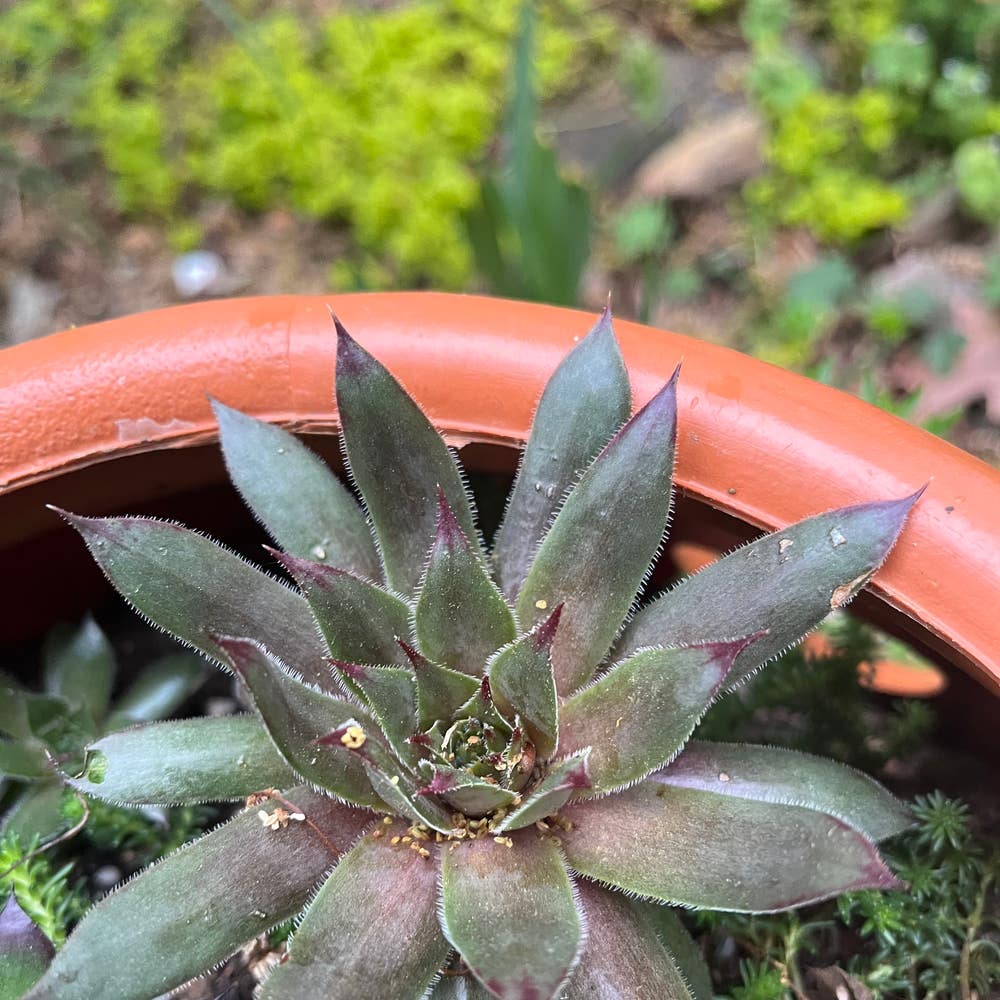
Why Are My Sedeveria 'Dark Elf' Leaves Curling?
Sedeveria 'Dark Elf'
By the Greg Editorial Team
Jun 18, 2024•4 min read
This article was created with the help of AI so we can cover more plants for you. May contain errors. See one? Report it here.
Solve your Sedeveria's leaf-curl riddle 🍃 and keep it thriving with our expert care tips!
- 🌞 Too much sun causes bleached colors and burned edges on leaves.
- 💧 Adjust watering and soil drainage to prevent over/underwatering and root rot.
- 🐜 Check for pests regularly and use appropriate treatments to keep them at bay.
When Your Plant Gets Too Much Sun (Or Not Enough)
🕶️ Spotting the Signs of Light Stress
Curling leaves on your Sedeveria 'Dark Elf' can be a red flag for light stress. If they're reaching skyward, they're probably starved for sunlight. Conversely, leaves that resemble crispy critters might be suffering from a sun overdose. Watch for bleached colors or burned edges, which scream "I'm getting scorched!"
🌞 Sunbathing vs. Shade-Loving
Finding the Goldilocks zone for your 'Dark Elf' is key. Bright, indirect light is the sweet spot. If your plant's leaves are throwing a tantrum with browning tips, it's time to dial back the sun exposure. Rotate the pot regularly to ensure even growth and prevent one-sided sun stress. If the light is too low, your plant's growth may become stretched and leggy. Consider moving it to a sunnier window or using grow lights to simulate the ideal conditions. Remember, as the seasons change, so should your plant's spot in your home.

The Thirst Quenching Balance: Watering Your Sedeveria 'Dark Elf'
💧 Telltale Signs of Water Woes
Overwatering turns your Sedeveria 'Dark Elf' into a soggy mess. Look for leaves that are yellow, swollen, or even bursting at the seams. If the soil feels like a wet sponge, it's a red flag. Underwatering, on the other hand, leaves your plant looking deflated and wrinkled, as if it's been on a diet of sand. The soil will be bone-dry, and the leaves may curl upwards, begging for hydration.
💦 Getting Watering Just Right
To unfurl those leaves, it's all about balance. Water your Sedeveria when the soil's top inch feels like a dry summer day. If it's damp, skip the watering can. Remember, this isn't a one-size-fits-all; adjust your routine with the seasons. More water may be needed during heat waves, less when it's cooler. If you've been neglectful and your plant's parched, give it a thorough soak. Submerge the pot for a good 5-10 minutes, then let it drain. If you've overdone it, and your plant's drowning, dry those roots out and keep an eye on them for any signs of rot.

Soil: The Foundation of Succulent Health
🌊 The Perils of Poor Drainage
Poor drainage is a silent assassin for Sedeveria 'Dark Elf'. If your plant's leaves are curling, the soil might be holding a grudge, trapping more water than a dam. Root rot sets in when roots soak in moisture like a sponge, leading to curled leaves as a cry for help.
To tweak the soil, consider the texture. Your plant's roots crave a mix that's more breathable than a pair of mesh sneakers. Add in coarse materials like perlite or pumice to make the soil less clingy and more forgiving when water comes around.
🍲 Mixing the Perfect Home for Your 'Dark Elf'
Creating the ideal soil mix is like being a gourmet chef for your plant. Start with a succulent or cactus mix as your base; it's already formulated to avoid waterlogging.
Enrich this mix with sand or crushed pebbles to promote dignity in drainage. The goal is to craft a soil that's as supportive as a best friend, allowing roots to spread out without the fear of water-induced suffocation. Remember, a happy root system means happy, uncurled leaves.
If you're not into DIY, grab a pre-mixed bag from your local garden center. Just make sure it's got the right particle size—about 1/4″—to prevent your 'Dark Elf' from throwing a fit.

Tiny Pests, Big Problems
🐜 Unwanted Guests: Identifying Pests
Pests are stealthy invaders that can wreak havoc on your Sedeveria 'Dark Elf'. Aphids, spider mites, and mealybugs are the usual suspects. Check the undersides of leaves and stems for tiny bugs or webbing. If you spot these signs, your plant is hosting a pest party.
🚪 Evicting Pests and Keeping Them Out
To kick pests out, start with a water blast or insecticidal soap. For stubborn cases, a miticide may be necessary. Prevention is key: introduce beneficial insects or apply neem oil as a deterrent. Regular plant check-ups are your best defense against future infestations.
⚠️ Safety First
This content is for general information and may contain errors, omissions, or outdated details. It is not medical, veterinary advice, or an endorsement of therapeutic claims.
Always consult a qualified healthcare professional before using any plant as food, medicine, or supplement.
Never eat any plant (or feed one to pets) without confirming its identity with at least two trusted sources.
If you suspect poisoning, call Poison Control (800) 222-1222, the Pet Poison Helpline (800) 213-6680, or your local emergency service immediately.
Spotted an error? Please report it here.
Ensure your Sedeveria 'Dark Elf' thrives with perfectly-timed 🕓 watering and light reminders from Greg, preventing those pesky curling leaves.