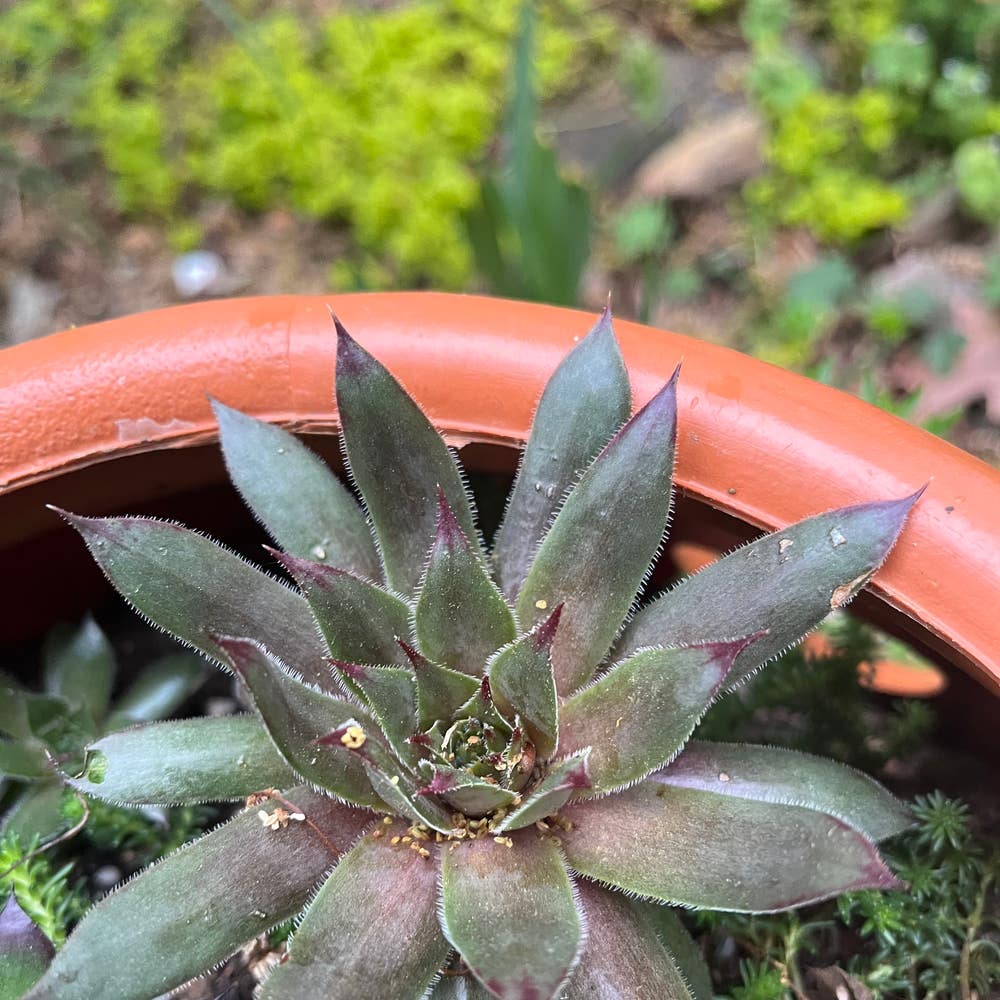
Black Spots on My Sedeveria 'Dark Elf' Leaves
Sedeveria 'Dark Elf'
By the Greg Editorial Team
Jun 18, 2024•5 min read
This article was created with the help of AI so we can cover more plants for you. May contain errors. See one? Report it here.
Banish black spots on your Sedeveria 'Dark Elf' 🍃 with our expert rescue and prevention guide!
- Black spots signal trouble, from fungal issues to sunburn or infections.
- Adjust watering and light to prevent and treat black spots.
- Quarantine and prune to manage bacterial or viral infections.
Spotting the Trouble: Recognizing Black Spots
🕵️ What Do These Black Spots Look Like?
Black spots on Sedeveria 'Dark Elf' leaves are the plant's version of a distress signal. They often start as tiny specks under ⅛ inch in diameter and can grow or merge into larger blotches. These spots are not just blemishes; they're a sign of potential trouble brewing beneath the surface.
🌿 Where Do They Like to Hang Out on Your Plant?
The spots prefer the undersides of leaves, making them a bit of a stealthy adversary. Regularly flipping leaves during inspections is crucial for early detection. If you notice the spots are spreading or the leaf texture changes, it's time to take action. Keep an eye out for discolored patches or changes in texture, as these are tell-tale signs that black spots are taking hold.

Playing Detective: Figuring Out the Culprit
🍄 Fungal Foes
Circular or irregular black spots on your Sedeveria 'Dark Elf' are like red flags waving at you. These spots, sometimes with a powdery texture, indicate a fungal invasion. Overwatering is the main suspect here, turning your plant's soil into a fungal frat house.
☀️ Sunburn Scars
If your Sedeveria 'Dark Elf' looks like it's wearing a patchy tan, it's likely been sunbathing too long. The most light-exposed areas will show black spots from sunburn. It's a clear sign that your plant needs a break from the intense rays.
🦠 Bacterial and Viral Villains
Subtle yet sinister, bacterial and viral infections leave behind water-soaked lesions or discolored patches. These symptoms are your plant's SOS, signaling a microscopic menace at work. Keep an eye out for any unusual patterns or growths that could indicate such an infection.

The Rescue Mission: Treating Black Spots
🍄 Fungus Among Us: Kicking Fungal Infections to the Curb
Adjust your watering habits immediately. Sedeveria 'Dark Elf' is not a fan of wet feet. Ensure the soil is dry before you water again, and when you do, water the soil directly, not the leaves. This isn't just a good practice; it's a game-changer for preventing fungal parties.
Antifungal treatments are your next line of defense. Neem oil can be a gentle yet effective option for early signs of trouble. For more severe cases, consider a fungicide like Aliette or Subdue. Apply in the evening to avoid leaf burn and follow the label instructions like your plant's life depends on it—because it does.
☀️ Sunburn Soothers
Gradually introduce your Sedeveria to sunlight. Think of it as a slow dance rather than a mosh pit. Start with morning light, which is gentler, and increase exposure incrementally.
Create a sun-shielding sanctuary. Use a sheer curtain or move the plant to a spot with dappled light. It's like sunglasses for your Sedeveria—stylish yet functional.
🦠 Bacterial and Viral Infection Interventions
Quarantine is not just for humans. Isolate your infected plant to prevent the contagion from spreading. It's like the plant version of social distancing.
When it's time for surgical leaf removal, be decisive. Remove infected parts with sterilized scissors. It's a tough love approach, but sometimes you have to lose a leaf to save the plant. Remember, cleanliness is next to godliness here, so clean those cuts.

Keeping Your Plant Spotless: Prevention Tips
💧 Watering Wisdom: Finding the Balance
Consistency is your best friend when it comes to watering your Sedeveria 'Dark Elf'. Overwatering is like throwing a pool party for fungi—unwanted guests will thrive. Instead, aim for moist soil that's not soggy. Use pots with drainage holes to prevent water from overstaying its welcome.
☀️ Sunlight Smarts: Providing the Perfect Amount of Light
Your Sedeveria 'Dark Elf' loves sunlight, but not too much. Think of bright, indirect light as the plant's ideal spa day—relaxing but not overbearing. If your plant's leaves start looking like they've had a bit too much sun, it's time to move it to a shadier spot. Rotate the pot regularly to ensure even exposure and prevent sunburn.
🧼 Cleanliness is Next to Godliness
Keep those leaves clean to ensure maximum photosynthesis and minimize disease risk. A gentle wipe with a damp cloth can be as beneficial for your plant as a daily vitamin is for you. Plus, it's a chance to inspect for any early signs of trouble.
💨 Airflow Without the Draft
Good air circulation is like a breath of fresh air for your plant—it helps keep the leaves dry and disease at bay. Place your Sedeveria near a fan or in a breezy area, but avoid direct drafts that could cause temperature stress.
The Right Potting Mix
Choose a well-draining potting mix that's like a cozy bed for your plant's roots—comfortable but not waterlogged. It's the plant equivalent of a memory foam mattress that also repels water.
Timing is Everything
Water your Sedeveria 'Dark Elf' in the early morning, so the leaves have time to dry out during the day. This simple timing trick can make a world of difference in preventing fungal growth.
The Bigger Picture
Remember, prevention isn't just about one aspect of care—it's about creating a harmonious environment that supports your plant's overall health. Keep a watchful eye, and your Sedeveria 'Dark Elf' will reward you with its spotless beauty.
⚠️ Safety First
This content is for general information and may contain errors, omissions, or outdated details. It is not medical, veterinary advice, or an endorsement of therapeutic claims.
Always consult a qualified healthcare professional before using any plant as food, medicine, or supplement.
Never eat any plant (or feed one to pets) without confirming its identity with at least two trusted sources.
If you suspect poisoning, call Poison Control (800) 222-1222, the Pet Poison Helpline (800) 213-6680, or your local emergency service immediately.
Spotted an error? Please report it here.