Pellaea rotundifolia - Fertilizing 101
Hemionitis rotundifolia
By the Greg Editorial Team
Jun 18, 2024•4 min read
This article was created with the help of AI so we can cover more plants for you. May contain errors. See one? Report it here.
- Organic fertilizers are safer, improving soil over time.
- Spring and summer are key times for monthly feedings.
- Avoid over-fertilization; look for white crust or yellowing leaves.
Choosing the Right Fertilizer for Your Button Fern
🌱 Organic vs. Synthetic: Which is Best for Pellaea?
Organic fertilizers are the tortoises in this race—slow, steady, and kind to the earth. They release nutrients at a pace your Pellaea rotundifolia can handle, reducing the risk of nutrient burn. Plus, they improve soil structure over time. But they're less predictable; you're never quite sure when they'll kick in.
Synthetic fertilizers, on the other hand, are the hares. They offer a quick nutrient boost, perfect for that immediate satisfaction. However, they come with a catch: overuse can lead to a harmful build-up of salts in the soil. It's like giving your plant a triple espresso when all it needs is a gentle wake-up call.
🌿 The Lowdown on Slow-Release and Liquid Fertilizers
Slow-release fertilizers are the set-it-and-forget-it option. They're like a time capsule for your plant's nutrients, breaking down gradually to feed your fern over time. Ideal for the forgetful gardener who still wants their plant to get a steady diet.
Liquid fertilizers are the sprinters of the group. They act fast, providing immediate nourishment to your Button Fern. They're easy to control and perfect for a quick fix, but remember, it's a sprint, not a marathon—reapplication is necessary. Just like watering, it's all about regularity and not overdoing it.

Timing is Everything: When to Feed Your Fern
⏰ Spring into Action: Fertilizing in the Growing Season
As spring unfurls, so should your fertilizer. This is the prime time for your Pellaea rotundifolia, as it shakes off the winter chill. Monthly feedings are your go-to move during this season of growth.
☀️ Summer Considerations: Adjusting Your Fertilization Routine
Come summer, your fern's still in the game, but the rules change a bit. Keep the monthly ritual, but stay vigilant. If your fern starts looking like it's auditioning for a role in a plant-based tragedy, dial back. It's all about that sweet spot.
🍂 Preparing for Rest: Fertilizing in the Fall
When the air gets crisp and the leaves start their descent, your fern's gearing down. Ease up on the fertilizing as fall approaches. Think of it as tucking your plant in for a cozy winter nap—a light feeding or none at all is the way to go.

Fertilizing Techniques: How to Nourish Your Pellaea Rotundifolia
💧 Getting it Just Right: Dosage and Application Tips
Fertilizer is like a fine spice—it's all about the right amount. For Pellaea rotundifolia, a balanced fertilizer is key. Think of it as the plant's multivitamin, providing essential nutrients for growth.
Half-strength liquid fertilizer is your go-to. Apply directly to the soil to avoid leaf burn. Remember, the roots are the mouth of your plant—feed them, not the foliage.
🌱 Potted Plant vs. Garden: Adapting Your Approach
In pots, your Pellaea's roots can't forage far, so they rely on you. A quarterly sprinkle of slow-release granules should suffice. Keep them away from the stem to prevent damage.
Garden-grown Pellaea enjoys a bit more freedom. Here, you can be a tad more generous with slow-release fertilizers. Apply in early spring and watch your fern flourish.
Remember, over-feeding is like over-eating—it does more harm than good. Stick to the recommended dosages and your Pellaea will thank you with vibrant fronds.

Keeping it Balanced: Avoiding Over-Fertilization
🚫 Spotting Trouble: Recognizing Signs of Excess Fertilizer
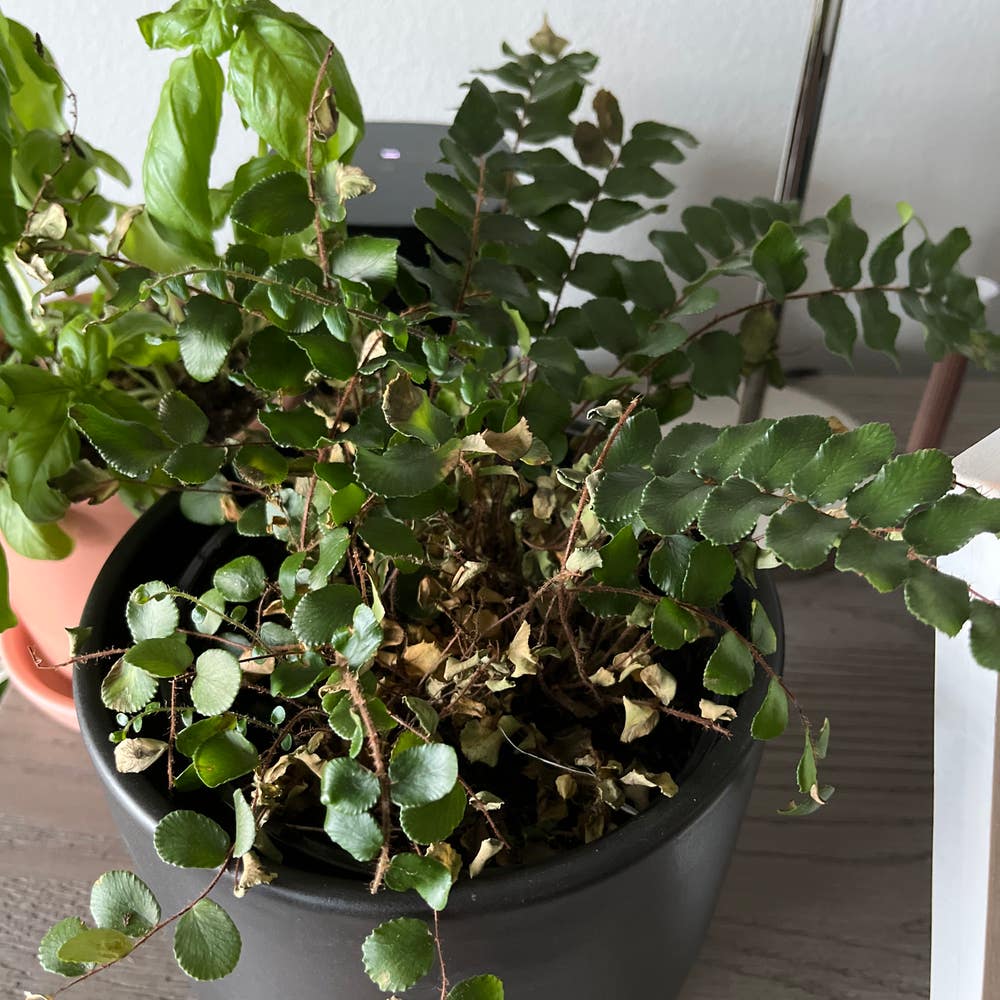
In the quest for a thriving Pellaea rotundifolia, over-fertilization is a common misstep. Look out for a white crust on the soil surface or pot edges—this is salt buildup, a telltale sign you've gone overboard. Yellowing leaves or a sudden halt in growth are your fern's SOS signals. If your fern's leaves are looking more like a fall foliage tour than a lush green haven, it's time to reassess your fertilization game.
🛠️ Oops, Too Much! Fixing Fertilization Faux Pas
So you've overdone it with the fertilizer—don't panic. It's fixable. Start by flushing the soil with water to rinse out the excess. This isn't a one-time charm; repeat the process several times to ensure those pesky salts are washed away. Remember, your button fern isn't a garbage disposal—it can't handle everything you throw at it. Cut back on the fertilizer, and watch your plant perk up. Keep it simple: less is more, and your fern will thank you with its vibrant presence.
⚠️ Safety First
This content is for general information and may contain errors, omissions, or outdated details. It is not medical, veterinary advice, or an endorsement of therapeutic claims.
Always consult a qualified healthcare professional before using any plant as food, medicine, or supplement.
Never eat any plant (or feed one to pets) without confirming its identity with at least two trusted sources.
If you suspect poisoning, call Poison Control (800) 222-1222, the Pet Poison Helpline (800) 213-6680, or your local emergency service immediately.
Spotted an error? Please report it here.
Fertilize with confidence 🌱 - let Greg remind you when and how to feed your Pellaea rotundifolia for lush growth without the worry of overdoing it.