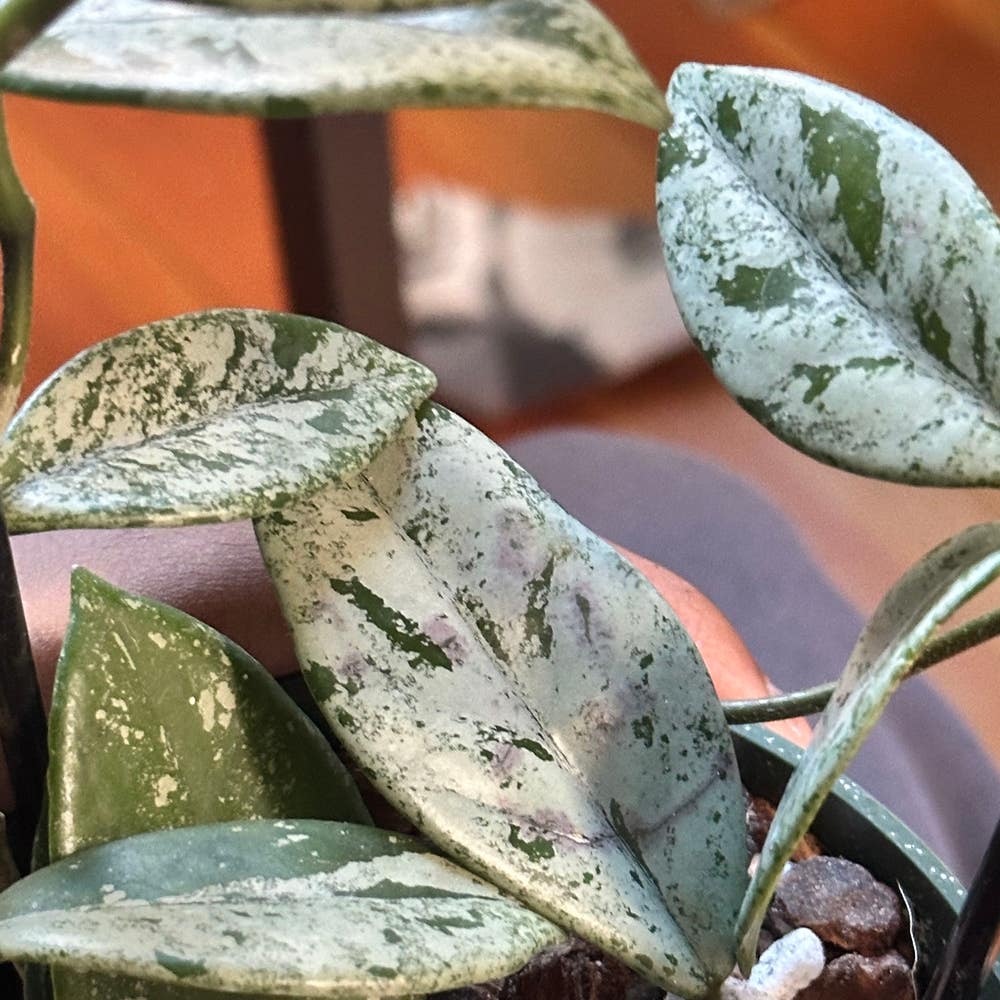
Why Does My Hoya carnosa 'Wilbur Graves' Have Yellow Leaves?
Hoya carnosa 'Wilbur Graves'
By the Greg Editorial Team
Jan 17, 2024•5 min read
This article was created with the help of AI so we can cover more plants for you. May contain errors. See one? Report it here.
Unveil the secrets to banishing yellow leaves and nurturing a thriving Hoya 'Wilbur Graves' 🌿✨!
- Yellow leaves can signal aging or issues like water stress and nutrient deficiencies.
- Proper watering and light are key; avoid over/underwatering and extreme sunlight.
- Check root health and use well-draining soil to prevent yellowing.
Spotting Trouble: Identifying Yellow Leaves on Your Hoya
🚩 Normal Aging vs. Cause for Concern
Yellowing leaves can be the Hoya's version of a graceful retirement for older foliage. But if the new growth is turning yellow, that's your plant waving a red flag.
🖼️ Visual Symptoms and Patterns
Patterns matter. If it's a uniform yellowing, think big picture issues like watering or light. Spotty yellowing? You might be dealing with pests or diseases. Check for bullseye patterns or uneven spots, which could point to a fungal fiesta.
Brown spots? Time to play plant detective. These could signal anything from thirsty roots to unwanted creepy crawlies. And if the leaves are more spotted than a Dalmatian, consider environmental stress or infections.
Leaf drop is like the plant's version of a bad hair day—it's telling you something's off. Overwatering, underwatering, or a nutrient no-no could be the culprits.
Remember, yellow leaves aren't trying to start a new trend; they're a cry for help. Keep your eyes peeled for these visual cues, and you'll be on your way to green glory.
Water Woes: Balancing Hydration for Healthy Leaves
💧 Overwatering vs. Underwatering
Yellow leaves on your Hoya carnosa 'Wilbur Graves' can be a red flag for watering issues. Overwatering often leads to a soggy, oxygen-starved root system, causing leaves to yellow and drop like flies. On the other hand, underwatering will have your Hoya's leaves wrinkling and drooping in a silent protest for moisture.
To strike the right balance, check the soil before you water. If it clings to your finger like a needy pet, hold off on watering. If it's dry and crumbly, it's time to quench your plant's thirst. Remember, your Hoya isn't a fan of wet feet or desert droughts.
Tips for Perfect Watering
For a Hoya carnosa 'Wilbur Graves' with no yellow in sight, follow these best practices:
- Use the finger test: Stick your finger about an inch into the soil. If it feels like a dry summer day, water away. If it's damp, wait it out.
- Embrace the soak and dry method: Water thoroughly, allowing excess to drain, then let the soil dry out slightly between waterings.
- Monitor the weight: Lift the pot. A lightweight pot is a thirsty pot.
- Seasonal shifts matter: Water less in the cooler, less sunny months when your Hoya's sipping habits slow down.
- Quality counts: Use room-temperature water to avoid shocking the roots. If your tap water is harder than a calculus exam, consider filtered water to prevent mineral build-up.
By tuning into your Hoya's hydration needs, you'll keep those leaves greener than a leprechaun's wardrobe.
Light and Temperature: Creating the Ideal Environment
🌞 Finding the Sweet Spot for Sunlight
Hoya carnosa 'Wilbur Graves' thrives in bright, indirect light. Too much direct sunlight can lead to the leafy equivalent of a sunburn, while insufficient light may stifle growth and bloom potential. North-facing windows or those with sheer curtains are prime real estate for these plants.
🌡️ Keeping the Temperature Just Right
The ideal temperature range for a Hoya carnosa 'Wilbur Graves' is between 60-80°F (15-27°C). This cultivar enjoys consistency and might throw a leafy fit if subjected to temperatures outside this comfort zone. Keep it away from drafts and sudden temperature swings to prevent stress-induced yellowing.
Feeding Your Hoya: Nutrients and Fertilization
💡 Spotting Nutrient Deficiencies
Yellow leaves on your Hoya carnosa 'Wilbur Graves' might be screaming for nutrients. If the foliage looks more like a lemon than a leaf, you're likely dealing with a nitrogen shortage. This essential element is like the spinach to Popeye for your Hoya – without it, the plant can't flex its green. Interveinal chlorosis, where leaves turn yellow but the veins stay green, is another tell-tale sign; though less common in Hoyas due to their thick leaves.
🍽️ Fertilization Frequency and Types
When it comes to feeding time, think of fertilizer as a seasoning – just enough to enhance growth, not so much that you end up with the botanical equivalent of a salt-lick. During the growing season, a half-strength, water-soluble fertilizer every 3-4 weeks should do the trick. It's like giving your plant a consistent, light drizzle of nutrients without causing a downpour of excess that leads to nutrient burn.
As autumn rolls in and your Hoya starts to yawn into dormancy, cut back on the plant chow. No fertilizer is needed from October to February; think of it as your Hoya's hibernation diet. When spring's growth spurt hits, you can resume the light feedings.
For the type of fertilizer, a balanced NPK ratio is the Hoya's jam. If you're eyeing those potential blooms, a formula with a bit more phosphorous might just coax out those flowers. But remember, overfertilizing is like forcing your Hoya to run a marathon after a feast – it's not going to end well. Keep it light, keep it balanced, and your Hoya will thank you with the lushest of green leaves.
Root and Potting Perils: Ensuring a Healthy Foundation
🌱 Checking for Root Health
Root health is paramount; it's the hidden lifeline of your Hoya carnosa 'Wilbur Graves'. To check for distress, gently slide the plant out of its pot. Healthy roots should be firm and either white or green, not brown and mushy. If you encounter the latter, you've got root rot on your hands. A solution of 3% hydrogen peroxide mixed with water can help address this issue—just pour it through the soil and let it drain.
🏺 The Right Pot and Soil Mix
Choosing the right pot and soil mix is like picking a bespoke suit; it needs to fit perfectly. A pot that's too large is a recipe for waterlogged sorrow, leading to yellow leaves or worse. Ensure your pot has drainage holes and skip the gravel—it's as useful as a chocolate teapot. Instead, opt for a well-draining potting mix that's airy and loose. If your soil feels like a wet sponge, it's time to repot with a mix that's more crumbly cake than swamp.
⚠️ Safety First
This content is for general information and may contain errors, omissions, or outdated details. It is not medical, veterinary advice, or an endorsement of therapeutic claims.
Always consult a qualified healthcare professional before using any plant as food, medicine, or supplement.
Never eat any plant (or feed one to pets) without confirming its identity with at least two trusted sources.
If you suspect poisoning, call Poison Control (800) 222-1222, the Pet Poison Helpline (800) 213-6680, or your local emergency service immediately.
Spotted an error? Please report it here.
Banish yellow leaves 💧 from your Hoya 'Wilbur Graves' with Greg's custom watering reminders and environmental tips for the perfect plant glow-up!