💧 How Much Humidity Does My Hoya carnosa 'Wilbur Graves' Need?
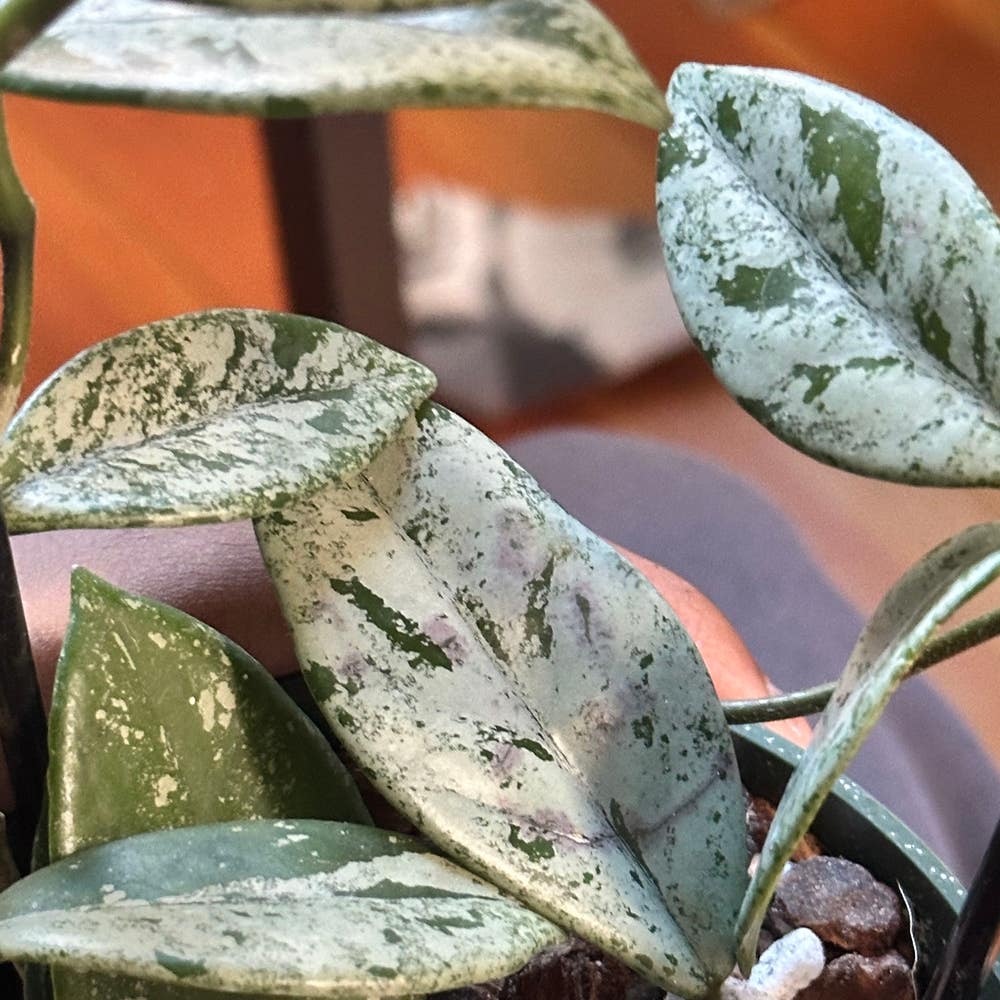
Hoya carnosa 'Wilbur Graves'
By the Greg Editorial Team
Jan 17, 2024•3 min read
This article was created with the help of AI so we can cover more plants for you. May contain errors. See one? Report it here.
Ensure your Hoya 'Wilbur Graves' flourishes 🌿 by mastering its ideal humidity needs.
- Ideal humidity is 50%+ for Hoya carnosa 'Wilbur Graves' to thrive.
- Crispy or yellow leaves? Adjust humidity for your Hoya's health.
- Use hygrometers and humidifiers to monitor and balance indoor humidity.
Dialing in the Perfect Humidity for Your 'Wilbur Graves'
💧 What's the Sweet Spot?
Hoya carnosa 'Wilbur Graves' thrives in humidity that's just right—think Goldilocks, but for plants. The ideal relative humidity (RH) hovers around 50% or more, a nod to its tropical ancestry. Too low, and you're in tumbleweed territory; too high, and you're hosting a mold convention.
Signs Your Hoya is Thirsty for Humidity
When your Hoya starts to throw a fit, it's time to pay attention. Crispy leaves and stunted growth are its way of saying, "I'm parched!" If the foliage resembles a piece of toast more than a leaf, it's a clear sign your air is drier than a stand-up comedian's humor.
Too Much of a Good Thing?
Conversely, a Hoya swimming in humidity might as well be underwater. Yellowing leaves and a lackluster demeanor are cries for less moisture. If your plant's environment feels more like a steam room than a living space, dial down the humidity before your Hoya needs a lifeboat.
Local Humidity and Your Hoya
🌿 Seasonal Shifts and Indoor Climates
In the tug-of-war between seasons, your Hoya carnosa 'Wilbur Graves' is the rope. Winter often means indoor heating, which is like a moisture vacuum for your home. Conversely, summer can turn your living space into a tropical haven, sometimes a bit too much so. It's not just about the plant's survival; it's about keeping it in its comfort zone, where it can thrive without throwing a fit.
📊 Measuring Up
Hygrometers are your undercover agents in the quest for perfect humidity. These gadgets don't just spit out numbers; they tell a story of your air's moisture levels. Place them strategically, away from the deceptive breezes of air vents and the misleading rays of direct sunlight. Regular check-ins with your hygrometer can prevent your Hoya from staging a dramatic wilt or, worse, a fungal uprising. Remember, the goal is to keep the air around your Hoya as consistent as possible, mimicking the stable environment of its natural habitat.
Balancing Act: Adjusting Humidity Levels
🌿 Boosting Humidity Naturally
Grouping plants is like throwing a social for your green friends; they share moisture and everyone's happier for it. It's a simple trick that leverages the power of transpiration, where plants release water vapor, thus upping the humidity ante.
Pebble trays are another low-tech, high-reward strategy. Just set a dish with pebbles and water beneath your Hoya, making sure the pot doesn't sit in water. As water evaporates, it's party time for humidity levels.
🔮 Tech to the Rescue: Humidifiers and Dehumidifiers
Humidifiers are your climate-controlling ninjas, silently working to bring tropical vibes to your Hoya's doorstep. They're straightforward to use: fill, set, and forget—well, until it's time to refill.
Dehumidifiers, on the other hand, are the bouncers at the door, keeping excess moisture out. They're crucial when you're dealing with that sticky, over-humidified air that plants like the 'Wilbur Graves' detest.
Remember, it's all about balance. Use a hygrometer to keep tabs on the humidity levels. It's your objective eye in the sky, ensuring you're hitting that sweet spot for your Hoya.
⚠️ Safety First
This content is for general information and may contain errors, omissions, or outdated details. It is not medical, veterinary advice, or an endorsement of therapeutic claims.
Always consult a qualified healthcare professional before using any plant as food, medicine, or supplement.
Never eat any plant (or feed one to pets) without confirming its identity with at least two trusted sources.
If you suspect poisoning, call Poison Control (800) 222-1222, the Pet Poison Helpline (800) 213-6680, or your local emergency service immediately.
Spotted an error? Please report it here.
Keep your Hoya carnosa 'Wilbur Graves' perfectly pampered 🌿 with Greg's personalized alerts to maintain that ideal 50% humidity!