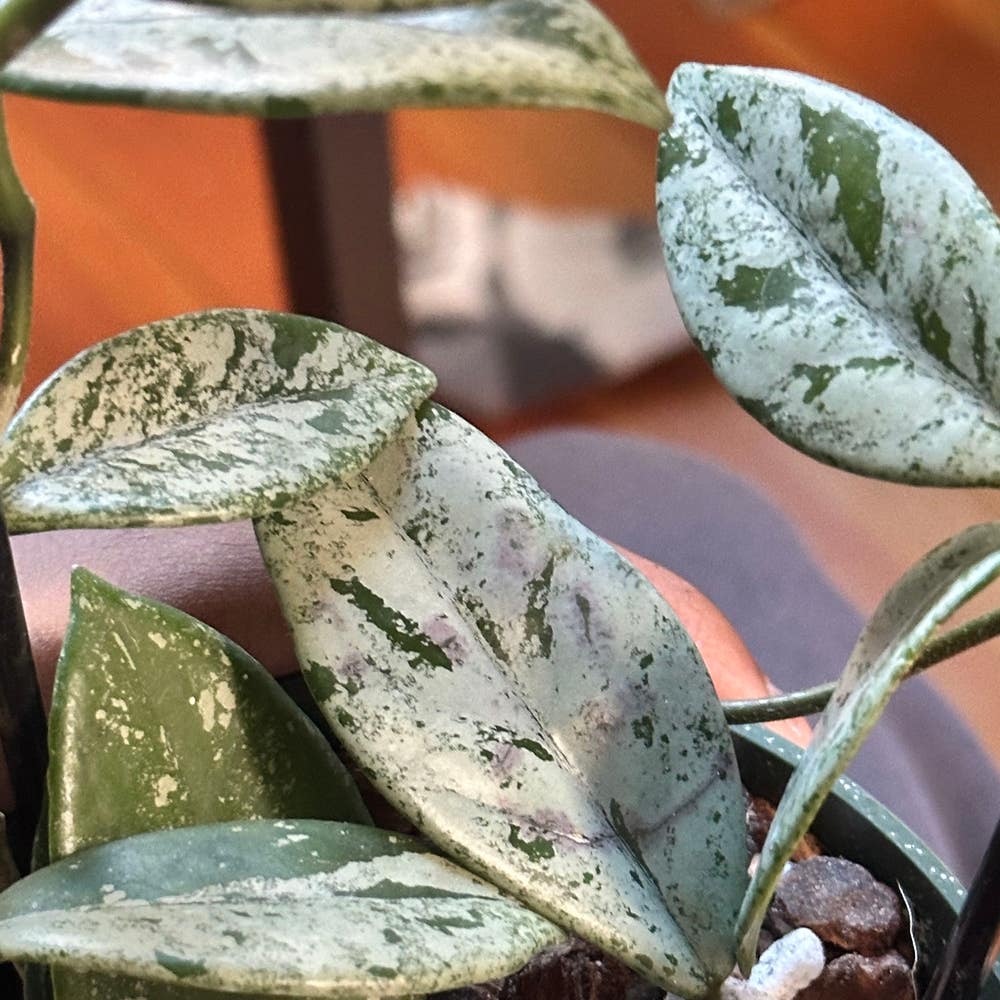
How Can You Tell If A Hoya carnosa 'Wilbur Graves' Is Dying?
Hoya carnosa 'Wilbur Graves'
By the Greg Editorial Team
Jan 17, 2024•6 min read
This article was created with the help of AI so we can cover more plants for you. May contain errors. See one? Report it here.
Spot early distress signals 🚨 in your Hoya 'Wilbur Graves' to prevent its untimely wilt and wither. 🌿
- Wilting and yellow leaves signal dehydration or over-watering.
- Stunted growth? Check light, water, and nutrient balance.
- Prevent root rot by ensuring proper drainage and soil dryness.
Spotting Trouble: Key Symptoms to Watch For
🥀 Wilting Woes: Recognizing Dehydration Signs
Wilting leaves on your Hoya carnosa 'Wilbur Graves' are the plant's equivalent of a distress signal. If the foliage droops or feels less firm, it's time to assess your watering routine. Remember, the goal is to mimic a rainforest, not a desert.
💛 Yellow Alert: Interpreting Yellowing Leaves
Yellow leaves aren't just a fashion statement; they're a cry for help. Overwatering, poor drainage, or nutrient deficiencies could be the culprits. Before you water, do the finger test; the top inch of soil should be dry. And don't just water on a schedule—water according to need.
🌱 Growth Grinding to a Halt: When Your Hoya Stops Thriving
If your Hoya has hit a growth standstill, it's not being lazy. It could be signaling an issue with light, water, or nutrients. Make sure it's not sitting in the dark or basking in a scorching sunbeam. And don't overdo it with the fertilizer—think gourmet meal, not buffet.
Water Woes: Too Much or Too Little
💦 Drowning in Love: Signs and Solutions for Over-Watering
Over-watering can turn your Hoya carnosa 'Wilbur Graves' into an aquatic plant wannabe, and trust me, it's not aspiring to be a lily pad. Yellowing leaves that feel more like a wet sponge than a crisp dollar bill are crying out, "I'm too drenched!" If the soil is more swamp than desert, it's time to back off with the watering can.
Unblock those drainage holes. They're not just for decoration. Think of them as lifelines for your waterlogged Hoya. And if you're feeling fancy, a terracotta pot can be your plant's best friend, wicking away excess moisture like a charm.
🏜️ Thirsty for Attention: How to Deal with Under-Watering
When your Hoya's leaves start resembling potato chips more than foliage, it's parched. Dry, crispy edges are the plant's SOS signal. If the soil is drier than a stand-up comedian's wit, it's time to hydrate.
Consistency is key. Don't water on a whim; set a schedule that's more regular than your morning coffee ritual. And remember, room-temperature water is like a warm hug for your plant's roots, so avoid the cold shock. Keep an eye on the soil moisture like it owes you money, and adjust your watering strategy accordingly. If the leaves perk up after watering like they've just had an espresso shot, you've hit the sweet spot.
Light and Temperature: Finding the Sweet Spot
🌞 Sunburnt Leaves: Identifying and Fixing Leaf Scorching
Bright, indirect sunlight is your Hoya carnosa 'Wilbur Graves' best friend. Direct sun can be a brutal enemy, leaving your plant with the leafy equivalent of a nasty sunburn. If you spot brown, crispy patches on the leaves, it's time to intervene. Move your plant to a spot where the light is filtered, like behind a sheer curtain. Think of it as putting sunglasses on your Hoya.
❄️ Chilly Receptions: Protecting Your Hoya from Temperature Stress
Hoyas don't take kindly to the cold shoulder. They prefer their environment like a mild spring day—not too hot, not too cold. Keep the temperature consistent; dramatic swings are as unwelcome as a hailstorm at a picnic. If your Hoya starts to droop or the leaves discolor, it might be signaling a temperature tantrum. Adjust the thermostat or move your plant away from drafty windows and doors to keep it cozy.
Battling Invaders: Pests and Pathogens
🐜 Unwanted Guests: Tackling common pests specific to Hoya carnosa 'Wilbur Graves'
Regular checks are your best defense against pests turning your Hoya into a snack bar. Aphids, those juice junkies, can be spotted with the naked eye, crowding around like they own the place. If you see them, it's time for isolation and a good old-fashioned wipe-down with soapy water or alcohol.
Mealybugs are another menace, setting up camp in the cozy nooks of your plant. Catching these fluffy fiends early is crucial; a cotton swab dipped in alcohol can be your precise weapon of choice.
For spider mites, watch for telltale webbing and a dusty appearance on leaves. These critters thrive in dry, warm conditions, so maintaining humidity can be a deterrent. And if they do show up, a shower for your Hoya might just wash those vampires right down the drain.
🍄 Fungal Foes: Spotting and stopping mold and fungus
Fungus and mold love a good moist environment as much as the next mushroom, but your Hoya? Not so much. If you spot a fungal rave on the soil surface, it's time to cut off the music by letting the soil dry out more between waterings.
Botrytis blight can show up as gray spots and stem lesions, a real downer for your plant's vibe. Good airflow and avoiding wet leaves are key moves to prevent this party crasher.
And then there's powdery mildew, the wallflower of plant fungi. It sneaks in unnoticed and spreads like a bad rumor. Keep leaves dry and air circulating; if it's already there, a fungicide can be the bouncer you need to clear it out.
Remember, the best offense is a good defense. Keep your Hoya's leaves clean, the air moving, and stay vigilant. Pests and pathogens are looking for an easy target—don't let your Hoya be it.
Root of the Problem: Preventing and Treating Root Rot
👃 Sniffing Out Trouble: Detecting Root Rot by Smell and Sight
Root rot in Hoya carnosa 'Wilbur Graves' is like that uninvited guest at a party—it shows up without warning and wreaks havoc. Sniff for trouble; a stench akin to decay is a dead giveaway. Visually, you're looking for roots that have turned to the dark side—black or brown instead of a healthy white or tan. Leaves dropping like flies or turning into mushy messes are your cue to take action.
🏥 Surgery and Recovery: Steps to Save Your Hoya from Root Rot
When root rot crashes your Hoya's party, it's time for some plant surgery. Sterilize your tools; we're not barbarians. Cut away the rotten roots like you're excising bad vibes. If the stem's caught the rot, keep chopping until you see clear or white sap—nature's sign of life. After the amputation, give the stem a hydrogen peroxide bath to disinfect. Let it dry out to avoid a repeat performance.
When repotting, choose well-draining soil and a pot with drainage holes to prevent water from overstaying its welcome. Remember, overwatering is like overfeeding—it does more harm than good. Keep the soil moist but not soggy, and your Hoya will thank you by not dying.
Regular root check-ups are non-negotiable. Think of it as a dental cleaning, but for your plant. Stay vigilant, and you might just catch root rot before it turns into a full-blown plant pandemic.
⚠️ Safety First
This content is for general information and may contain errors, omissions, or outdated details. It is not medical, veterinary advice, or an endorsement of therapeutic claims.
Always consult a qualified healthcare professional before using any plant as food, medicine, or supplement.
Never eat any plant (or feed one to pets) without confirming its identity with at least two trusted sources.
If you suspect poisoning, call Poison Control (800) 222-1222, the Pet Poison Helpline (800) 213-6680, or your local emergency service immediately.
Spotted an error? Please report it here.
Keep your Hoya carnosa 'Wilbur Graves' flourishing 🌿 with Greg's custom watering plans and community support to prevent overwatering and root rot.