When and Where Should I Trim My Phyllanthus mirabilis?
Phyllanthus mirabilis
By the Greg Editorial Team
Jun 18, 2024•3 min read
This article was created with the help of AI so we can cover more plants for you. May contain errors. See one? Report it here.
- 🌱 Prune in late winter/early spring for healing and growth.
- ✂️ Cut above nodes, not internodes, for healthy regrowth.
- 🌿 Pruning enhances health and aesthetics; focus on dead or diseased branches.
Timing is Everything: When to Prune
🌱 Recognizing the Right Time
Pruning your Phyllanthus mirabilis isn't a whimsical decision. Look for signs that your plant is ready to burst into its growth phase—new leaves, increased daylight, and a surge in plant vigor. These are your cues to grab the shears.
The best seasons for pruning are late winter to early spring. This timing allows your plant to heal and use its energy for the lush growth that comes with warmer weather.
🌿 Pruning and Plant Phases
Align your pruning with the plant's life cycle. During the dormant phase, your Phyllanthus mirabilis conserves energy. Pruning at this time is like setting the stage before the curtain rises on a new season of growth.
Active growth phases are also prime times for pruning. This period is when your plant is most resilient, bouncing back from cuts with vigor. Remember, timing isn't just a suggestion—it's the pulse of your plant's life.

Where to Make the Cut: Pruning Locations
🌱 Targeting the Right Spots
Understanding nodes and internodes is crucial for pruning Phyllanthus mirabilis. Nodes are the points on a stem where leaves and branches can grow, acting as a plant's command center for new growth. Internodes, the segments between nodes, are your no-go zones for cuts.
🚫 Avoiding Common Mistakes
Avoid cutting into the internodes; this can hinder the plant's healing process and disrupt new growth. Instead, make clean cuts just above the nodes to encourage healthy regrowth.
To prevent over-pruning, which can stress your plant, focus on removing only what's necessary. This means cutting away dead, diseased, or damaged branches and thinning out areas to improve air circulation. Always prune with a purpose, considering both the immediate and long-term effects on your Phyllanthus mirabilis's health and appearance.

Pruning with Precision: Techniques and Tools
🔪 Choosing Your Tools
Sharpness is non-negotiable when it comes to pruning tools. Blunt instruments are about as useful as a chocolate teapot, so ensure your pruning shears or scissors are as keen-edged as a chef's favorite knife. Regular maintenance is key; a simple wipe with rubbing alcohol keeps them both clean and sharp, warding off plant diseases like a bouncer at a club.
🎯 Making the Cut
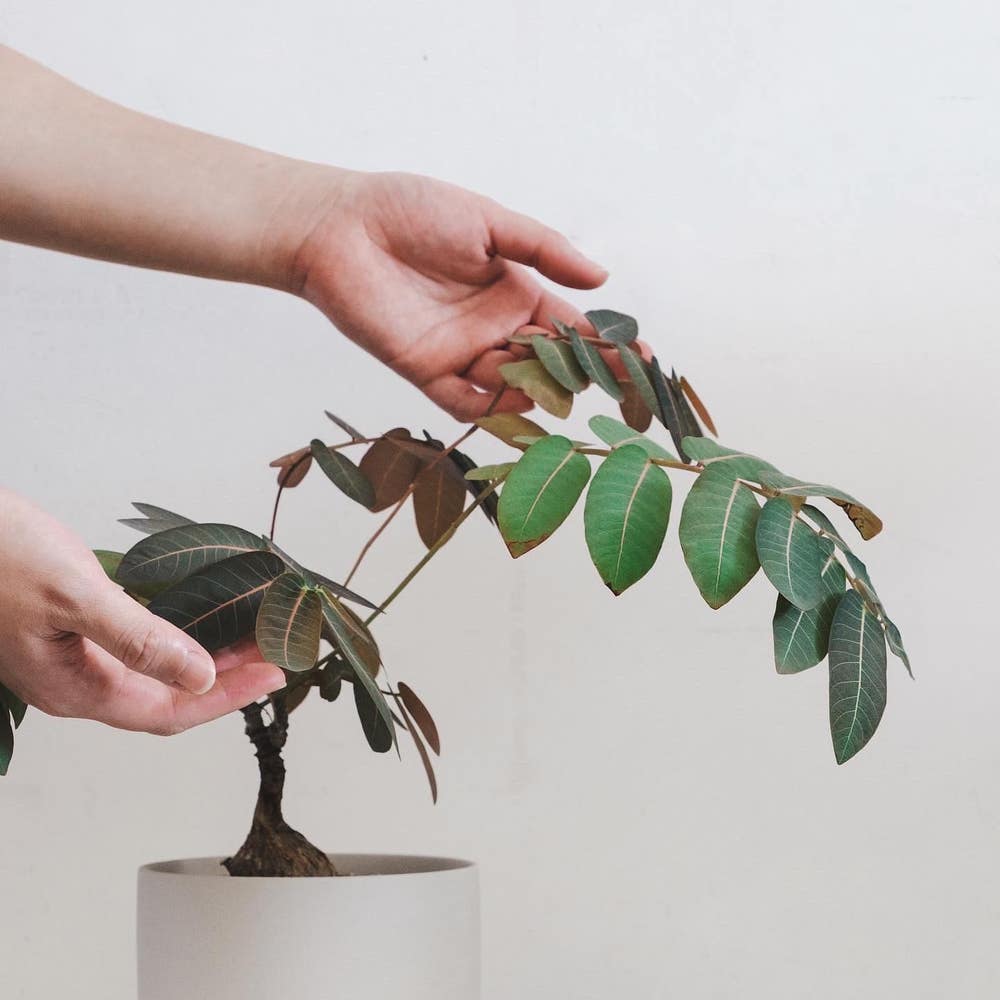
Nodes are your bullseye, the points on the stem where leaves and branches emerge. Snipping just above these points is like hitting the jackpot on a slot machine—it encourages new growth and keeps your Phyllanthus mirabilis lush. Aim for a 45-degree angle cut; it's not just for show, it helps your plant heal like a champ. Dead or yellowing leaves? Show them the door; they're freeloaders on your plant's energy. And if you're feeling like a green-thumbed maverick, those cuttings you've just liberated can start a whole new life in water. Talk about a two-for-one deal.

A Strategy for Health and Beauty: Comprehensive Pruning
🌿 Balancing Aesthetics and Health
Pruning your Phyllanthus mirabilis isn't just about making it look good—it's a wellness check. Shape matters, but so does the plant's vigor. Trim to maintain a pleasing form, but always with an eye on encouraging robust growth. Cut back any overgrown sections to reveal the plant's natural structure, but don't get scissor-happy. Less can be more.
🛡️ Preventing Problems
Think of pruning as a preemptive strike against the plant's unseen enemies. Disease and poor air circulation are the banes of your Phyllanthus mirabilis. By strategically removing problematic growth, you're not just tidying up—you're safeguarding its future. Keep those cuts clean and your tools sterile; your plant's health is in your hands.
⚠️ Safety First
This content is for general information and may contain errors, omissions, or outdated details. It is not medical, veterinary advice, or an endorsement of therapeutic claims.
Always consult a qualified healthcare professional before using any plant as food, medicine, or supplement.
Never eat any plant (or feed one to pets) without confirming its identity with at least two trusted sources.
If you suspect poisoning, call Poison Control (800) 222-1222, the Pet Poison Helpline (800) 213-6680, or your local emergency service immediately.
Spotted an error? Please report it here.
Trim your Phyllanthus mirabilis to perfection by following the signs of growth, and let Greg keep you on track with seasonal pruning alerts ⏲ to ensure your plant's health and beauty.