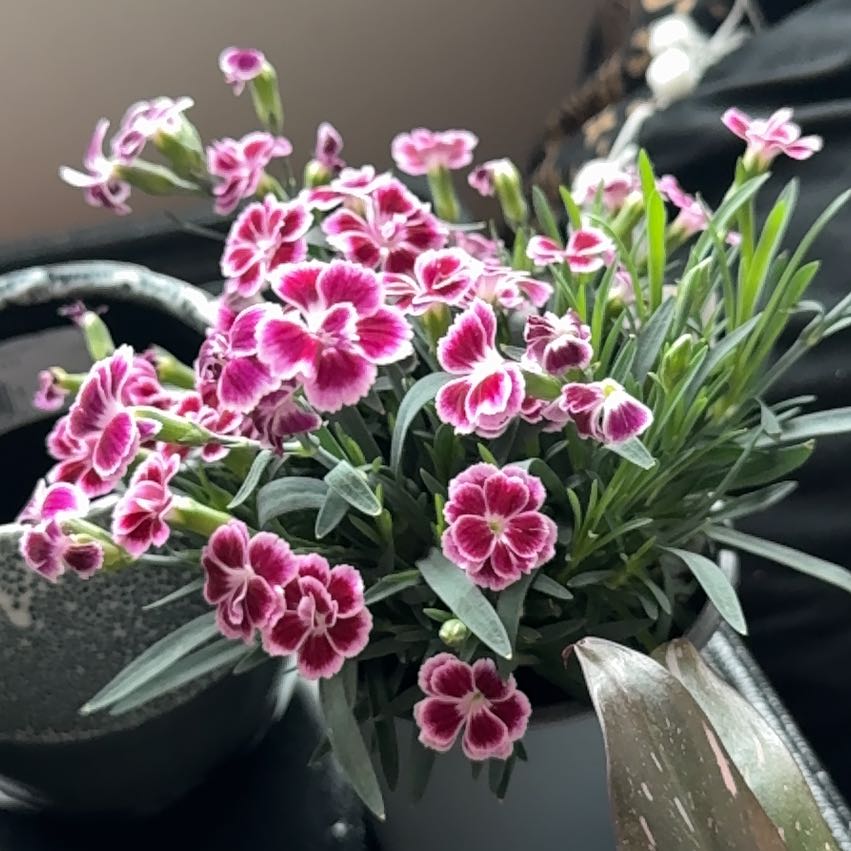
Border Carnation

How to Prune Border Carnation

Dianthus caryophyllus
Reviewed by Kiersten Rankel M.S.
Quick Answer
Deadhead Border Carnation throughout the blooming season by cutting spent flower stems back to just above a leaf node. After the main flush in summer, cut the stems back by about one-third to encourage new side shoots. In fall, cut the plant down to a few inches above the ground to prepare it for winter. Never remove all foliage at once during the growing season.

When is the best time to prune?

Border Carnation is a perennial across zones 5–9, so pruning timing shifts by several weeks between cooler and warmer climates depending on when blooming begins and ends.

US pruning regions map
Pacific
Jun–Jul (deadhead); Oct (cutback)
Mountain
Jul–Aug (deadhead); Oct (cutback)
Midwest
Jun–Aug (deadhead); Oct (cutback)
Northeast
Jun–Aug (deadhead); Oct (cutback)
Southeast
May–Jul (deadhead); Oct (cutback)
Stay on top of plant care
Get seasonal reminders for watering and fertilizing — personalized for your plants.
Try Greg Free

Why Should I Prune My Border Carnation?

Border Carnations bloom repeatedly through the season if you keep deadheading the spent flowers. Left unpruned, the plant puts energy into setting seed rather than pushing new buds, and the display stops sooner.

Deadhead by cutting each spent stem back to just above a leaf node or side shoot lower down on the stem. This encourages the plant to redirect energy into new flowering shoots rather than seed development. You can do this as frequently as every week or two during the blooming season.

After the main summer flush, the plant can look a bit tired and woody at the top. A harder cutback by about one-third at this point opens up the plant, improves air circulation, and prompts fresh side growth that may produce another round of flowers in fall.

In late fall before the first hard frost, cut the entire plant back to a few inches above the ground. This clears out old woody growth and encourages strong fresh stems the following spring. In colder climates, leaving a little stub rather than cutting to the ground provides some protection for the crown.

Know Before You Cut

Difficulty Easy
Max removal Up to 1/3 per session during season; full cutback in fall
Growth pattern Upright clumping
Tools Pruners or scissors

What Should I Remove?

Deadhead spent flowers by cutting back to a leaf node
Cut stems back by one-third after the main summer flush
Cut the whole plant back to a few inches in late fall
Remove any yellowing or dead stems throughout the season
Don't remove all foliage during the growing season
Don't cut back hard in spring — wait until after the first bloom
Don't leave spent flowers on the plant for long — they suppress new blooms

How Do I Prune Step by Step?

1
Deadhead spent blooms throughout the season
As each flower fades, trace the stem down to the first healthy leaf node or side shoot and cut there. Do this regularly to keep new buds coming.
2
Cut back after the main summer flush
Once the main blooming period winds down, cut the stems back by about one-third. Cut to a point where you can see healthy growth or a visible bud.
3
Remove yellow and dead stems
Any stems that are yellow, dried, or clearly dead can be removed at the base throughout the season. These do nothing for the plant and crowd out healthy growth.
4
Cut back fully in late fall
Before the first hard frost, cut all stems to 3–4 inches above the ground. This removes old woody growth and gives the plant a clean start the following spring.
5
Mulch in cold climates
In zones 5–6, apply a light layer of mulch around the base after cutting back to help protect the crown from freezing. Remove the mulch in early spring when new growth appears.

Frequently Asked Questions

How do I get my Border Carnation to bloom longer?
Consistent deadheading is the key. Every time you remove a spent flower stem, the plant responds by pushing new buds. Missing a round of deadheading is enough for the plant to start redirecting energy into seed instead of flowers.
What if I cut back too hard in summer?
Border Carnation is fairly resilient. If you cut back further than intended, keep the plant watered and in a sunny spot. New growth will appear from lower nodes within a few weeks, though you may miss the next bloom flush.
Should I deadhead or cut to the ground after blooming in fall?
Deadhead individual spent flowers throughout the season, then cut the whole plant to a few inches in late fall. These are two separate actions at different times.
Can Border Carnation be grown as an annual?
It is a perennial in zones 5–9, but gardeners in colder zones often grow it as an annual. If treated as an annual, there is no need for fall cutback or winter care.
Stay on top of plant care
Get seasonal reminders for watering and fertilizing — personalized for your plants.
Try Greg Free

About This Article

Kiersten Rankel M.S.
Botanical Data Lead at Greg · Plant Scientist
About the Author
Kiersten Rankel holds an M.S. in Ecology & Evolutionary Biology from Tulane University. A certified Louisiana Master Naturalist, she has over a decade of experience in science communication, with research spanning corals, cypress trees, marsh grasses, and more. At Greg, she curates species data and verifies care recommendations against botanical research.
See Kiersten Rankel's full background on LinkedIn.
Editorial Process
Pruning guidance verified against Dianthus caryophyllus growth data from Greg's botanical database, cross-referenced with USDA hardiness zone data and published horticultural research.
1,890+ Greg users growing this plant
USDA hardiness zones 5a–9b
Grow plants with confidence