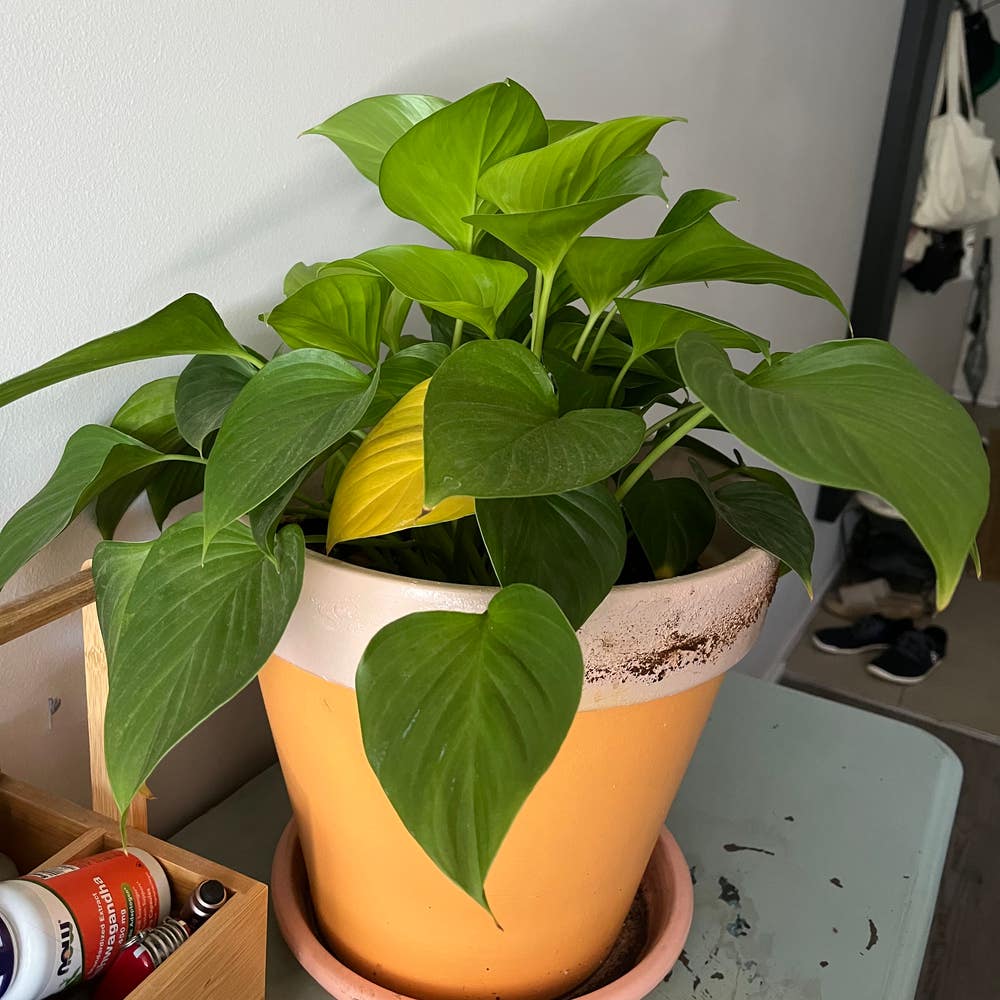
Fertilizing My Homalomena rubescens 'Black'
Homalomena rubescens 'Black'
By the Greg Editorial Team
Jun 06, 2024•5 min read
This article was created with the help of AI so we can cover more plants for you. May contain errors. See one? Report it here.
- Balanced N-P-K and micronutrients are key for Homalomena rubescens 'Black'.
- Adjust fertilizing with seasons: more in spring/summer, less in winter.
- Prevent over-fertilization: use half-strength dilution, watch for symptoms.
Picking the Right Fertilizer
💡 Balanced Fertilizers: The Key to Happy Homalomena
Balanced fertilizers are non-negotiable for Homalomena rubescens 'Black'. A 20-20-20 or 10-10-10 N-P-K ratio is your ticket to a plant that's not just surviving, but thriving. These numbers aren't just random; they represent an equal share of nitrogen, phosphorus, and potassium—each a VIP in the plant nutrition club.
🌱 Organic vs. Synthetic: What's Best for Your 'Black'?
The organic versus synthetic debate is a garden party staple. Organic fertilizers are like a slow-cooked meal, releasing nutrients at a leisurely pace and improving soil health over time. Synthetics, on the other hand, are the fast food of plant nutrition—quick and targeted. Your choice should hinge on your Homalomena's needs and your own plant-parenting style.
📋 Reading Labels: N-P-K Ratios and Micronutrients
Decoding fertilizer labels is an art form. Beyond the N-P-K, micronutrients are the unsung heroes. They're the entourage that ensures your Homalomena hits all the right notes. Look for a label that boasts a comprehensive micronutrient profile—it's the difference between a one-hit-wonder and a chart-topping album. Remember, more isn't always better; stick to the script to avoid a nutrient overdose.
Timing is Everything: Fertilizing Schedule
💪 Growth Phase: When Your Plant is Hungry for Nutrients
Spring and summer are the prime time for your Homalomena rubescens 'Black'. This is when it's all about growth and glory. Crank up the nutrient supply to match the plant's appetite, typically fertilizing every two to four weeks. Keep a watchful eye; if your plant is pushing out new leaves like there's no tomorrow, it's a clear signal to keep the meals coming.
💤 Dormant Phase: Slowing Down on Supplements
As the days shorten and temperatures drop, your plant hits the brakes. It's time to ease off the fertilizer—think of it as your plant's version of a winter coat, it doesn't need the extra bulk. During this phase, a monthly or bi-monthly schedule should suffice. Remember, yellowing leaves are a cry for help; they mean "back off with the buffet."
🌦️ Seasonal Adjustments: Summer Feasts and Winter Fasts
Adjust your fertilizing frequency with the seasons. When the heat is on, so is your plant's metabolism. Keep the nutrients flowing to support this active phase. But when winter whispers, it's time to cool it with the feeding frenzy. If your Homalomena rubescens 'Black' is still showing signs of growth despite the chill, a light snack might be in order. Stay sharp and tweak as needed.
Application Mastery: How to Fertilize Properly
💦 Soil Drenching: Getting to the Root of It
Soil drenching is your go-to move. It's simple: mix your fertilizer with water and pour it over the soil, taking care not to flood your Homalomena rubescens 'Black'. Think of it as watering with perks. The trick is to moisten the soil first; this encourages the roots to drink up the nutrients without drowning them.
🌿 Foliar Feeding: A Quick Snack for Your Plant
Foliar feeding is like a fast-food run for your plant. Mix fertilizer with water, and give the leaves a gentle misting. Early morning or late evening is prime time for this, to avoid leaf burn when the sun's out. It's a quick fix, not a full meal, so use it sparingly.
🍹 Dilution Ratios: Mixing the Perfect Plant Cocktail
When it comes to dilution, precision is key. Half-strength is generally the rule of thumb. If the label suggests a full cup, you're better off with half. Always dilute liquid fertilizer in water—think of it as crafting a bespoke cocktail for your plant. And remember, overdoing it can lead to a nasty hangover for your Homalomena.
Recognizing and Fixing Over-Fertilization
🚨 Spotting Trouble: Symptoms of Too Much Love
Leaf discoloration, such as yellowing leaves with dark green veins, is a classic distress signal from your Homalomena rubescens 'Black'. If you notice brown tips or edges, it's a clear sign that your plant is calling for help. A white crust on the soil surface isn't a quirky decoration; it's an SOS message about salt buildup from over-fertilization. Stunted growth is another red flag; it's as if your plant is saying, "I'm full, thanks!"
💊 First Aid for Fertilizer Burns: The Recovery Plan
Caught your plant looking overfed? Time to spring into action. Remove any visible fertilizer from the soil surface to stop the nutrient assault. Next up, give your Homalomena a thorough soil flush. Run water through the soil to leach out the excess fertilizer—think of it as a detox for your plant. You might need to repeat this every few days, so keep an eye on the drainage and avoid waterlogging. Those crispy brown-tipped leaves? Snip them off; they're not making a comeback. If your plant is potted, consider repotting with fresh, nutrient-free soil to give it a clean slate. And hold the fertilizer! Give your plant a break for a few weeks to recover from its nutrient hangover. When you resume feeding, go easy on the portions—your plant will thank you for it.
⚠️ Safety First
This content is for general information and may contain errors, omissions, or outdated details. It is not medical, veterinary advice, or an endorsement of therapeutic claims.
Always consult a qualified healthcare professional before using any plant as food, medicine, or supplement.
Never eat any plant (or feed one to pets) without confirming its identity with at least two trusted sources.
If you suspect poisoning, call Poison Control (800) 222-1222, the Pet Poison Helpline (800) 213-6680, or your local emergency service immediately.
Spotted an error? Please report it here.
Nurture your Homalomena rubescens 'Black' to flourish without the fear of over-fertilization 🌿, thanks to Greg's custom fertilizing reminders tailored to your plant's needs and seasons.