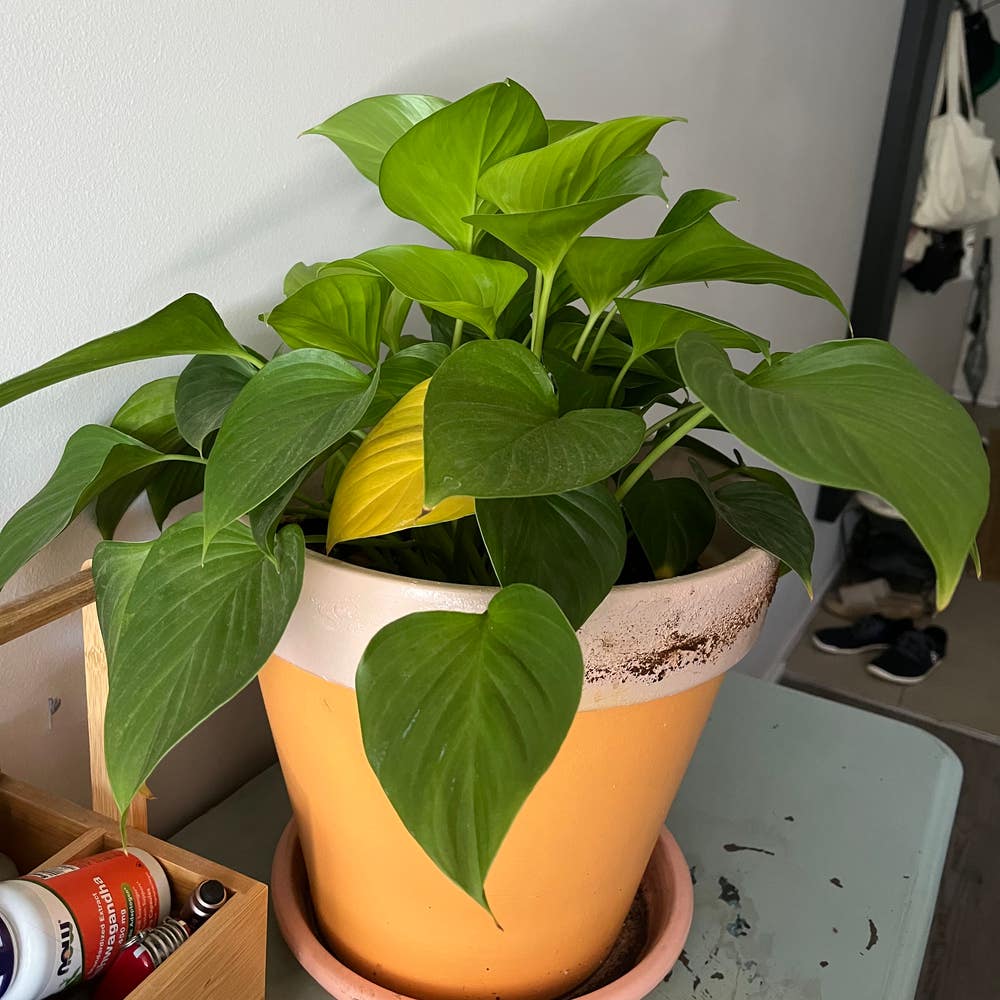
Black Spots on My Homalomena rubescens 'Black' Leaves
Homalomena rubescens 'Black'
By the Greg Editorial Team
Jun 06, 2024•5 min read
This article was created with the help of AI so we can cover more plants for you. May contain errors. See one? Report it here.
- Black spots signal trouble, hinting at fungal, bacterial, or environmental stress.
- Isolate and remove affected leaves to prevent spread; improve airflow and keep foliage dry.
- Long-term health requires proper watering, sanitation, and balanced light and humidity.
Spotting Trouble: Recognizing Black Spots on Leaves
🕵️ Visual Cues: Spotting the Invaders
Black spots on Homalomena rubescens 'Black' are the plant's SOS. These spots are dark, often with a yellow halo, and can range from tiny dots to larger blotches. They're not part of the leaf's natural charm, so when you see them, it's time to play detective.
🗺️ Location, Location, Location
Where these spots choose to crash the party is crucial. They're fond of the leaf's undersides, but don't be surprised to find them sunbathing on top. New growth isn't immune either; these spots are equal-opportunity invaders.
📏 Size and Quantity: Assessing the Scene
A single spot might not be a red alert, but a constellation of them? That's a sign your plant is waving a white flag. Keep tabs on how many and how big; it's the difference between a quick fix and a full-blown intervention.
🤚 Texture and Patterns: The Touch Test
Run your fingers over the spots. Are they raised like tiny volcanoes or sunken like craters? This tactile intel can help you suss out whether you're dealing with a fungal party or a bacterial rave.
🎨 Spot Characteristics: The Devil's in the Details
Uniform spots might mean one thing, but if they're scattered like a toddler's art project, it's another. Look for spots with defined borders or those that fade out like a bad dye job. It's all in the subtleties.
Rooting Out the Causes
🍄 Fungal Foes
Leaf spot and anthracnose are the usual suspects when Homalomena rubescens 'Black' starts sporting unsightly black spots. These fungal culprits thrive in conditions that are a bit too cozy for comfort—think high humidity and wet leaves.
🔍 Spotting the Signs
Look for circular lesions, sometimes with a bull's-eye appearance, or dark spots with concentric rings. These are telltale symptoms of a fungal shindig happening right on your plant's foliage.
🦠 Bacterial Baddies
Bacterial leaf spot can turn your plant's leaves into a soggy, spotted mess. It's a stealthy ninja, less common than fungi but equally ruthless.
🚨 Signs of Bacterial Trouble
Water-soaked lesions and a general look of leafy despair are your clues. Unlike fungal spots, bacterial ones might appear as slimy or oily, and they can spread rapidly if not addressed.
🌿 Environmental Stressors
Sometimes, it's not a microbe but the environment that's stressing your Homalomena out. Overwatering, excessive light, or the wrong humidity can create the perfect storm for black spots.
⚠️ Stress Signals
Your plant will communicate its discomfort. Spots from environmental stress may lack the halos or sliminess of infections, but they're a sign your green buddy isn't living its best life.
First Response: Immediate Actions to Take
🛡️ Isolating the Affected Plant: Why and How?
Isolation is your plant's best friend when black spots appear. It's like putting your plant in solitary confinement to stop the contagion from spreading to the rest of your plant gang. Immediately move your Homalomena rubescens 'Black' to a separate area, ensuring it's away from other plants. Choose a spot with good light and airflow to set up your plant's quarantine zone. Remember, no plant visitors allowed.
🚑 Quick Fixes: Simple Steps to Mitigate the Spread of Black Spots
Grab your sterilized scissors—it's surgery time. Snip off the affected leaves to prevent the black spots from staging a takeover. Think of it as pruning the problem. Boosting airflow around your plant is like giving it room to breathe, making conditions less inviting for fungal freeloaders. Keep a close eye on your plant's progress; if it doesn't perk up, be ready to tweak your care strategy. Remember, keeping the foliage dry is paramount—water at the base to avoid splashing the leaves like a stealthy gardener ninja.
Winning the Battle: Long-Term Treatment and Prevention
🛡️ Fungal and Bacterial Warfare
Fungicides and antibacterial agents are your plant's knights in shining armor. When you're picking your potion, consider options like potassium bicarbonate or a combo of tebuconazole and trifloxystrobin. Use them judiciously, following the label like it's a sacred text.
Sanitation can't be overstated. Clean your tools with the precision of a surgeon. Fallen leaves? They're not decor; they're a fungal fiesta waiting to happen. Scoop them up and keep your plant's vicinity as tidy as a monk's living quarters.
🏜️ Fortifying the Environment
Watering is an art form. Aim for moist, not marshy. Overwatering is the root of all evil in the plant world. Ensure your Homalomena's soil is well-draining, and its feet are never soggy.
Humidity and light need to be in harmony. The sweet spot is 40-60% humidity, and indirect light is your plant's best friend. Too much of either, and you're asking for trouble. Keep the air moving; stagnant air is the enemy. If you have a fan, use it to simulate a gentle breeze.
Remember, a healthy environment is the best defense. Keep those conditions optimal, and your Homalomena rubescens 'Black' will thank you by staying spot-free.
⚠️ Safety First
This content is for general information and may contain errors, omissions, or outdated details. It is not medical, veterinary advice, or an endorsement of therapeutic claims.
Always consult a qualified healthcare professional before using any plant as food, medicine, or supplement.
Never eat any plant (or feed one to pets) without confirming its identity with at least two trusted sources.
If you suspect poisoning, call Poison Control (800) 222-1222, the Pet Poison Helpline (800) 213-6680, or your local emergency service immediately.
Spotted an error? Please report it here.
Banish those black spots 🕵️♂️ on your Homalomena rubescens 'Black' with Greg's alerts for optimal watering and environmental conditions