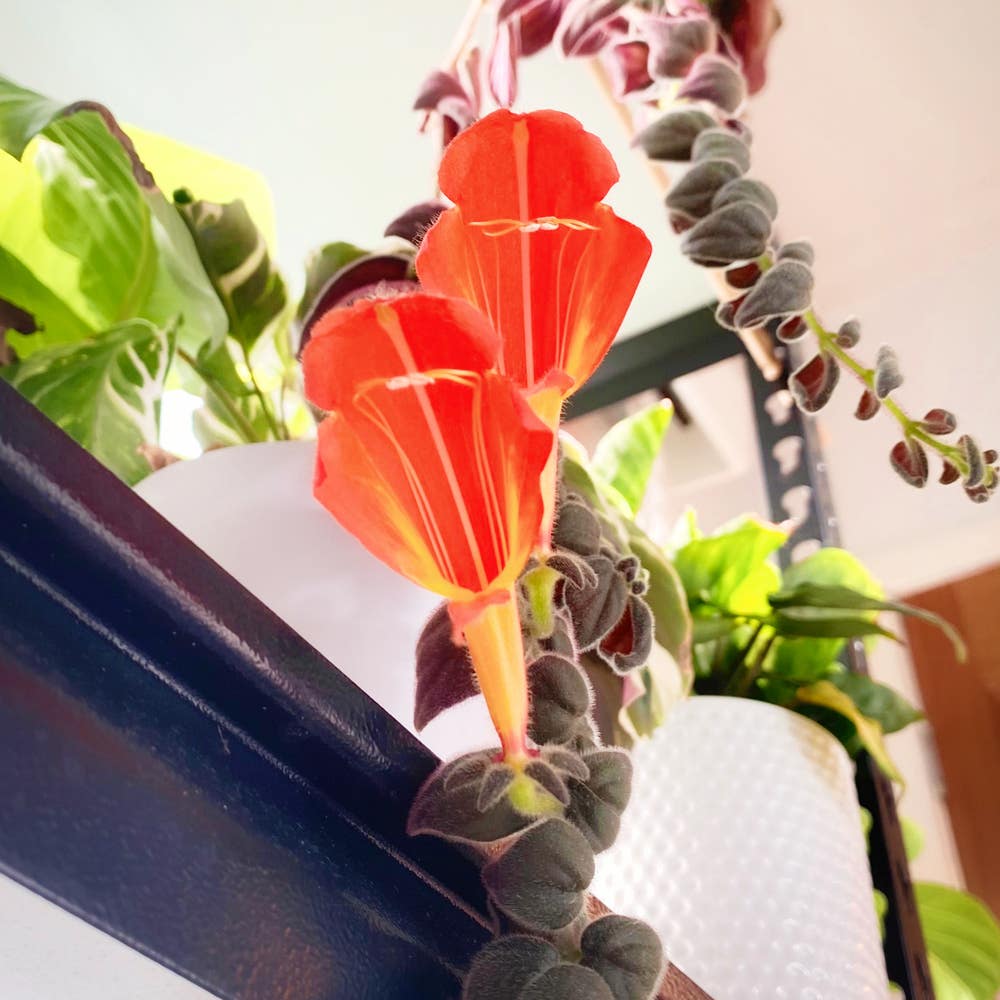
🐟 Goldfish Plant Width: What to Expect
Columnea gloriosa
By the Greg Editorial Team
Sep 29, 2024•5 min read
This article was created with the help of AI so we can cover more plants for you. May contain errors. See one? Report it here.
Master the art of growing stunning goldfish plants 🌱 by understanding their ideal size and care needs!
- 🌱 Goldfish plants grow 12-24 inches tall and 18-36 inches wide under ideal conditions.
- ☀️ Bright, indirect sunlight and humidity are essential for optimal growth and size.
- 🪴 Prune regularly to encourage bushier growth and maintain desired size.
Mature Height and Spread
Dimensions 🌱
Goldfish plants typically reach a mature height of 12 to 24 inches (30 to 60 cm). Their average width can range from 18 to 36 inches (45 to 90 cm), largely depending on the conditions in which they grow.
Factors Influencing Mature Dimensions 🌿
Several factors play a crucial role in determining the mature size of your goldfish plant. Key elements include light exposure, water availability, and nutrient levels in the soil.
Ensuring your plant receives bright, indirect sunlight can significantly enhance its growth. Conversely, inadequate light can lead to stunted growth and smaller dimensions.
Watering practices also matter; too much or too little can hinder your plant's ability to reach its full potential. Lastly, nutrient-rich soil will support robust growth, while poor soil can restrict size.
Understanding these factors will help you cultivate a thriving goldfish plant that meets your expectations. As we explore growth rates next, you'll see how these dimensions come into play over time.
Growth Rate and Time to Full Size
Growth Rate 🌱
Goldfish plants are known for their moderate growth rate, typically achieving 6 to 12 inches (15 to 30 cm) per year under optimal conditions. With the right care, you can expect your plant to reach its full size in about 2 to 3 years.
Influencing Factors 🌦️
Seasonal changes can significantly impact growth speed. For instance, warmer months often boost growth, while colder seasons may slow it down.
Indoor and outdoor conditions also play a crucial role in growth variability. Indoor plants may grow more slowly due to limited light, while outdoor plants can thrive with ample sunlight and natural elements.
Understanding these factors can help you create the ideal environment for your goldfish plant, ensuring it reaches its full potential.
As you consider the growth rate, keep in mind how light, temperature, and humidity can affect your plant's journey to maturity.
Size Variability Based on Growing Conditions
🌞 Light and Soil
To thrive, goldfish plants need bright, indirect sunlight. This optimal light exposure encourages robust growth and vibrant foliage.
Low light conditions can lead to stunted growth and reduced dimensions. If your plant seems to be struggling, consider adjusting its light source.
Well-draining soil is crucial for healthy growth. It prevents waterlogging, which can harm the roots and stunt the plant's development.
🌡️ Temperature and Humidity
Goldfish plants flourish in an ideal temperature range of 65°F to 80°F (18°C to 27°C). Keeping them within this range helps maintain their vibrant health.
High humidity levels are beneficial, promoting larger growth. If your environment is too dry, consider using a humidifier or misting the leaves.
🪴 Container Size
The size of the pot significantly impacts root development and overall plant size. A larger pot allows for more root space, which can lead to a more robust plant.
For optimal growth, choose pot sizes based on the plant's growth stage. A smaller pot is suitable for young plants, while larger pots are better for mature specimens.
Understanding these factors can help you create the perfect environment for your goldfish plant, ensuring it reaches its full potential. Next, let’s explore the differences between dwarf and giant varieties.
Dwarf vs. Giant Varieties
Dwarf Characteristics 🌱
Dwarf goldfish plants typically reach a height of 6 to 12 inches (15 to 30 cm). Their compact size makes them perfect for small spaces or indoor settings, allowing plant lovers to enjoy their beauty without needing a large garden.
Giant Characteristics 🌳
On the other hand, giant varieties can exceed 36 inches (90 cm) in height. These impressive plants are ideal for larger gardens or as statement pieces, adding a bold touch to any outdoor space.
Understanding the differences between dwarf and giant varieties helps you choose the right plant for your environment. Whether you're looking to fill a cozy nook or make a grand statement, there's a goldfish plant variety that fits your needs perfectly.
Next, let's explore how to control the size of your goldfish plant through effective pruning and repotting strategies.
Controlling Size
Pruning Techniques ✂️
Pruning is essential for maintaining the size and shape of your goldfish plant. The best time to prune is during the growing season, ideally every 6 to 8 weeks, to encourage bushier growth.
To prune effectively, use clean, sharp scissors to remove any dead or leggy stems. This not only promotes a fuller appearance but also helps the plant focus its energy on healthy growth.
Repotting Strategies 🪴
Recognizing when to repot is crucial for controlling size. Signs that your goldfish plant has outgrown its container include roots emerging from the drainage holes or water pooling on the surface after watering.
When repotting, choose a pot that is one size larger and ensure it has good drainage. This allows for healthy root development while keeping the plant manageable.
Fertilization Practices 🌱
A consistent fertilization schedule can help regulate your plant's growth. Aim to fertilize monthly during the growing season to provide essential nutrients without encouraging excessive size.
Opt for balanced fertilizers that promote healthy growth. Look for options labeled as "slow-release" to avoid overwhelming your goldfish plant with nutrients.
By mastering these techniques, you can enjoy a thriving goldfish plant that fits perfectly in your space. Next, let’s explore the differences between dwarf and giant varieties to help you choose the right one for your garden.
⚠️ Safety First
This content is for general information and may contain errors, omissions, or outdated details. It is not medical, veterinary advice, or an endorsement of therapeutic claims.
Always consult a qualified healthcare professional before using any plant as food, medicine, or supplement.
Never eat any plant (or feed one to pets) without confirming its identity with at least two trusted sources.
If you suspect poisoning, call Poison Control (800) 222-1222, the Pet Poison Helpline (800) 213-6680, or your local emergency service immediately.
Spotted an error? Please report it here.
Maximize your goldfish plant's growth potential 🌟 with Greg's tailored care reminders and expert tips for optimal light, watering, and pot size!