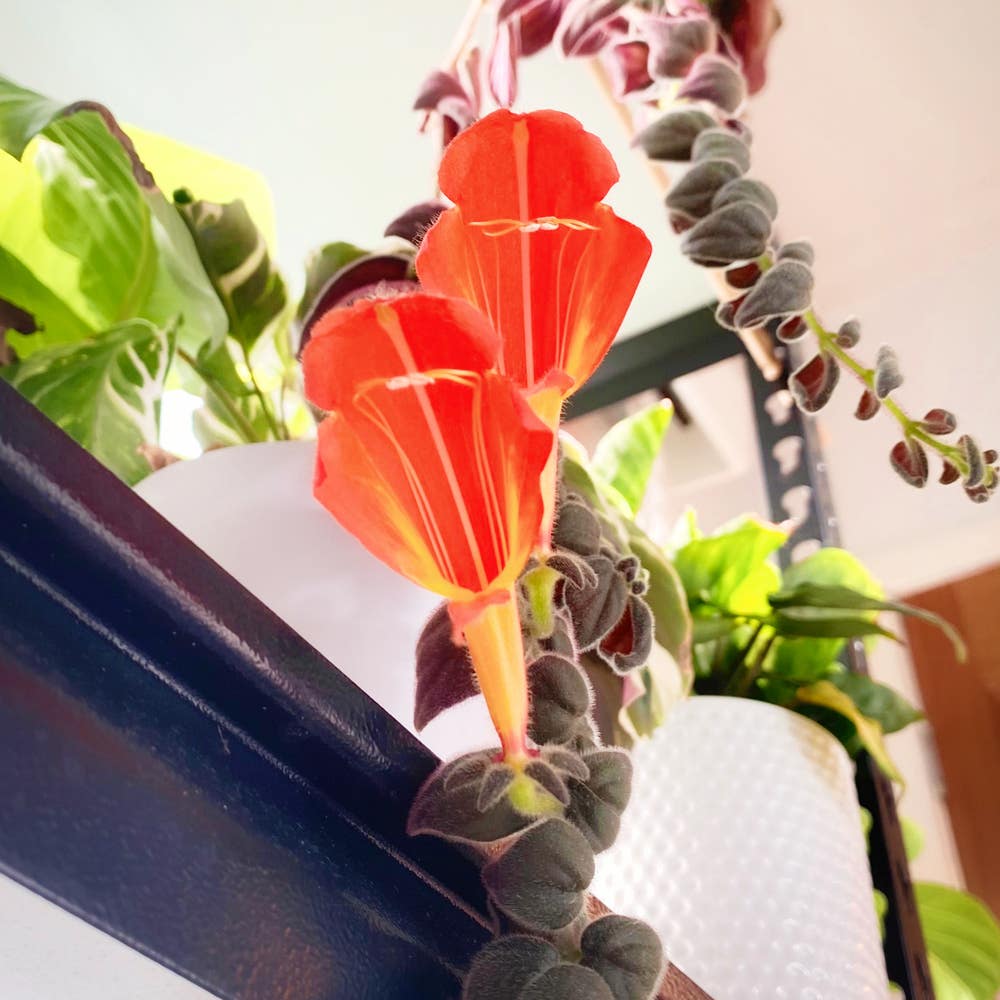
🐟 Why Your Goldfish Plant Buds Won't Open
Columnea gloriosa
By the Greg Editorial Team
Sep 29, 2024•6 min read
This article was created with the help of AI so we can cover more plants for you. May contain errors. See one? Report it here.
Master light, water, and nutrients 🌱 to unlock vibrant blooms for your Goldfish Plant and watch it thrive!
- 🌞 Goldfish Plants need 12-14 hours of bright, indirect light to bloom successfully.
- 💧 Overwatering or underwatering stresses plants, preventing flowers from opening.
- 🌱 Nutrient deficiencies in nitrogen, phosphorus, and potassium hinder blooming; fertilize regularly.
Failure to Bloom
🌒 Causes of Failure to Bloom
Insufficient Light
One of the primary reasons your Goldfish Plant might not bloom is insufficient light. Adequate light is crucial for triggering the bloom cycle, as it helps the plant produce the energy needed for flowering.
Improper Watering
Another common culprit is improper watering. Both overwatering and underwatering can stress the plant, leading to a failure to produce flowers.
Nutrient Deficiencies
Nutrient deficiencies can also hinder blooming. Key nutrients like nitrogen, phosphorus, and potassium are essential for flower development, and a lack of these can stifle your plant's potential.
🌼 Solutions to Encourage Blooming
Adjusting Light Exposure
To encourage blooming, adjust your plant's light exposure. Aim for 12-14 hours of bright, indirect sunlight daily to stimulate growth and flowering.
Proper Watering Techniques
Maintaining consistent moisture is vital. Water your Goldfish Plant when the top inch of soil feels dry, ensuring it doesn’t sit in water to avoid root rot.
Fertilization Strategies
Fertilization plays a significant role in blooming. Use a balanced fertilizer every 4-6 weeks during the growing season to provide the necessary nutrients for flower development.
By addressing these factors, you can create an environment conducive to blooming, setting the stage for a vibrant display of flowers. Next, let’s explore the issue of premature flower drop and how to prevent it.
Premature Flower Drop
🌪️ Causes of Premature Flower Drop
Environmental Stress
Sudden changes in humidity and temperature can shock your Goldfish Plant, leading to premature flower drop. These plants thrive in stable conditions, so fluctuations can be detrimental.
Overwatering
Excess moisture is another common culprit. When the soil is consistently soggy, it can suffocate the roots and cause buds to drop before they bloom.
Pest Infestations
Pests can wreak havoc on your Goldfish Plant. Common offenders like aphids and spider mites not only damage the plant but also contribute to flower drop.
🛠️ Solutions to Prevent Premature Flower Drop
Monitoring Humidity Levels
Maintaining humidity levels between 50-70% is crucial. Use a hygrometer to keep track and adjust as needed to create a comfortable environment for your plant.
Adjusting Watering Schedule
Pay attention to your watering habits. Signs of overwatering include yellowing leaves and a soggy base, while underwatering may show as drooping leaves.
Pest Control Methods
Implement pest control strategies to keep your plant healthy. Organic options like neem oil can be effective, while chemical treatments may be necessary for severe infestations.
By addressing these factors, you can help your Goldfish Plant thrive and enjoy its beautiful blooms. Next, let’s explore the causes and solutions for abnormal flower development.
Abnormal Flower Development
🌱 Causes of Abnormal Flower Development
Genetic Factors
Genetics play a crucial role in determining the traits of your Goldfish Plant's flowers. Some plants may simply be predisposed to develop unusual flower shapes or colors.
Nutrient Imbalances
Nutrient ratios significantly impact flower formation. An imbalance, particularly in nitrogen, phosphorus, and potassium, can lead to abnormal growth patterns.
Temperature Extremes
Fluctuating temperatures can wreak havoc on flower morphology. When temperatures swing outside the ideal range, it can cause flowers to develop in unexpected ways.
🛠️ Solutions for Normalizing Flower Development
Ensuring Proper Fertilization
To promote healthy flower growth, focus on the right NPK ratios. A balanced fertilizer with a ratio of 10-10-10 is often recommended for optimal results.
Maintaining Stable Temperatures
Keep your Goldfish Plant in a stable environment. The ideal temperature range is between 18°C to 24°C (65°F to 75°F) to ensure consistent flower development.
By addressing these factors, you can help your Goldfish Plant thrive and produce beautiful blooms. Next, let’s explore how light quality influences flowering.
Impact of Light on Flowering
🌈 Importance of Light Quality
Light quality is crucial for your Goldfish Plant's blooming success. Understanding the difference between natural and artificial light can help you create the perfect environment.
Natural light is often the best option, as it provides a full spectrum that promotes healthy growth. However, artificial light can also be effective if you choose the right type.
The light spectrum plays a significant role in triggering blooming. Plants respond best to specific wavelengths, particularly blue and red light, which are essential for photosynthesis and flower development.
☀️ Optimal Light Conditions for Blooming
Finding the best locations for your Goldfish Plant can make a world of difference. Ideally, place it near a window that receives bright, indirect sunlight for 12-14 hours daily.
Seasonal changes can affect light exposure, so be prepared to adjust accordingly. In winter, you may need to move your plant closer to the light source to ensure it gets enough brightness.
By optimizing light conditions, you can encourage your Goldfish Plant to bloom beautifully. This simple adjustment can lead to a thriving plant that fills your space with vibrant flowers.
As we explore the next section, let’s dive into the nutritional factors that also play a vital role in flowering.
Nutritional Factors Affecting Flowering
🌱 Essential Nutrients for Flower Development
To thrive and bloom, Goldfish Plants require a balanced diet of essential nutrients. The key players are nitrogen, phosphorus, potassium, and various micronutrients.
Nitrogen is crucial for leafy growth and overall plant vigor. It helps in the formation of chlorophyll, which is vital for photosynthesis.
Phosphorus plays a significant role in energy transfer and root development. It encourages strong root systems and is essential for flower and fruit formation.
Potassium aids in water regulation and enhances the plant's resilience to stress. It also supports the development of flowers and fruits, making it a must-have nutrient.
Micronutrients, though needed in smaller amounts, are equally important. Elements like iron, magnesium, and calcium contribute to various physiological processes, ensuring healthy blooms.
🚨 Signs of Nutritional Deficiencies
Recognizing nutritional deficiencies early can save your Goldfish Plant from stress. Visual indicators can help you diagnose issues before they escalate.
Yellowing leaves often signal nitrogen deficiency. If the older leaves turn yellow while the younger ones remain green, it’s time to boost nitrogen levels.
Poor flowering can indicate phosphorus deficiency. If your plant is lush but lacks blooms, consider adjusting its phosphorus intake.
Brown leaf tips may point to potassium deficiency. This can lead to weak stems and poor flower development, so keep an eye out for this sign.
To address deficiencies, start with a soil test to pinpoint nutrient levels. Based on the results, you can choose a suitable fertilizer to restore balance and encourage blooming.
By understanding these nutritional factors, you can create an environment where your Goldfish Plant thrives and produces beautiful flowers. Next, let’s explore how light quality impacts flowering.
⚠️ Safety First
This content is for general information and may contain errors, omissions, or outdated details. It is not medical, veterinary advice, or an endorsement of therapeutic claims.
Always consult a qualified healthcare professional before using any plant as food, medicine, or supplement.
Never eat any plant (or feed one to pets) without confirming its identity with at least two trusted sources.
If you suspect poisoning, call Poison Control (800) 222-1222, the Pet Poison Helpline (800) 213-6680, or your local emergency service immediately.
Spotted an error? Please report it here.
Unlock vibrant blooms for your Goldfish Plant 🌼 by using Greg's tailored care reminders to ensure optimal light, moisture, and nutrients for thriving flowers!