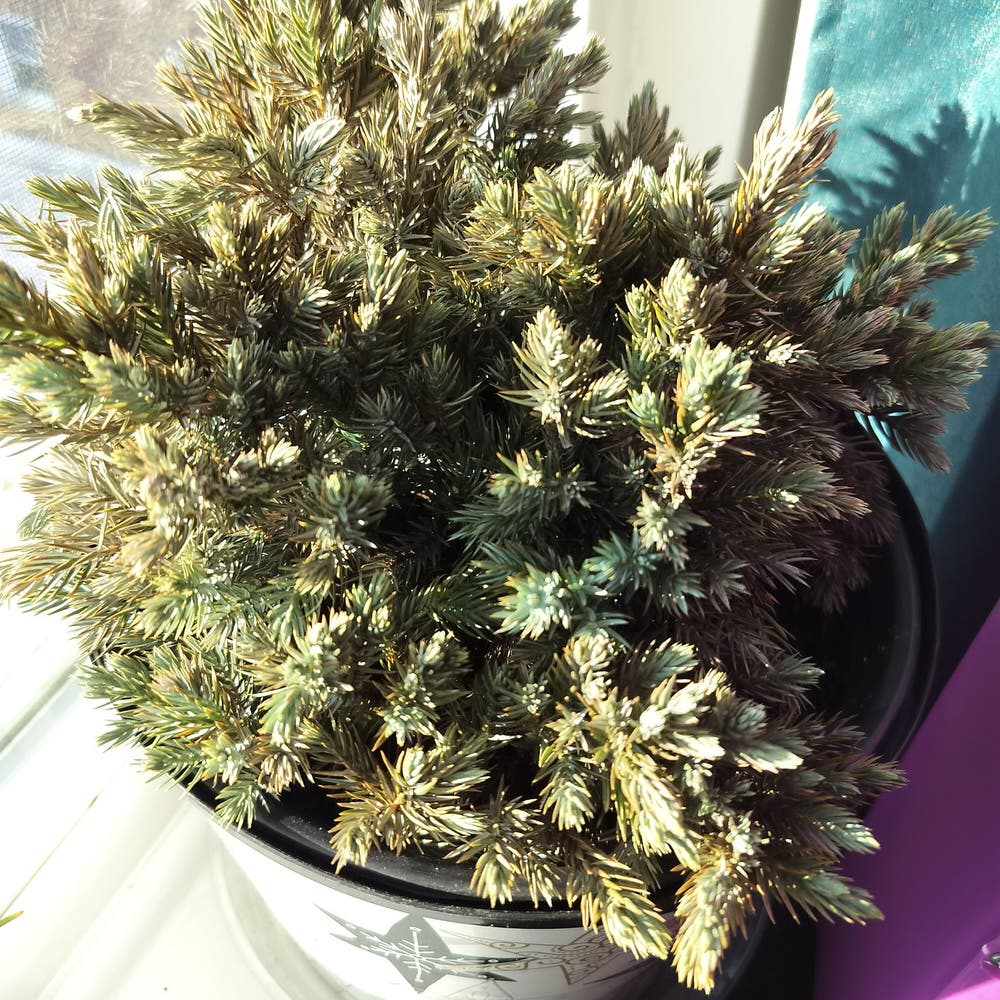
What Are The Bugs on My Blue Star Juniper? 🐛
Juniperus squamata
By the Greg Editorial Team
Jun 18, 2024•5 min read
This article was created with the help of AI so we can cover more plants for you. May contain errors. See one? Report it here.
- Spider mites and scale insects disguise as foliage damage and waxy bumps.
- Combat pests with sprays, oils, or alcohol, and use sticky traps for flies.
- Prevent infestations with regular inspections, soil moisture control, and clean cuts.
Meet the Mites: Spider Mites on Blue Star Juniper
🕷️ Spotting the Webs and Bites
Tiny but troublesome, spider mites can turn your Blue Star Juniper into their personal buffet. Look for fine webbing on the tips of branches, a telltale sign of these pests. Leaves may show a speckled or dusty appearance, and severe infestations can lead to yellowing or browning foliage. Don't wait for your plant to wave a white flag; these symptoms mean it's time to act.
💥 Fight Back with Natural and Chemical Weapons
When spider mites attack, fight back with a powerful spray from your garden hose to disrupt their cozy web homes. If that's not cutting it, bring in the big guns: neem oil, horticultural oils, or miticides. Remember, read those labels and follow the directions like your plant's life depends on it—because it does. And don't be shy about repeating treatments; these mites are stubborn.
🛡️ Keeping the Mites at Bay
Prevention is better than cure—keep your Blue Star Juniper hydrated and happy to deter mites. Consider adding a humidity tray beneath your plant, or misting it regularly. Quarantine new plants like they're carrying the plague because, in the plant world, they just might be. Regular inspections with the construction paper trick can save you from a full-blown mite invasion. Stay vigilant, and your juniper will thank you.

Scale: Sticky Foes on Stems and Leaves
🕵️ Unmasking the Camouflaged Culprits
Scale insects are masters of disguise. They masquerade as part of your Blue Star Juniper, but don't be fooled—these tiny critters are a menace. Look for waxy bumps or cottony spots on stems and leaves; these are the scale insects' protective shells. Yellowing leaves and stunted growth are distress signals from your plant, indicating a scale invasion.
🛠️ Scale Scrap: Removing and Repelling
Scraping off scale insects is a hands-on approach; think of it as giving your plant a pest peel. For stubborn squatters, dabbing with rubbing alcohol can evict them. If you're not into the manual labor, horticultural oils can suffocate these pests without harming your juniper. Remember, thorough coverage is key. And for the love of foliage, don't forget to disinfect your tools after each cut to prevent spreading any unseen plant plagues.
🛡️ Scale-proof Your Juniper
Prevention is simpler than cure. Regular inspections are your first line of defense—catch those scales before they settle in. Keep your pruning tools clean and make clean cuts to avoid giving pests an easy entry. And if you're introducing new plants to your garden, keep them quarantined until you're sure they're not harboring any stowaway scales.

Fungus Gnats vs. Fruit Flies: Soil-Dwelling Pests
🕵️ Catching the Flyers
Fungus gnats and fruit flies often get lumped together, but distinguishing them is key. Fungus gnats are the dark, mosquito-like nuisances swarming your Blue Star Juniper's moist soil. Fruit flies, with their reddish eyes, prefer hovering around your overripe bananas. Spotting the difference? It's all in the eyes and the hangout spots.
🚀 Ground Control: Eradicating the Larvae
Soil moisture is like a festival invitation for fungus gnat larvae. Cut back on watering to crash their party. Sticky traps are your undercover agents, snagging these pests mid-flight. For a non-chemical ambush, lay down potato slices; they're like all-you-can-eat buffets for larvae, which you can then dispose of, along with your uninvited guests.
🏜️ Dry Tactics: Preventing the Next Generation
Keep your soil as dry as a witty comeback to discourage gnat family expansions. Let the top layer of soil become a mini-desert before watering again. Bacillus thuringiensis subsp. israelensis (Bti) is your microscopic ally, targeting gnat larvae without mercy. A layer of sand or gravel on the soil's surface is the equivalent of a "keep out" sign, maintaining a dry, unwelcoming environment for egg-laying.

The Mealybug Menace: Fluffy White Invaders
🕵️ Spotting the Cotton Clusters
Mealybugs on your Blue Star Juniper are not subtle. Look for the white, cotton-like masses they leave behind as they feast on the sap. These pests love to hide in the nooks and crannies, so inspect thoroughly.
🧪 Alcohol to Oils: Mealybug Eradication
For a small infestation, rubbing alcohol is your go-to weapon. Apply it with a cotton swab directly to the mealybugs. For a larger invasion, consider horticultural oils or insecticidal soaps to show these pests the door.
🚫 Mealybug-Free Zone
Prevention is about routine plant inspections and promoting good airflow. Keep new plants quarantined before introducing them to your garden to prevent a mealybug mingle.
Other Uninvited Guests: Aphids, Caterpillars, and Whiteflies
🐛 Quick ID Guide: Who's Who of Pests
Aphids are sap-suckers; they're tiny, green, and love to hang out in groups. Caterpillars are the larvae of butterflies and moths; they're often found munching on leaves. Whiteflies resemble miniature white moths and swarm when disturbed.
🎯 Targeted Tactics: Pest-Specific Remedies
Aphids detest a strong water jet or insecticidal soap. Introduce ladybugs; they're aphid-eating machines. For caterpillars, hand-picking or Bacillus thuringiensis (Bt) works. Whiteflies fall for yellow sticky traps or a vacuum cleaner's gentle suction.
☮️ Keeping the Peace: Prevention Strategies
Prevent aphids by checking new plants for stowaways. Trim off caterpillar-damaged foliage to discourage more from settling. Whiteflies hate cleanliness; keep leaves dust-free and apply reflective mulch to deter them.
⚠️ Safety First
This content is for general information and may contain errors, omissions, or outdated details. It is not medical, veterinary advice, or an endorsement of therapeutic claims.
Always consult a qualified healthcare professional before using any plant as food, medicine, or supplement.
Never eat any plant (or feed one to pets) without confirming its identity with at least two trusted sources.
If you suspect poisoning, call Poison Control (800) 222-1222, the Pet Poison Helpline (800) 213-6680, or your local emergency service immediately.
Spotted an error? Please report it here.
Banish pests from your Blue Star Juniper 🌟 with Greg's precise care reminders and community advice to keep your garden's health on point!