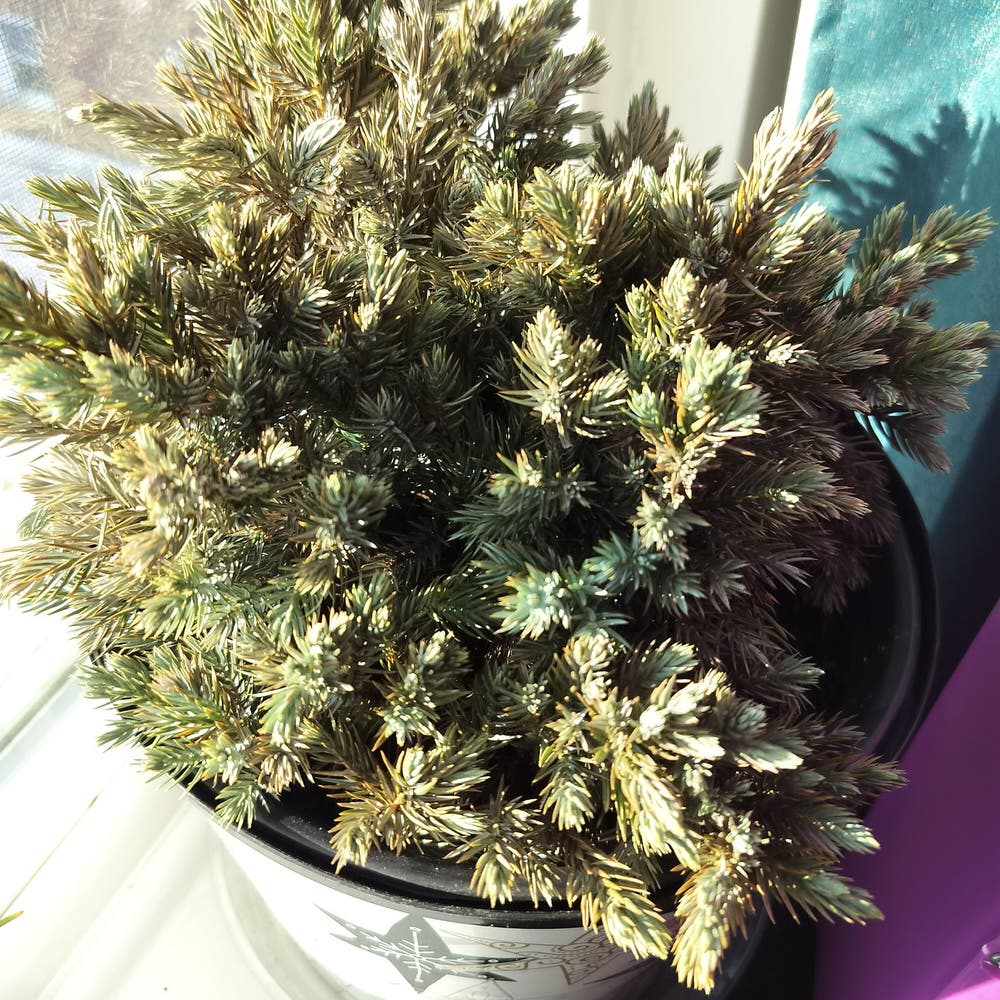
Why Are My Blue Star Juniper Leaves Dropping? 🍂
Juniperus squamata
By the Greg Editorial Team
Jun 18, 2024•4 min read
This article was created with the help of AI so we can cover more plants for you. May contain errors. See one? Report it here.
- Yellow or brown needles signal your Blue Star Juniper's distress.
- Temperature, watering, pests, diseases: all can cause leaf drop.
- Regular check-ups and proper care prevent future leaf drop issues.
Spotting the Signs: When Your Blue Star Juniper Is Unhappy
🚨 Visual Clues of Distress
A healthy Blue Star Juniper flaunts silvery-blue needles, but discoloration to yellow or brown screams trouble. If the foliage is less plush than a luxury carpet, consider it a cry for help.
Wilting or thinning foliage? That's your juniper waving a white flag. Don't ignore these visual SOS signals; they're as subtle as a sledgehammer in a glass house.
🕵️ Beyond the Leaves
Root health is like a credit score for your plant—critical but often overlooked. If the roots are as mushy as overcooked noodles, you've got problems.
Stem damage or unusual patterns? That's your cue to play Sherlock. Pests might be throwing a party, and trust me, you're not invited.

Unraveling the Mystery: Common Culprits Behind Leaf Drop
⛅️ Weather Woes
Temperature extremes are like mood swings for your Blue Star Juniper; they can wreak havoc on its leafy demeanor. Too hot or too cold, and your plant might start shedding leaves like a dog sheds fur in summer. Consistency is the plant's best friend—abrupt changes, particularly cold snaps, can cause significant stress, leading to leaf drop.
Improper watering is another drama queen for junipers. Overwatering can lead to a soggy mess and root rot, while underwatering leaves your plant as parched as a desert. Stick your finger into the soil; if it's dry, it's time for a drink. If it's wet, put the watering can down and back away slowly.
🐜 Unwelcome Guests
Pests are the uninvited guests at the dinner party of your Blue Star Juniper. Spider mites and aphids love to crash the scene, leaving behind a sticky mess and mottled leaves. If you spot these signs, it's time to roll up your sleeves and show these party crashers the door.
Diseases like root rot are the silent assassins of the plant world. They sneak in when conditions are too damp, and before you know it, your juniper's leaves are hitting the ground. Keep an eye out for a gradual decline in your plant's health, and remember that the best offense is a good defense—preventative care is key.

First Aid for Your Blue Star Juniper
💧 Adjusting Your Watering Technique
Blue Star Junipers are not needy when it comes to water. Balance is key. They thrive on soil moisture that's just right—not too wet, not too dry. For the first year, water them regularly to help them settle in. After that, they're pretty self-sufficient, only needing water when the soil feels dry or during extreme heat.
Overwatering is the fast track to unhappy juniper roots. Let the soil dry out between waterings. This isn't a guessing game; stick to a schedule. Your plant will thank you for the predictability.
🚰 Implementing Proper Drainage Solutions
Drainage is the unsung hero here. If your juniper's pot is more like a swimming pool, it's time for an upgrade. Get a pot with proper drainage holes. Mix in some coarse sand or perlite to improve soil texture—it's like loosening a tight belt after a big meal. And don't forget to aerate the soil occasionally. It's like giving your plant room to breathe in a crowded elevator.
🌞 Creating the Ideal Home Environment
Light exposure is crucial. Blue Star Junipers bask in the glory of bright, indirect light. Direct sunlight? Not too much, unless you're trying to cook your plant. And when the mercury drops, think of giving your juniper a cozy sweater—move potted plants to a sheltered spot and wrap the container in burlap or bubble wrap to protect from the cold.
Soil conditions are just as important. These junipers prefer light, sandy soils but can handle a range from slightly acidic to alkaline (pH 5.0 to 8.0), as long as it's well-drained. Water-logged soil is a no-go zone. If you're potting, go for terra-cotta containers to prevent toppling and remember that container-grown junipers will need more frequent watering, especially during those hot summers.

Keeping the Blues Away: Prevention and Long-Term Care
🕵️ Routine Monitoring
Regular check-ups are crucial for your Blue Star Juniper's health. Like a car needs its oil changed, your plant needs consistent care. Inspect leaves, stems, and soil weekly to catch any signs of distress early. If you notice healthier foliage after tweaking your care routine, you're on the right track.
🛡️ Proactive Pest and Disease Control
Pests despise cleanliness as much as teenagers hate chores. Keep the area around your plant tidy—remove fallen leaves and debris to discourage unwanted guests. Introduce beneficial insects like ladybugs if you can; they're nature's pest control. For diseases, remember that prevention is the best medicine. Rotate treatments if you're using chemicals to outsmart any pesky pest adaptability.
⚠️ Safety First
This content is for general information and may contain errors, omissions, or outdated details. It is not medical, veterinary advice, or an endorsement of therapeutic claims.
Always consult a qualified healthcare professional before using any plant as food, medicine, or supplement.
Never eat any plant (or feed one to pets) without confirming its identity with at least two trusted sources.
If you suspect poisoning, call Poison Control (800) 222-1222, the Pet Poison Helpline (800) 213-6680, or your local emergency service immediately.
Spotted an error? Please report it here.
Ensure your Blue Star Juniper remains resilient 🌟 with Greg's tailored care reminders, keeping it lush and safeguarded against pests and watering woes.