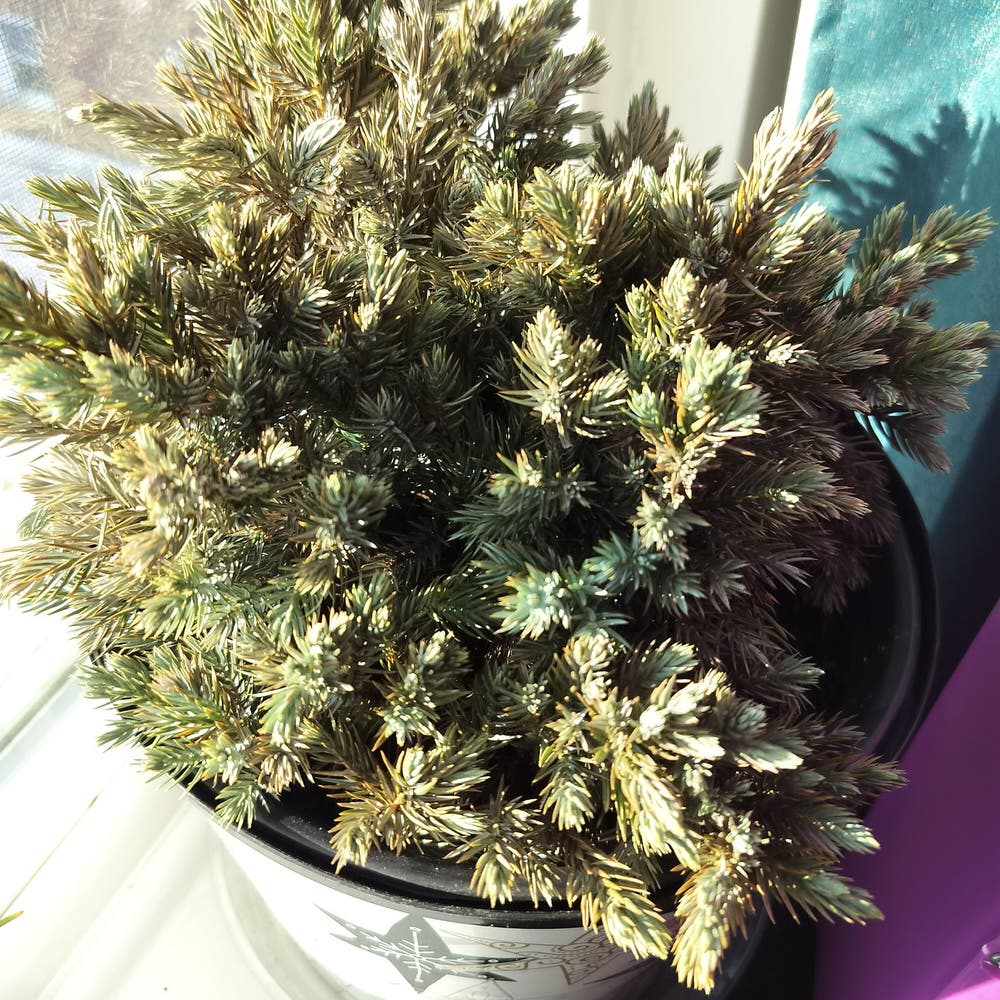
Why Are My Blue Star Juniper Leaves Curling?
Juniperus squamata
By the Greg Editorial Team
Jun 18, 2024•4 min read
This article was created with the help of AI so we can cover more plants for you. May contain errors. See one? Report it here.
- Curling leaves signal distress, often due to environmental factors or pests.
- 🌱 Maintain moist soil and prune to prevent and treat leaf curling.
- Consistent care routine is key for Blue Star Juniper's health.
Spotting the Signs: When Your Blue Star Juniper Needs Help
🍃 Recognizing Leaf Curling and Related Symptoms
When the normally resilient leaves of your Blue Star Juniper start to curl, it's not trying to make a fashion statement—it's signaling distress. Look for leaves that resemble tiny green scrolls, a sure sign that your plant is not in its happy place. Crispy edges? That's the botanical equivalent of a cry for hydration. And if the foliage starts to mimic a gymnast's ribbon, know that it's not showing off; it's showing strain.
🕵️ Decoding the Curl: What Your Plant's Leaves Are Telling You
Leaf curling is not a plant's attempt at cryptic communication; it's a blatant SOS. This symptom is a clear indicator that your Blue Star Juniper is facing some sort of adversity. Whether it's environmental stress, improper watering, or an unseen pestilence, the curl is a clue that demands your attention. It's time to don your detective hat and get to the root of the problem—literally and figuratively.

Battling the Elements: Environmental Impact on Leaf Curling
🛡️ Shielding from Extreme Weather
Extreme temperatures can wreak havoc on your Blue Star Juniper. Heat waves or frosty nights can cause leaves to curl as a stress response. To combat this, create a microclimate with shade cloth during intense sun or use insulation like bubble wrap when frost threatens. It's about giving your plant the equivalent of sunscreen or a winter jacket.
🚰 Adjusting Your Watering Tactics
Soil moisture is a balancing act. Overwatering can lead to root rot, while underwatering stresses the plant, both resulting in leaf curling. The goal is to maintain soil that's moist but not soggy. Use the touch test to gauge dampness, and adjust your watering schedule according to the season. In winter, water less; in summer, monitor more frequently. Remember, consistent moisture tailored to the current climate is key.

The Unseen Adversaries: Pests and Diseases
🐛 Identifying Common Culprits
Leaf curling in Blue Star Juniper can often be a red flag for pest or disease presence. Mealybugs and spider mites are notorious for causing such symptoms, as they sap the plant's vitality. Fungal diseases, on the other hand, can manifest through discoloration and deformity of the foliage.
💪 Winning the Fight Against Infestations
To combat these issues, vigilance is key. Regularly inspect your plant, paying close attention to the undersides of leaves. If pests are spotted, organic options like neem oil or insecticidal soap can be effective. For fungal foes, remove affected leaves and improve air circulation. When using fungicides, opt for eco-friendly choices to avoid collateral damage to your garden's ecosystem. Remember, the best defense is a good offense: keep your Blue Star Juniper healthy to ward off these unwelcome invaders.

Feeding Your Blue Star Juniper: Nutrient Needs and Soil Health
💊 Correcting Nutrient Shortfalls
Nitrogen is the lifeblood of lush, green foliage. If your Blue Star Juniper is looking a bit lackluster, it might be crying out for this essential nutrient. A soil test can be your best friend here, revealing any deficiencies. For a quick fix, a balanced 10-10-10 fertilizer in late winter or early spring can give your juniper the pick-me-up it needs. But remember, moderation is key; over-zealous fertilizing can backfire.
🌱 Enhancing Soil Quality
Your Blue Star Juniper's roots are like the plant's stomach, and well-draining soil is the gourmet diet it craves. Sandy soils are a match made in heaven for these shrubs, but they're not picky—any well-drained soil will do. To boost drainage and fertility, consider mixing in some compost or perlite. It's like upgrading your plant's meal plan to premium—more nutrients, better growth. Keep the soil's pH slightly acidic to neutral, and watch your juniper thrive.
Pruning and Long-Term Care for Vigorous Growth
🌱 Pruning with Purpose
Pruning isn't just a cosmetic fix—it's a vital step in rehabilitating your Blue Star Juniper. Snip off any curled or damaged leaves to prevent disease spread and encourage a flush of new, healthy growth. Use clean, sharp shears and cut just above a leaf node to promote regeneration. Remember, it's like removing the blockers so your plant can sprint forward.
🏋️ Establishing a Resilient Routine
Developing a consistent care routine is like setting a winning strategy for your plant's health. Regularly check for pests, adjust watering as needed, and ensure your Blue Star Juniper is getting the right amount of light. Fertilize with a balanced mix during the growing season, but don't overdo it—think of it as a well-measured diet for your plant. Consistency is key; make these practices as routine as your morning coffee.
⚠️ Safety First
This content is for general information and may contain errors, omissions, or outdated details. It is not medical, veterinary advice, or an endorsement of therapeutic claims.
Always consult a qualified healthcare professional before using any plant as food, medicine, or supplement.
Never eat any plant (or feed one to pets) without confirming its identity with at least two trusted sources.
If you suspect poisoning, call Poison Control (800) 222-1222, the Pet Poison Helpline (800) 213-6680, or your local emergency service immediately.
Spotted an error? Please report it here.
Combat leaf curling in your Blue Star Juniper by troubleshooting 🕵️♂️ with Greg's tailored care plans and community advice for a lush, healthy plant.