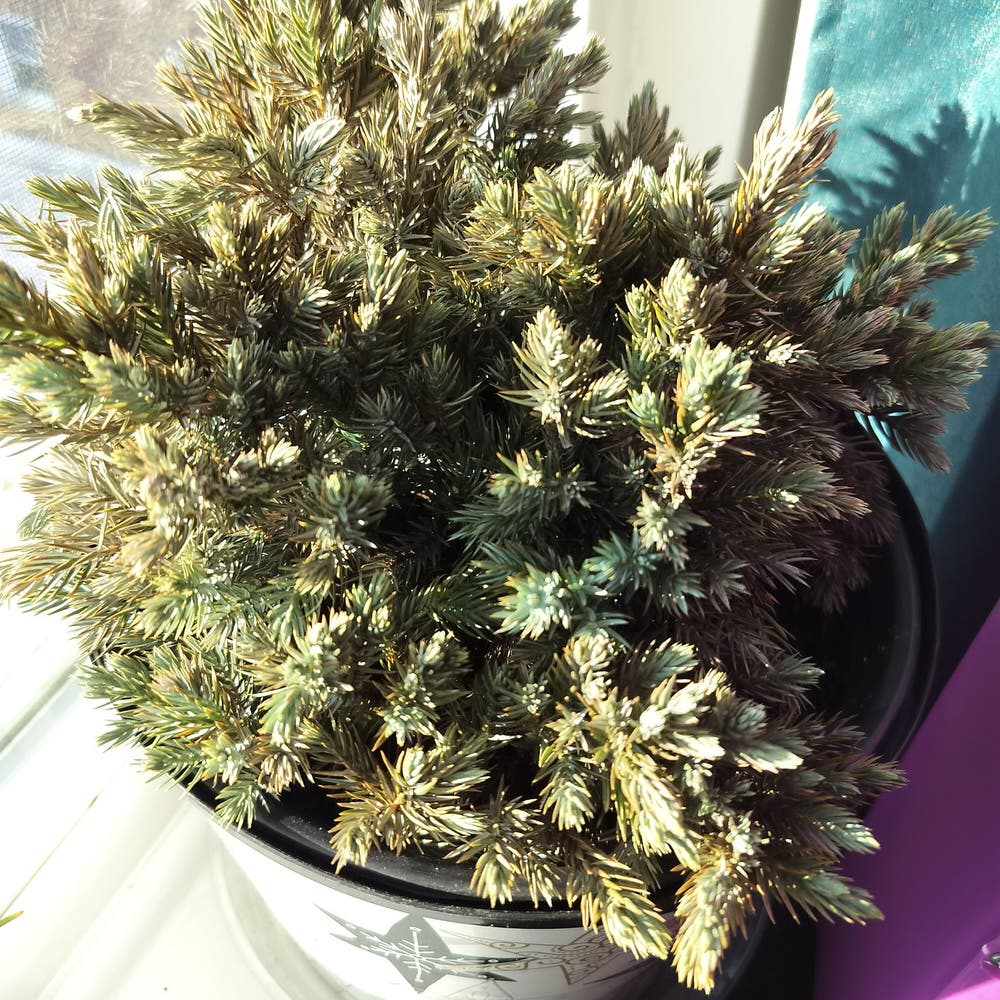
What Temperature Does My Blue Star Juniper Need?
Juniperus squamata
By the Greg Editorial Team
Jun 18, 2024•3 min read
This article was created with the help of AI so we can cover more plants for you. May contain errors. See one? Report it here.
- Thrives in cool climates: Ideal 65°F-80°F, tolerates frost.
- Watch for heat stress: Wilting and crispy leaves signal overheating.
- Protect from extremes: Shade in summer, mulch and wind barriers in winter.
Nailing the Perfect Chill: Ideal Temperature Range for Blue Star Juniper
Blue Star Junipers are mountain natives; they thrive in cooler climates and can handle a frosty evening without a shiver.
⛄️ The Sweet Spot
The ideal temperature range for these steely-blue beauties is between 65°F and 80°F (18°C and 27°C). This zone ensures the juniper's foliage remains vibrant and doesn't start looking like it's been through a desert trek.
❄️ When the Mercury Dips
Don't panic when temperatures plunge; Blue Star Junipers can withstand the cold. They're cold-hardy down to freezing, making them a robust choice for gardeners in cooler zones. However, they're not fans of the sauna-like conditions—high heat and humidity are their kryptonite.

When Things Heat Up: Recognizing Temperature Stress
🌡️ Spot the Signs: How Blue Star Juniper Tells You It's Too Hot
Wilting leaves may be the first distress call your Blue Star Juniper sends out when it's overheating. This is the plant equivalent of sweating profusely on a sweltering day. If you notice the foliage turning crispy or developing a bleached appearance, it's like your plant is waving a white flag at the sun's relentless rays. These are clear indicators that your juniper is baking in too much heat.
🌋 The Aftermath of a Scorcher: Long-Term Effects of Heat Stress on Your Plant
Heat stress isn't just a bad day for your Blue Star Juniper; it's a chronic condition that can lead to a downward spiral of health. Prolonged exposure to high temperatures can cause stunted growth, making your plant look as if it's stuck in a perpetual state of arrested development. In severe cases, you might find sunburned patches on the leaves, which are as unsightly as they are damaging. And let's not forget root rot—it can sneak up like a thief in the night if the soil temperature gets too high, turning your plant's lifeline into mush. Keep an eye out for these signs, and take action to prevent your Blue Star Juniper from becoming a casualty of the summer sun.

Keeping Your Cool: Protecting Blue Star Juniper from Temperature Extremes
Summer sizzle defense: Your Blue Star Juniper can get cranky in the heat. Shade is its best friend when the sun is relentless. Consider a light cloth or strategically placed plant companions to cast a protective umbrella during peak hours.
Watering wisdom: Adjust your irrigation game. In summer's zenith, your juniper's thirst spikes, but avoid swamping the roots. Think consistent moisture, not a flood.
❄️ Winter is coming: Ensuring your Blue Star Juniper stays snug
Mulch magic: A thick layer of mulch acts like a cozy blanket for the roots. It's essential to prevent the soil from freezing solid.
Wind barriers: Burlap or landscape fabric can shield your juniper from biting winds. Position it to block the chill but not the light.
💦 A Quick Word on Humidity
Low humidity lover: Blue Star Juniper isn't into tropical vibes. Keep it in a spot that's more desert than rainforest. Air circulation is crucial to fend off fungal foes.
Pebble tray potential: If your indoor air is drier than a comedian's humor, a pebble tray can add a touch of moisture without overdoing it. Remember, moderation is key.

⚠️ Safety First
This content is for general information and may contain errors, omissions, or outdated details. It is not medical, veterinary advice, or an endorsement of therapeutic claims.
Always consult a qualified healthcare professional before using any plant as food, medicine, or supplement.
Never eat any plant (or feed one to pets) without confirming its identity with at least two trusted sources.
If you suspect poisoning, call Poison Control (800) 222-1222, the Pet Poison Helpline (800) 213-6680, or your local emergency service immediately.
Spotted an error? Please report it here.
Ensure your Blue Star Juniper stays cool ❄️ with Greg's personalized care plan that alerts you when temperatures aren't just right!