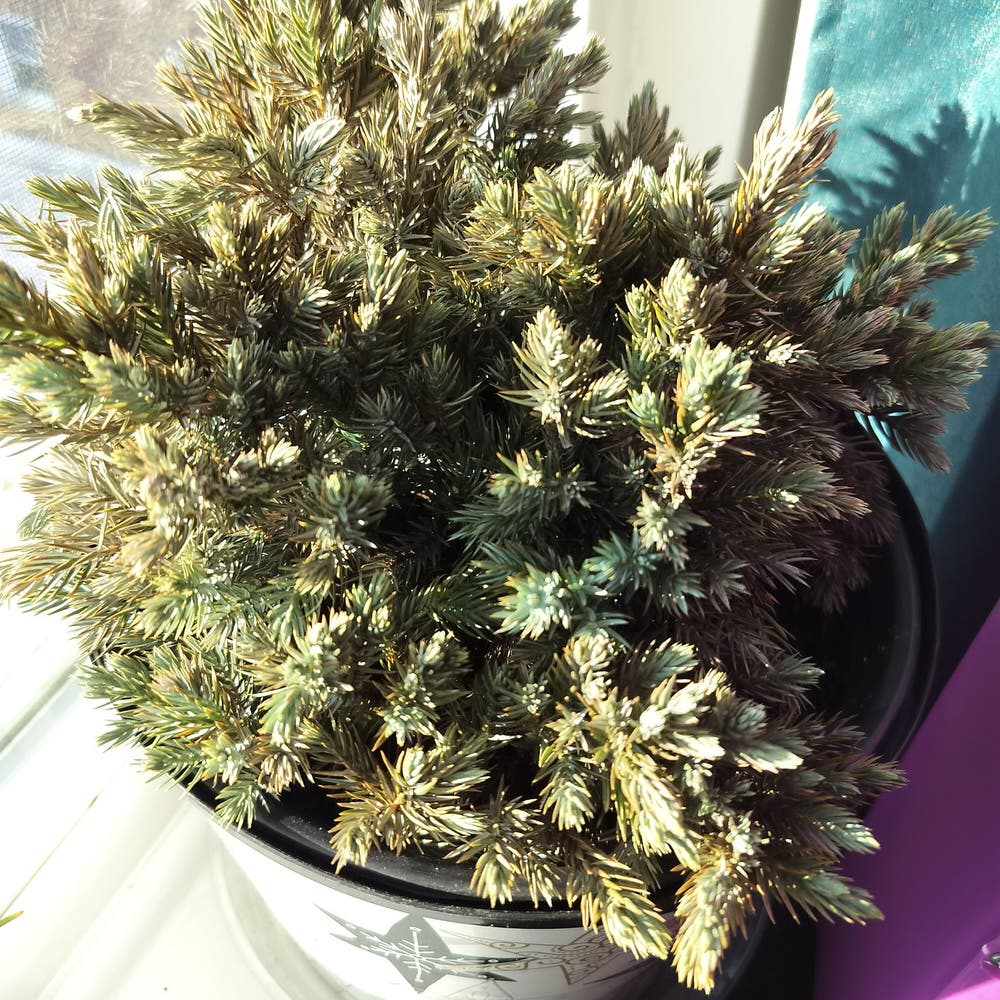
Why Is My Blue Star Juniper Not Doing Well?
Juniperus squamata
By the Greg Editorial Team
Jun 18, 2024•4 min read
This article was created with the help of AI so we can cover more plants for you. May contain errors. See one? Report it here.
- 🌧️ Over/under-watering harms Junipers; let soil dry between waterings.
- ☀️ Bright, indirect sunlight needed, avoid intense noon sun to prevent scorch.
- 🐞 Combat pests and fungus with early detection and proper pruning.
When Water Works Against You
💧 Spotting Water Woes
Over-watering and under-watering your Blue Star Juniper can be the silent assassins of your shrub's health. Yellowing needles? That's the hallmark of too much H2O. Conversely, wilting and browning tips scream for water. It's a balancing act that requires vigilance.
Fine-Tuning Your Watering Routine
To prevent the dreaded root rot, let the soil dry out between waterings. Early morning is prime time to water, reducing the risk of fungal nightlife. Ensure your pot has adequate drainage—no plant enjoys wet feet. Adjust your watering with the seasons; your Juniper's thirst varies throughout the year. Remember, consistency is key, but so is flexibility.

Light and Temperature: Getting It Just Right
🌞 Symptoms of Light and Temperature Stress
Blue Star Junipers are sun worshippers and temperature divas. Too little sun, and they'll sulk with faded foliage; too much, and they'll throw a fit with scorched leaves. Temperature fluctuations turn these evergreens into drama queens, with growth slowing to a snail's pace or needles dropping like flies.
Creating the Ideal Environment
Bright, indirect sunlight is your Blue Star's best friend. Think of it as the plant's non-negotiable coffee fix. If it's languishing in the shade, move it to a sunnier spot—but not direct noonday sun, unless you fancy fried juniper. As for temperature, keep it steady. These plants hate change more than a cat hates a bath. Avoid drafts and heat sources like the plague. If you're playing musical chairs with your plant and the seasons, do it gradually. No shock therapy, please. Use light meters and timers if you must, to nail that Goldilocks zone: not too hot, not too cold, just right.

Bug Off: Dealing with Pests
🐞 Common Culprits
Pests are uninvited guests in the Blue Star Juniper's life. Spider mites betray their presence with fine webs, while scale insects disguise themselves as bumps on stems and leaves. Yellowing foliage or stunted growth? These critters are likely to blame.
🐜 Pest Control Tactics
Early detection is crucial for pest control. For spider mites, a forceful water spray can dislodge these tiny terrors. Scale insects may require a more hands-on approach, like scraping or dabbing with rubbing alcohol. Horticultural oils are also effective, smothering these pests without harming the plant.
Beneficial predators are nature's hitmen. Ladybugs and parasitic wasps have a voracious appetite for aphids and scales. Introducing these allies can help keep pest populations in check. Remember, diversity in your garden can confuse pests, making it harder for them to settle in.
For persistent problems, insecticidal soaps or neem oil can be the heavy artillery. These options are less harmful to the good guys but deadly to pests. Rotate treatments to prevent the critters from developing resistance.
Regular inspections are your best defense. Keep an eye out for any signs of infestation and act swiftly. Vigilance ensures these pests don't throw a party at your juniper's expense.

Fungal Foes and Scorched Leaves
🍄 Recognizing Fungal Signs and Scorched Tips
When your Blue Star Juniper starts looking like it's on the losing end of a battle, fungal issues or leaf scorch might be to blame.
🕵️ Spotting Fungal Invaders
Check for discoloration or powdery spots on leaves—these are the telltale signs of a fungal party you didn't invite. Yellowing leaves can also indicate a fungal free-for-all.
Identifying Scorched Leaves
Scorched leaves are the plant's equivalent of a sunburn—look for brown edges and a fading green. It's a subtle shift, so keep your eyes peeled.
🛡️ Combating Fungal Invaders and Heat Damage
Once you've spotted the signs, it's time to get your hands dirty and show these problems the door.
Fungal Foes: Fight Back
- Prune affected areas to stop the spread.
- Keep leaves dry; consider watering at the base to avoid moisture on the foliage.
- Improve air circulation; a stuffy environment is a fungal favorite.
- If things look grim, a fungicide might be your new best friend. Go for a copper-based one and follow the instructions like your plant's life depends on it—because it does.
Scorched Leaves: Turn Down the Heat
- If the sun's rays are too intense, relocate your juniper to a spot with more shade.
- Ensure the plant isn't just hot but also thirsty—adjust your watering routine accordingly.
- Remember, prevention is better than cure. Keep an eye out for early signs and act swiftly to avoid crispy leaf casualties.
⚠️ Safety First
This content is for general information and may contain errors, omissions, or outdated details. It is not medical, veterinary advice, or an endorsement of therapeutic claims.
Always consult a qualified healthcare professional before using any plant as food, medicine, or supplement.
Never eat any plant (or feed one to pets) without confirming its identity with at least two trusted sources.
If you suspect poisoning, call Poison Control (800) 222-1222, the Pet Poison Helpline (800) 213-6680, or your local emergency service immediately.
Spotted an error? Please report it here.
Ensure your Blue Star Juniper thrives with just-right watering 💧 reminders from Greg, helping you prevent pests and the perils of over or under-watering.