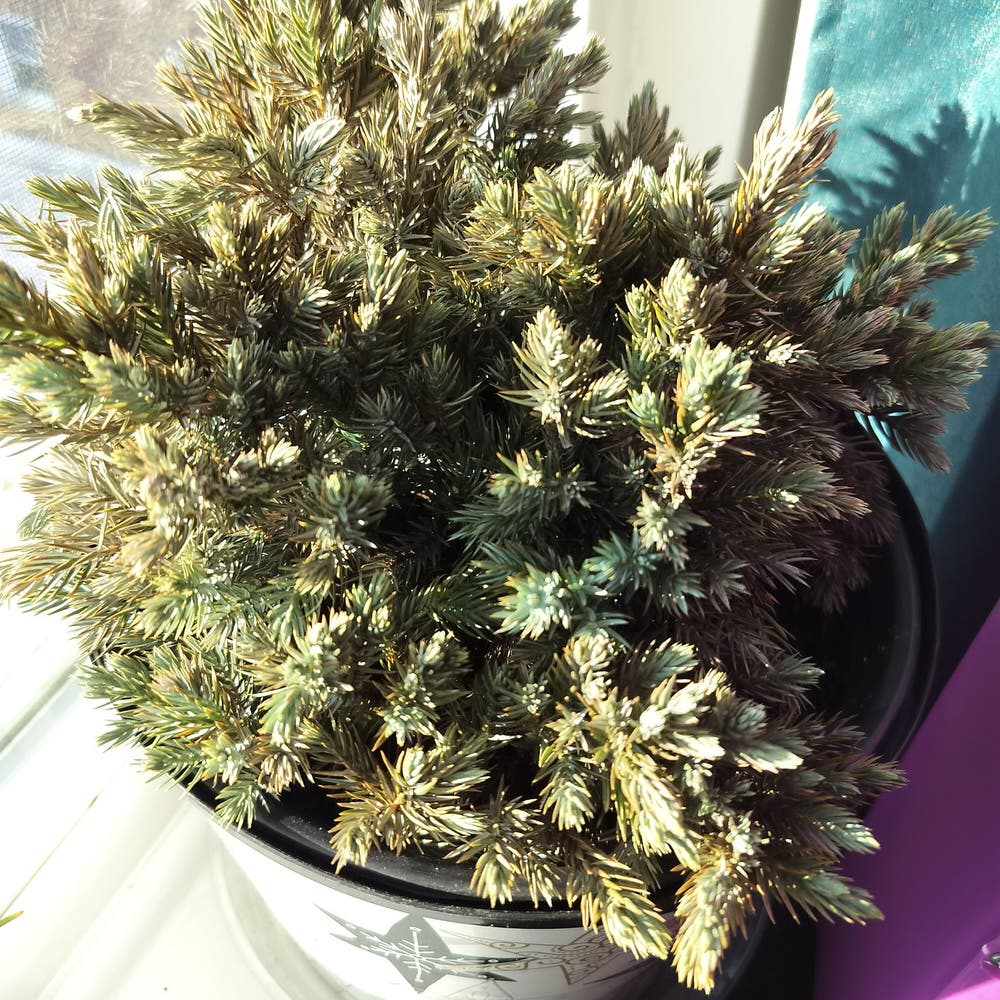
Blue Star Juniper - Fertilizing 101
Juniperus squamata
By the Greg Editorial Team
Jun 18, 2024•5 min read
This article was created with the help of AI so we can cover more plants for you. May contain errors. See one? Report it here.
- Spring and fall fertilizing primes Blue Star Juniper for growth and winter.
- Balanced 10-10-10 fertilizer suits young plants; compost may suffice for mature ones.
- Avoid over-fertilization by calculating correctly and observing for burn symptoms.
Timing is Everything: When to Fertilize Your Blue Star Juniper
🌱 Spring Awakening: Fertilizing After Winter Dormancy
Late winter or early spring is prime time for feeding your Blue Star Juniper. It's waking up from its winter nap and is hungry for nutrients. A balanced 10-10-10 fertilizer is a good choice for young plants in their first year. Established junipers are less needy; a layer of compost might just do the trick.
☀️ Summer Boost: Mid-Season Nutrient Top-Up
Come summer, your Blue Star Juniper is in full swing and could use a little pick-me-up. If you notice it's a bit under the weather, a light feeding could be beneficial. But remember, this isn't a buffet—more isn't better. Stick to the script, aka the fertilizer label instructions.
🍂 Fall Preparations: Last Call for Fertilizer Before Winter
As fall approaches, it's time for the last round of fertilization. This helps your juniper prepare for the cold months ahead. But timing is crucial—don't fertilize too close to winter. You want to avoid new growth that can't handle Jack Frost. Aim to fertilize at least two months before the first expected frost.

Choosing the Perfect Fertilizer Match
💡 NPK Ratios: What Does Blue Star Juniper Crave?
Blue Star Junipers aren't divas of the plant world, but they do have specific needs. They're like the quiet kids in class – low maintenance but with definite preferences. Nitrogen (N) is essential for foliage development, while phosphorus (P) and potassium (K) support root strength and disease resistance. An NPK ratio that's not too heavy on the nitrogen is ideal – think 10-10-10 or similar balanced blends. This ensures your Blue Star doesn't get too leggy while still maintaining its stellar blue hue.
🍽️ Organic vs. Synthetic: Which Way to Go?
Organic fertilizers are the slow food movement of the gardening world – they release nutrients at a gentler pace and improve soil health over time. They're like a home-cooked meal, full of complex flavors that take time to savor. Synthetic options, on the other hand, are the fast food – quick, convenient, and precise. They can give your Blue Star Juniper a rapid green-up, but overuse might leave the soil and your plant feeling a bit junk-food-junky. It's a toss-up, really, but leaning towards organic can be a win for the environment and your shrub's long-term health.
🌞 Slow-Release Fertilizers: A Steady Diet for Your Shrub
Slow-release fertilizers are the crockpots of the nutrient world. They're all about low and slow, providing a steady stream of food that keeps your Blue Star Juniper satisfied without the risk of overindulgence. This approach mimics the natural nutrient uptake of plants, reducing the risk of fertilizer burn and making sure your shrub gets a balanced diet throughout the growing season. It's a set-it-and-forget-it solution that can make life easier for both you and your plant.

Fertilizer Application: A Step-by-Step Guide
💡 Calculating the Right Amount: Less is Often More
Calculating the correct amount of fertilizer for your Blue Star Juniper is crucial to avoid overindulgence. Start with the NPK ratio recommended for the plant, which is like the plant's dietary requirement. Use the formula: (Area of your garden in sq ft / 1000) x (Desired lbs of nitrogen per 1000 sq ft) / (Percentage of nitrogen in fertilizer) to get the amount needed. Remember, the goal is to nourish, not overwhelm.
💡 The Art of Spreading: Techniques for Even Distribution
Even distribution is key to a well-fed Blue Star Juniper. For granular fertilizers, use a spreader for uniform application. If you're using liquid, those medicine syringes aren't just for cough syrup—they're perfect for measuring out your plant's next meal. Ensure you're covering the root area evenly, but avoid direct contact with the plant's base to prevent root burn.
💡 Root Zone Fertilizing: Getting to the Heart of the Matter
Root zone fertilizing is like hitting the bullseye—it delivers nutrients right where they're needed. Create a moat around the plant, not too close to the trunk, and sprinkle the calculated amount of fertilizer into this area. This method encourages the roots to grow outward in search of food, which leads to a more stable and healthy plant. Remember, it's about getting to the heart of the matter without causing a heartache.

Recognizing and Resolving Over-Fertilization
🚨 Spotting Trouble: Symptoms of Fertilizer Burn
Overzealous fertilizing can leave your Blue Star Juniper with the botanical equivalent of a hangover. Yellow or brown leaves and a crusty salt buildup on the soil are your first red flags. If the roots look more barbecued than bountiful, you've likely gone too far with the nutrient love.
🛠️ Quick Fixes: Addressing Over-Fertilization Issues
When you've crossed the line from feeding to force-feeding, it's time to flush. Drench the soil with water to wash away excess fertilizer—think of it as a detox for your plant. Snip off any foliage that looks like it's seen better days. For potted Junipers, a soil change might be the fresh start they need.
🛡️ Prevention Strategies: How to Avoid Overdoing It Next Time
Here's a radical idea: test your soil before you fertilize. It's like checking the fridge before you go grocery shopping. And when you do fertilize, think of it as seasoning food—too much salt ruins the meal. Go for organic options that release nutrients at a plant-friendly pace, and always water thoroughly post-application to prevent those pesky salts from accumulating.
⚠️ Safety First
This content is for general information and may contain errors, omissions, or outdated details. It is not medical, veterinary advice, or an endorsement of therapeutic claims.
Always consult a qualified healthcare professional before using any plant as food, medicine, or supplement.
Never eat any plant (or feed one to pets) without confirming its identity with at least two trusted sources.
If you suspect poisoning, call Poison Control (800) 222-1222, the Pet Poison Helpline (800) 213-6680, or your local emergency service immediately.
Spotted an error? Please report it here.
Boost your Blue Star Juniper's vibrancy 🌟 with Greg's custom fertilizing reminders, ensuring a perfectly nourished and stunning shrub.