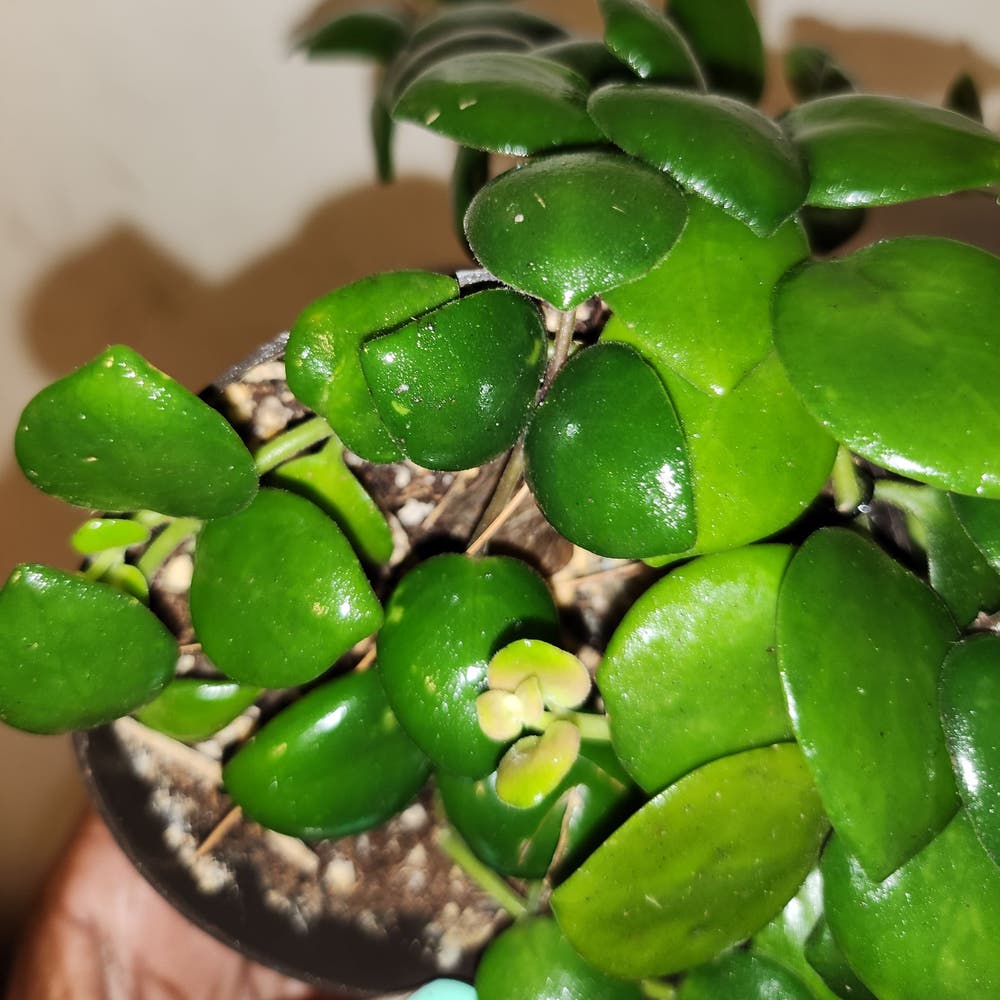
Black Spots on My Thai Pink Lipstick Plant Leaves
Aeschynanthus 'Thai Pink'
By the Greg Editorial Team
Apr 14, 2024•4 min read
This article was created with the help of AI so we can cover more plants for you. May contain errors. See one? Report it here.
Banish black spots 🕵️♂️ and restore your Thai Pink Lipstick Plant to its vibrant best with our expert guide.
- Fungal and bacterial infections cause black spots; environmental stress can too.
- Treat with fungicides, pruning, and adjust care to prevent recurrence.
- Regular inspections and cleanliness help catch and prevent black spots early.
Spotting the Culprit: Identifying and Understanding Black Spots
🕵️ What Do Black Spots Look Like?
Black spots on your Thai Pink Lipstick Plant are not a part of its charm. Visual cues are key: they're small, dark, and can grow from specks to blotches. Some spots may feel scabby, others sunken—both signal a cry for help from your plant.
👹 Common Villains Behind the Spots
🍄 Fungal Foes: Leaf Spot and Anthracnose
Leaf spot and anthracnose are the main fungal villains, thriving in warm, moist conditions. These spots can range from circular lesions with yellow halos to sunken areas, often feeling dry and crusty.
💦 Bacterial Baddies
Bacterial infections leave behind water-soaked lesions—think of the aftermath of a slimy encounter. These spots can feel as gross as they look, with a slimy texture that's unmistakable.
🌿 Environmental Stressors
Don't underestimate the impact of your plant's environment. Overwatering and poor air circulation are like rolling out the red carpet for these pathogens. Keep an eye on soil moisture and airflow to connect the dots between care and black spots.
First Aid for Your Plant: Treating Black Spots
🍄 Fungus Among Us: Tackling Fungal Infections
Sterilize your pruning tools; it's like preparing for a plant operation. Snip off the infected leaves to halt the spread of the fungus. Choose a fungicide—neem oil for the organic fans, or a stronger chemical concoction if you're dealing with the stubborn types. Apply it as if you're painting a masterpiece, covering every leaf thoroughly. Weekly applications are your new ritual.
🦠 Bacterial Battles: Curbing Bacterial Infections
Isolate your plant faster than you'd unfriend a spoiler-happy pal. Prune the drama away with those sterilized tools again. Enter copper-based fungicides, your garden's new superhero, but remember, the label is your bible—follow it. Keep everything cleaner than a five-star hotel room to avoid bacterial encores.
😅 Stress Less: Adjusting Care to Prevent Spots
Overwatering is a no-go; it's like force-feeding your plant. Aim for the soil, not the leaves, and do it when the sun's up to ensure a quick dry-off. Airflow is key—consider a fan to keep things breezy. And if your plant is sunbathing too hard, dial it back with some shade. It's all about that perfect plant spa vibe.
Keeping the Spots at Bay: Prevention Strategies
🌿 Routine Check-ups
Regular inspections are like your plant's personal health screenings. Catching issues early can save you from a world of black spots later. Wipe down leaves with a damp cloth to keep them clean and spot-check for pests. Think of it as your plant's personal health screening.
🏡 Creating the Ideal Home
Watering wisdom is all about timing and technique. Keep leaves dry and water only when the soil is bone-dry. Use a watering can with a long spout to target the soil directly, avoiding the leaves like they're lava.
Humidity control is crucial; use a hygrometer to maintain the perfect balance. Your plant's environment shouldn't be a tropical rainforest or a desert.
Good airflow is essential. Don't cram your plants together; they need personal space to breathe and stay dry, reducing disease spread.
Prune proactively. Snip off any funky-looking foliage with sterilized shears. It's like giving your plant a health-boosting haircut.
Soil savvy is key. Use well-draining soil to prevent water from overstaying its welcome. It's like giving your plant's roots a breathable raincoat.
Remember, cleanliness is your garden's best friend. Keep your gardening tools as pristine as a surgeon's scalpel. Regularly remove fallen debris from around your plant to disrupt the life cycle of fungi and pests.
Lastly, quarantine new plants. It's not unfriendly, it's smart. Isolate newcomers until you're sure they're clean, like they're the latest viral sensation.
⚠️ Safety First
This content is for general information and may contain errors, omissions, or outdated details. It is not medical, veterinary advice, or an endorsement of therapeutic claims.
Always consult a qualified healthcare professional before using any plant as food, medicine, or supplement.
Never eat any plant (or feed one to pets) without confirming its identity with at least two trusted sources.
If you suspect poisoning, call Poison Control (800) 222-1222, the Pet Poison Helpline (800) 213-6680, or your local emergency service immediately.
Spotted an error? Please report it here.
Keep your Thai Pink Lipstick Plant spot-free 🍃 with Greg's tailored care reminders, helping you catch and prevent black spots before they start.