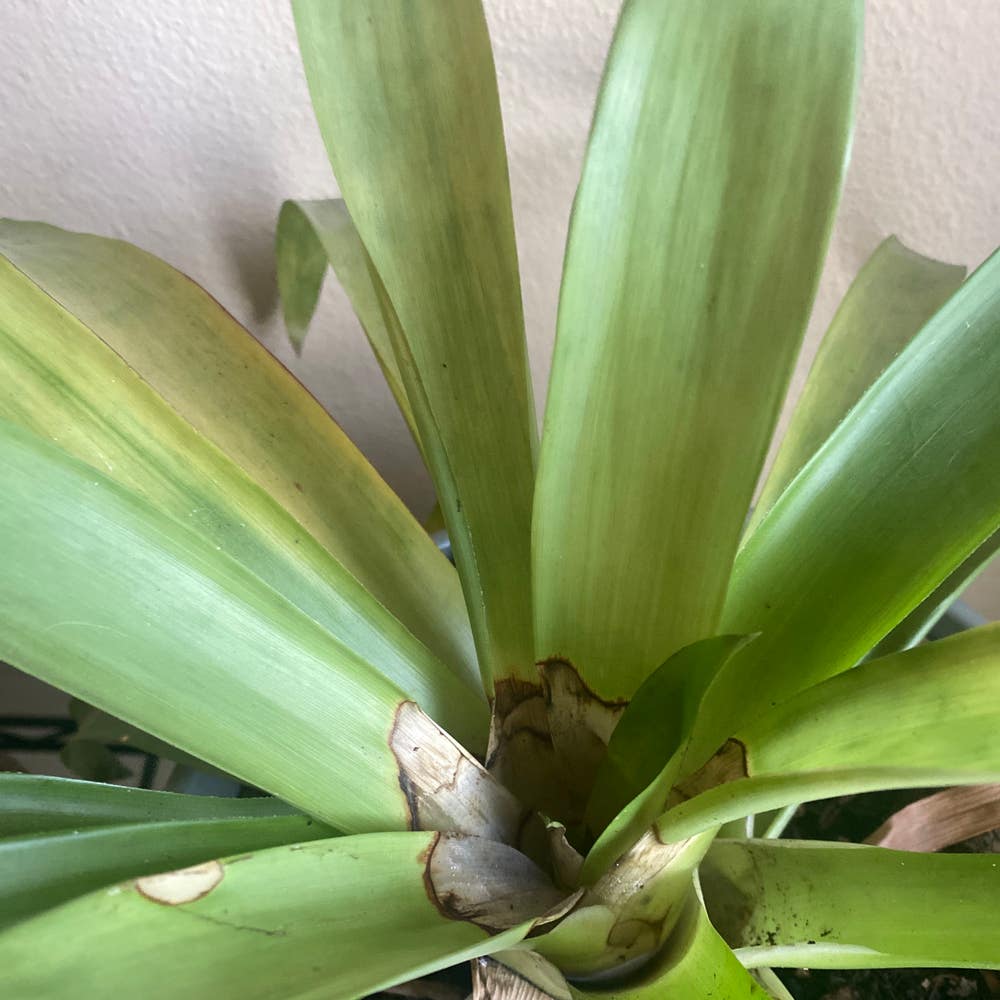
How Do I Fix Neoregelia 'Pop Tart' Root Rot?
Neoregelia 'Pop Tart'
By the Greg Editorial Team
Apr 28, 2024•4 min read
This article was created with the help of AI so we can cover more plants for you. May contain errors. See one? Report it here.
Save your 'Pop Tart' 🌱 from root rot's clutches with our must-know rescue and prevention tips!
- Yellow leaves and mushy roots signal root rot in Neoregelia 'Pop Tart'.
- Sterilize and trim damaged roots, then repot with well-draining soil.
- Balance watering habits and use tools to prevent future root rot.
Spotting the Red Flags: Symptoms of Root Rot in Your Neoregelia 'Pop Tart'
🚩 Visual Symptoms
Yellowing Leaves and Wilting
When your Neoregelia 'Pop Tart' starts to look less perky than usual, with leaves yellowing and wilting, it's not just throwing a tantrum for attention. This could be a visual cry for help, signaling the onset of root rot.
Unhealthy Roots
The roots should be sturdy, like a fresh carrot, not soft or mushy. If they resemble overcooked noodles, it's time to take immediate action against root rot.
🕵️ Sensory Clues
The Odor of Root Rot
Trust your nose. If you catch a whiff of something that smells like last week's forgotten gym socks, that's the stench of decay. It's a clear sign that your Neoregelia 'Pop Tart' might be suffering from root rot.
Emergency Response: Treating Root Rot ASAP
🏥 Root Triage
When root rot rears its ugly head, it's time for some tough love. Sterilize your scissors or shears; you're about to play plant surgeon. Gently remove your Neoregelia 'Pop Tart' from its pot and shake off the excess soil to reveal the root of the problem—literally. Healthy roots are firm and white, while the rotten ones are mushy and brown. Snip away the damaged parts with precision, leaving only the healthy tissue.
🌬️ Drying Out and Starting Fresh
After the root rot removal, give your plant a breather. Air out the roots, laying the plant on a dry surface. This is no time for water; think of it as a drying-out period essential for recovery. Once the roots feel less like a damp sponge, it's repotting time. Grab some fresh, well-draining soil and a pot with more holes than a detective's alibi. When repotting, be gentle—no soil compaction here. Water sparingly; imagine you're rationing on a lifeboat. This isn't just a new pot; it's a fresh start for your 'Pop Tart'.
Water Wisely: Adjusting Your Watering Habits
💧 Finding the Sweet Spot
Tailoring the watering frequency and volume is crucial for your Neoregelia 'Pop Tart' to bounce back from root rot. It's a delicate balance; too much water and you're back to square one with rot, too little and your plant dries out. Start with watering once your plant's soil feels dry an inch below the surface. Then, observe how your 'Pop Tart' responds and adjust accordingly.
🌊 Moisture Monitoring
Forget the guesswork; tools like moisture meters can be your new best friends. They provide a clear indication of when your plant's soil is just moist enough—like that wrung-out sponge. If you're more old-school, the finger test still works wonders. Stick your finger into the soil up to the first knuckle; if it's dry, it's time to water. Remember, the goal is consistent soil moisture, not a flood-and-drought routine.
Building a Strong Defense: Preventing Future Root Rot
🌱 The Right Foundation
Choosing the right soil and pot for your Neoregelia 'Pop Tart' is like equipping it with the best armor. You want a well-draining potting mix; think loose, airy, and unfriendly to waterlogging. Your pot must have drainage holes—this isn't up for debate. To level up, add a layer of gravel at the pot's base to act as a moisture buffer.
Elevate your pot with feet or a stand. It's not just about style; it's about promoting air circulation and ensuring that excess water has nowhere to hide.
💧 Watering Do's and Don'ts
Watering your 'Pop Tart' is not about sticking to a rigid schedule. It's about observing and adapting. Before you water, check the soil—top inch dry? Go ahead. Slightly moist? Hold off. It's about finding that Goldilocks zone for watering—not too much, not too little.
Use room-temperature water to avoid shocking your plant's roots. Cold water can be as unwelcome as a cold shower first thing in the morning. And remember, a dry plant is often a happy plant, so when in doubt, err on the side of underwatering rather than overwatering.
⚠️ Safety First
This content is for general information and may contain errors, omissions, or outdated details. It is not medical, veterinary advice, or an endorsement of therapeutic claims.
Always consult a qualified healthcare professional before using any plant as food, medicine, or supplement.
Never eat any plant (or feed one to pets) without confirming its identity with at least two trusted sources.
If you suspect poisoning, call Poison Control (800) 222-1222, the Pet Poison Helpline (800) 213-6680, or your local emergency service immediately.
Spotted an error? Please report it here.
Banish root rot and keep your Neoregelia 'Pop Tart' thriving 🌱 with Greg's personalized watering reminders that ensure just the right amount of moisture.