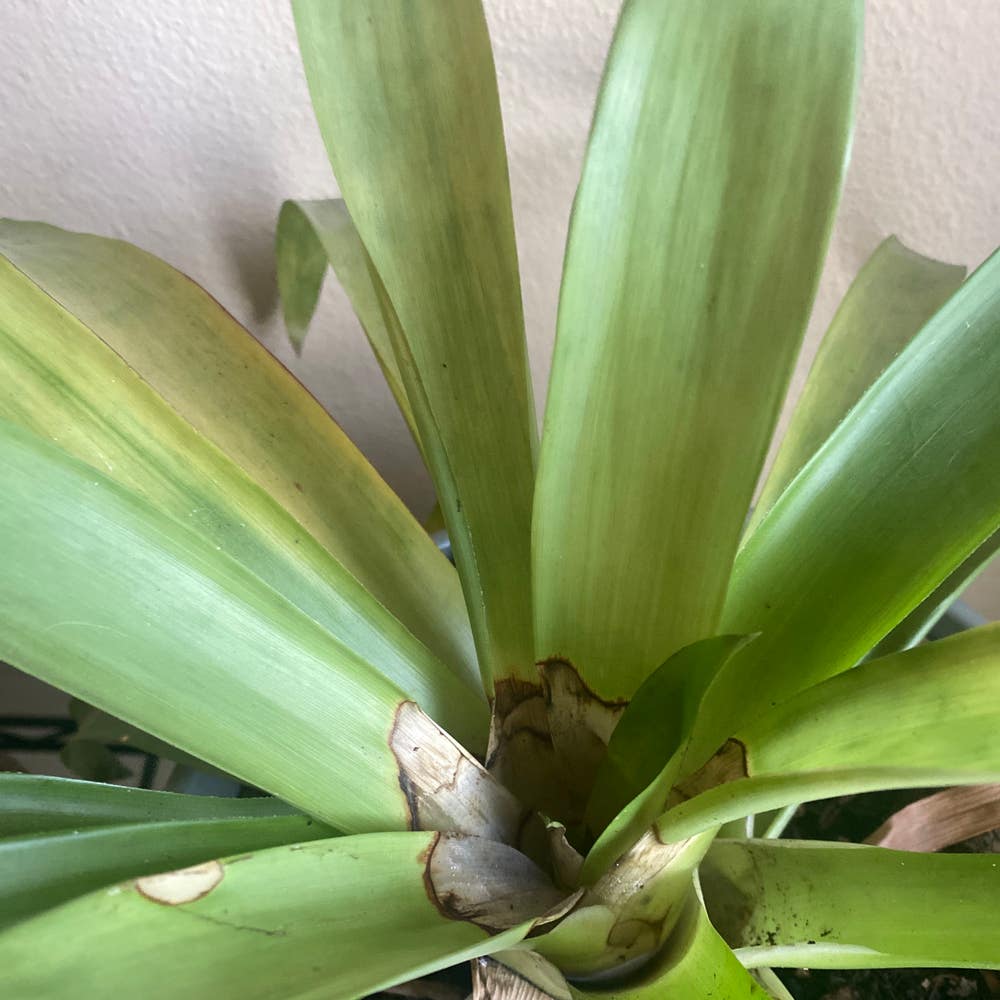
Why Are My Neoregelia 'Pop Tart' Leaves Curling?
Neoregelia 'Pop Tart'
By the Greg Editorial Team
Apr 28, 2024•6 min read
This article was created with the help of AI so we can cover more plants for you. May contain errors. See one? Report it here.
Unravel the mystery behind your Neoregelia's curling leaves and flaunt its perfect foliage! 🌿✨
- Leaf curling signals distress in Neoregelia 'Pop Tart'; watch for discoloration and spots.
- Balance light, temperature, humidity, and use well-draining soil to prevent curling.
- Inspect and treat pests regularly with natural remedies like neem oil.
Spotting the Signs: When Your Neoregelia 'Pop Tart' is Unhappy
🌀 Visual cues of leaf curling
Curling leaves in Neoregelia 'Pop Tart' are the plant's distress signal. When leaves twist into spirals or sharp bends, it's not a new aesthetic—it's a cry for help. These contortions indicate that the plant's environment is off-kilter.
Other symptoms to watch for
Beyond the curl, watch for discoloration. Yellow or brown leaves are your Neoregelia waving a white flag. Crispy edges and necrotic spots spell serious trouble. A sticky residue? That's pest graffiti on your plant's leaves. Stunted growth or unexpected leaf drop is your cue to investigate further. Keep an eye out for these signs, as they often accompany leaf curling and can help pinpoint the underlying issue.
Unraveling the Curl: Common Culprits Behind the Curve
🌞 Environmental stressors: Light, temperature, and humidity
Light can be a fickle friend to your Neoregelia 'Pop Tart'. Too much and the leaves curl up like they're trying to hide; too little and they stretch out, equally unhappy. Aim for that Goldilocks zone: bright, indirect sunlight.
Temperature swings are like unexpected plot twists—unwelcome and stressful. Keep the thermostat steady to avoid leaf curling drama. Consistency is key.
Humidity might not be the first thing on your mind, but for your 'Pop Tart', it's a big deal. Too dry, and the leaves curl tighter than a miser's fist; too wet, and you're in a fungal horror story. Aim for that rainforest vibe, not a desert mirage.
🚰 Thirsty roots: The impact of watering habits
When it comes to watering, think of your 'Pop Tart' as a discerning drinker. Overdo it, and the roots get waterlogged, leading to downward-curled leaves. Underdo it, and the leaves curl up, begging for a drink. Moderation is the mantra here.
Use a moisture meter or the good old finger test—when the top inch of soil feels dry, it's time to water. But remember, damp, not soggy. Your plant's roots need to breathe, not swim.
🍽️ Soil matters: Ensuring the right mix for your 'Pop Tart'
The right soil mix is like a good home—comfortable and supportive. Ensure it's well-draining and rich in organic matter. Think of it as a comfy bed for the roots, where they can sprawl out without drowning.
If the soil is more compacted than a rush-hour subway, consider mixing in some perlite or sand to loosen things up. And if you're dealing with a Sahara situation, a pebble tray might just be the oasis your 'Pop Tart' needs.
Battling the Bugs and Fending Off Fungi
🐛 Identifying unwelcome guests: Pests that love your 'Pop Tart'
Inspect your Neoregelia 'Pop Tart' regularly, like a detective on the lookout for clues. Pests such as spider mites, aphids, and mealybugs are attracted to your plant's vibrant leaves. These critters are tiny but mighty, capable of causing significant damage if left unchecked. They often leave behind telltale signs like webbing, sticky residue, or a cotton-like substance.
To combat these pests, start with a mild soapy water solution to gently clean the leaves. If they're stubborn, escalate to insecticidal soap or neem oil. These treatments act as bouncers, kicking pests out of their cozy leafy lounges. Remember, catching these pests early is half the battle.
🍄 Disease dilemmas: Recognizing and tackling infections
Fungal infections can be a real party pooper for your 'Pop Tart'. Symptoms include discolored spots or a powdery coating on the leaves. If you spot these signs, it's time to act fast. Fungicides can be the cleanup crew you need, but always follow the label instructions—this isn't the time for improvisation.
Prevention is your plant's best friend. Ensure a clean environment and proper air circulation to make your 'Pop Tart' less inviting to fungi. If you're dealing with an infection, isolate the plant to prevent spreading—think quarantine for your green buddy. And don't forget to sterilize your tools; cleanliness is a virtue in plant care.
Turning Over a New Leaf: Solutions and Strategies
🌿 Adjusting care routines to combat curling
Curling leaves on your Neoregelia 'Pop Tart' are a red flag. It's time to reassess your care routine. Start with lighting; too much sun can cause leaves to curl for protection. Strike a balance with bright, indirect light. Next, evaluate your watering habits. These plants enjoy moisture but despise wet feet. Ensure the potting mix is well-draining and water only when the top inch of soil feels dry.
🐜 Natural remedies vs. chemical treatments: Pros and cons
When pests invade, it's tempting to go nuclear with chemicals, but hold your horses. Natural remedies like insecticidal soap and neem oil can be effective without the collateral damage. They're the equivalent of a polite but firm bouncer. Chemical treatments are the SWAT team—useful in a severe infestation, but they can disrupt the ecosystem. Use them sparingly and with precision.
✂️ Pruning and plant first-aid: When to snip and how
Sometimes, a trim is the best medicine. Pruning isn't just about aesthetics; it's about removing dead or damaged leaves that can sap the plant's energy. Snip close to the base, but don't turn your 'Pop Tart' into a buzzcut. Remember, pruning is like plant surgery—clean your tools to avoid infection and only cut what's necessary for the health of your bromeliad.
Keeping It Straight: Prevention Is Better Than Cure
🕵️ Regular check-ups: Monitoring for early signs of stress
Regular monitoring is like the pulse check for your Neoregelia 'Pop Tart'. It's about spotting the early signs of stress before they spiral into full-blown leaf curling chaos. Inspect your plant's leaves for subtle changes in texture or growth patterns, and keep an eye out for pests that might be setting up shop.
🏝️ Creating the ideal 'Pop Tart' paradise: Ongoing care tips
Creating a stable environment for your 'Pop Tart' is like setting up a mini utopia in your living room. Consistency in light, temperature, and humidity levels is key. Use a hygrometer to keep tabs on moisture in the air, and don't hesitate to adjust your humidifier or dehumidifier to maintain that perfect balance. Remember, your plant craves predictability almost as much as you crave that morning coffee.
Proactive care means being one step ahead. Adjust your watering and care routines with the changing seasons—less water in winter, a bit more shade during the scorching summer months. Keep the soil fluffy and the leaves dust-free; it's the everyday grind that keeps your 'Pop Tart' thriving.
Lastly, don't forget to sterilize your tools and pots. It's like keeping your kitchen clean; no one wants pests and diseases at their dinner party. Use technology to your advantage—set reminders for watering or invest in a smart irrigation system. It's not just for the tech-savvy; it's for anyone who's ever forgotten a watering day and faced the droopy consequences.
⚠️ Safety First
This content is for general information and may contain errors, omissions, or outdated details. It is not medical, veterinary advice, or an endorsement of therapeutic claims.
Always consult a qualified healthcare professional before using any plant as food, medicine, or supplement.
Never eat any plant (or feed one to pets) without confirming its identity with at least two trusted sources.
If you suspect poisoning, call Poison Control (800) 222-1222, the Pet Poison Helpline (800) 213-6680, or your local emergency service immediately.
Spotted an error? Please report it here.
Keep your Neoregelia 'Pop Tart' radiant and relaxed 🍃 with Greg's personalized reminders ensuring the perfect balance of light, water, and care.