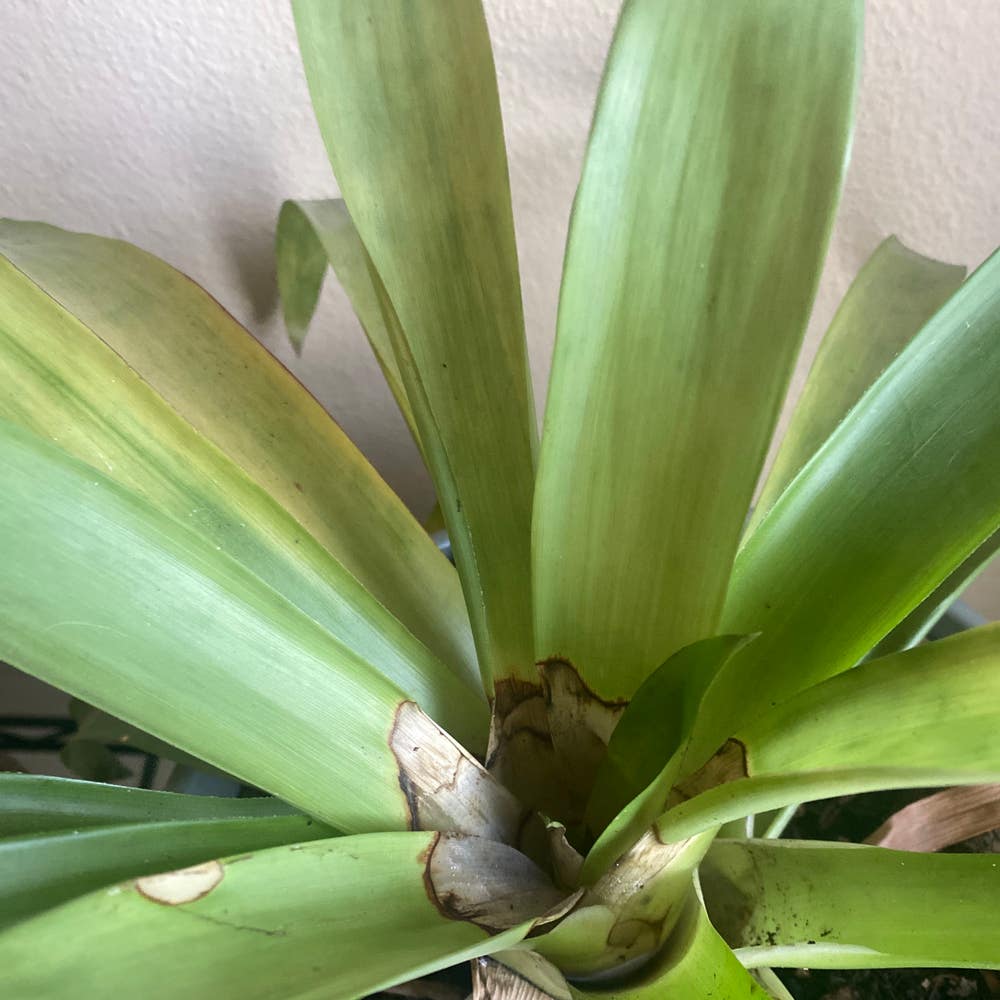
Black Spots on My Neoregelia 'Pop Tart' Leaves
Neoregelia 'Pop Tart'
By the Greg Editorial Team
Apr 28, 2024•4 min read
This article was created with the help of AI so we can cover more plants for you. May contain errors. See one? Report it here.
Banish black spots 🍂 and keep your Neoregelia 'Pop Tart' thriving with our definitive care guide.
- Fungi and bacteria are main causes of black spots; treat with fungicides or hygiene.
- Environmental stress like sunburn, water issues needs care adjustments.
- Prevent with proper care: indirect sunlight, steady temperature, and careful watering.
Spotting the Trouble: Recognizing Black Spots
🕵️♂️ Visual Cues: The Black Spot Breakdown
Black spots on your Neoregelia 'Pop Tart' are like uninvited guests at a garden party. They can range from tiny specks to large, unsightly blotches. These spots may not be a true black but can have a brownish hue or a yellowish edge, making them stand out against the vibrant foliage. They're often irregular, unlike the plant's natural patterns, and can feel rough or mushy to the touch.
Location Matters: Where to Inspect
When it comes to location, black spots are equal-opportunity offenders. They can appear on both sides of the leaf, whether it's the new growth or the old guard. Regularly flipping leaves during your inspection is crucial—think of it as a wellness check for your plant. Early detection is key, so make this a part of your routine plant care, like watering or feeding.
The Usual Suspects: Pinpointing the Causes
🍄 Fungal Foes
Fungi are the culprits often caught red-handed when it comes to black spots on Neoregelia 'Pop Tart'. Cercospora and Anthracnose are the usual suspects, thriving in the damp and cozy nooks of your plant's leaves. These fungi leave behind a distinctive pattern of black spots, sometimes with a sinister halo or concentric rings. If your 'Pop Tart' is sporting these spots, it's time to consider a fungicide.
🦠 Bacterial Bullies
Bacterial infections are the stealthy saboteurs, slipping in through the tiniest of wounds. Unlike the more flamboyant fungi, bacteria prefer a low-key approach, creating water-soaked spots that can turn slimy or emit a foul odor. These spots lack the dramatic halo effect and are more uniform in color, often a telltale sign that bacteria are at play.
🌿 Environmental Stressors
Environmental stress can't be overlooked as a potential stressor for your 'Pop Tart'. Sunburn and water woes are common issues, with spots typically appearing on the most exposed areas. If your plant is signaling distress through black spots, consider adjusting its care routine. It might be crying out for less sun, more shade, or a better watering schedule.
Battling Black Spots: Treatment Tactics
🌿 Fungicide to the Rescue
Choosing the right fungicide is like picking the best armor for battle. Go for heavy hitters like potassium bicarbonate or tebuconazole with trifloxystrobin. Read the label like it holds the secret to eternal youth, and follow it to a T.
- Application tips for effective treatment involve covering every inch of your plant. Imagine you're painting the Sistine Chapel's ceiling—no corner should be left untouched. Rotate your fungicides to keep the fungi guessing, and avoid overuse like you'd avoid double-dipping at a party.
🦠 Bacteria Busters
When bacterial infections crash the party, it's time for copper compounds and targeted bactericides. Pick the right target—ensure the product is the nemesis of your specific pathogen. Suit up with safety gear and apply with the precision of a master chef decorating a cake.
- Keeping it clean means plant hygiene is non-negotiable. Sterilize your tools like a surgeon prepping for an operation. Remember, cleanliness is next to plantliness.
🌱 Stress Relief for Your 'Pop Tart'
Adjusting care to combat environmental stress is like tweaking your diet for better health. Ensure airflow to keep humidity at bay and fungal parties a no-show. Sunlight and consistent temperatures are your plant's besties.
- Creating a comfy home to prevent stress-related spots is about getting the conditions just right. Water only when the sun's out, like you're timing your jog to avoid the rain. Keep the leaves dry as a good joke, and space your plants like introverts at a social gathering—enough room to breathe.
Keeping It Spotless: Prevention Strategies
💧 Moisture Mastery: Watering Without Worry
Water wisely. Your Neoregelia 'Pop Tart' isn't a fish; it doesn't need to swim. Use a moisture meter to hit that sweet hydration level—only water when the meter reads dry. Early morning is prime time, allowing any rogue droplets to evaporate before fungi throw a pool party.
🌞 Light and Temperature: Setting Up the Sweet Spot
Bright, indirect sunlight—that's the mantra for your 'Pop Tart'. Too much sun and you're baking leaves; too little, and you're basically growing a cave plant. Keep the temperature steady; your plant's no fan of surprise weather twists. Use a thermometer to avoid turning your living room into a plant sauna or igloo.
🔍 Routine Checks: Regular Inspections to Catch Early Signs
Be the plant detective. Regular inspections are less about paranoia, more about proactive care. Spot a black dot? Isolate like it's hot. Keep your tools cleaner than a surgeon's scalpel to prevent spreading any plant pandemics. Remember, cleanliness is next to plant-godliness.
⚠️ Safety First
This content is for general information and may contain errors, omissions, or outdated details. It is not medical, veterinary advice, or an endorsement of therapeutic claims.
Always consult a qualified healthcare professional before using any plant as food, medicine, or supplement.
Never eat any plant (or feed one to pets) without confirming its identity with at least two trusted sources.
If you suspect poisoning, call Poison Control (800) 222-1222, the Pet Poison Helpline (800) 213-6680, or your local emergency service immediately.
Spotted an error? Please report it here.
Banish those pesky black spots on your Neoregelia 'Pop Tart' by adjusting care 🌿 with Greg's tailored watering plans and expert community insights.