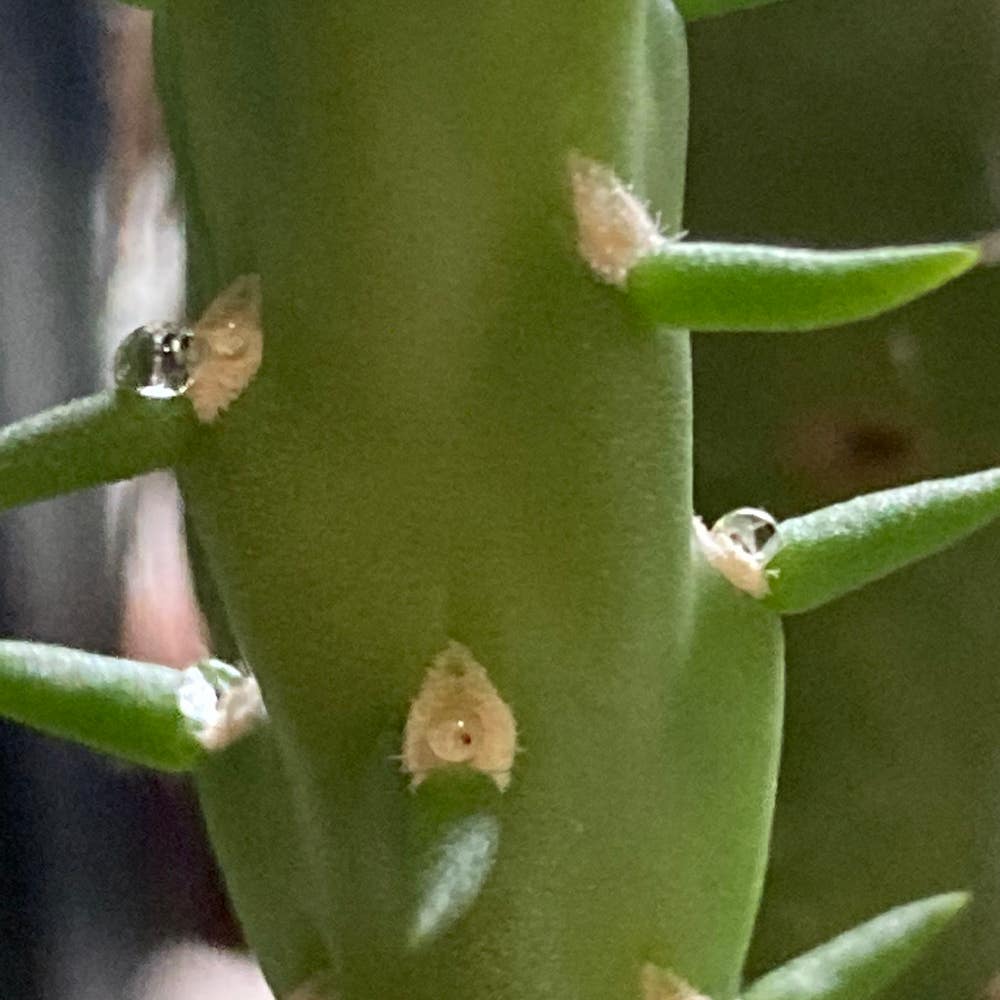
💧 Why Are My Miqueliopuntia miquelii Leaves Mushy?
Miqueliopuntia miquelii
By the Greg Editorial Team
Apr 13, 2024•5 min read
This article was created with the help of AI so we can cover more plants for you. May contain errors. See one? Report it here.
- Overwatering and root rot are top culprits for mushy leaves.
- Proper watering and soil mix prevent mushiness; wait for soil to dry.
- Prune and monitor environment to ensure airflow and correct humidity.
Spotting the Trouble: Signs of Mushy Leaves
👀 Visual Cues: What Does Mushiness Look Like?
Discoloration is your first visual clue. Miqueliopuntia miquelii leaves should not resemble a bruised peach. If they're sporting a yellowish-brown tinge, that's your cue to get concerned. Leaves that look defeated, hanging limply when they should be perky, are waving a red flag at you.
✋ Tactile Evidence: How Do Mushy Leaves Feel?
The touch test is telling. A healthy leaf snaps back like a fresh celery stick. A mushy leaf? It collapses under pressure, like a deflated whoopee cushion. If your fingers sink into the leaf with the ease of poking into an overripe tomato, you've got a problem. And if the leaves are parting ways with the plant without a struggle, it's less of a graceful exit and more of an SOS signal.
Remember, a foul smell is the olfactory equivalent of a plant's cry for help. If your Miqueliopuntia miquelii is turning heads for the wrong reasons, it's time to take action.
The Usual Suspects: Direct Causes of Mushiness
💦 Overwatering Woes
Overwatering is like a free bar at a wedding; it seems like a good idea until everything is a sloppy mess. Recognizing overwatering involves a bit of sleuthing. Soggy soil is a dead giveaway, and if your plant's pot feels like a water balloon, you've probably overdone it.
Recognizing Overwatering Before It's Too Late
The aftermath of overwatering is not just soggy soil but mushy leaves. They're the innocent bystanders in this hydration homicide. If the leaves of your Miqueliopuntia miquelii have the consistency of overripe fruit, it's time to reassess your watering routine.
🌱 Root Rot: The Hidden Enemy Beneath the Surface
Root rot is the plant world's backstabber, often going unnoticed until it's almost too late. It starts with the roots, which should be firm and white, turning into a mushy brown mess. A telltale musty odor is your cue to take action.
Identifying Root Rot and Its Symptoms
Spotting root rot requires a bit of digging—literally. If the roots are as soft as overcooked noodles and the smell reminds you of a damp basement, you've got root rot on your hands.
How Root Rot Leads to Mushy Leaves
Root rot is like a silent alarm for your plant. By the time you see the mushy leaves, the roots have already been compromised. This means they can't deliver the necessary nutrients to the plant, leading to the dreaded mushiness you now observe.
Turning the Tide: Immediate Actions to Help Your Plant
💧 Watering Wisdom: Striking the Balance for Hydration without Harm
Watering your Miqueliopuntia miquelii should be a careful ritual, not a haphazard splash fest. Wait until the top inch of soil feels like a desert before you give it a drink. Use room-temperature water to avoid shocking the roots. In winter, your plant's thirst wanes, so reduce the frequency.
🚱 The Art of Watering: Techniques to Avoid Overwatering
Forget the calendar; your plant doesn't care what day it is. Use a moisture meter or the trusty finger test to check soil dryness. If you're going analog, probe an inch down—if it's dry, it's time to water. A watering can with a long spout targets the base, preventing leaf wetness and potential disease.
🌱 Soil Solutions: Crafting the Perfect Environment for Healthy Roots
Choosing the right soil mix is like picking a mattress for your plant; it needs to be just right. Aim for a mix that retains moisture but drains well, avoiding the dreaded soggy soil syndrome.
🌿 When and How to Repot to Refresh Your Plant's Foundation
If your plant's soil is staging a silent protest, it's repotting time. Go for a pot with drainage holes to prevent water from overstaying its welcome. When repotting, be gentle with the roots—think of it as plant surgery. Afterward, water sparingly to let your plant settle into its new home.
Long-Term Defense: Preventative Measures
🌿 Proactive Pruning: Keeping Your Plant in Top Shape
Prune with purpose. Regularly snip away any dead or dying leaves to boost air circulation and deter pests. It's like giving your Miqueliopuntia miquelii a haircut to maintain its health and shape. Remember, a tidy plant is less inviting to unwanted critters.
🌱 Deciding When to Prune and What to Cut
Prune during the plant's active growth phase. Focus on removing parts that are dead, diseased, or overcrowded. This isn't just cosmetic; it's essential maintenance that keeps your plant robust.
🌡️ Environmental Vigilance: Monitoring and Adjusting Your Plant's Surroundings
Humidity and temperature aren't just small talk; they're critical for your cactus's well-being. Use a hygrometer to monitor moisture levels in the air. Think of it as your plant's personal weather station.
💧 The Role of Humidity and Temperature in Preventing Mushy Leaves
Keep humidity moderate. Your Miqueliopuntia miquelii isn't a fan of tropical conditions. Likewise, maintain stable temperatures to avoid stressing the plant, which can lead to mushiness.
🌬️ Ensuring Adequate Airflow Around Your Miqueliopuntia miquelii
A gentle fan can prevent air from becoming stagnant, like a soft breeze through an open window. Position your plant where it can breathe easy, but steer clear of drafty corridors or direct heat sources.
⚠️ Safety First
This content is for general information and may contain errors, omissions, or outdated details. It is not medical, veterinary advice, or an endorsement of therapeutic claims.
Always consult a qualified healthcare professional before using any plant as food, medicine, or supplement.
Never eat any plant (or feed one to pets) without confirming its identity with at least two trusted sources.
If you suspect poisoning, call Poison Control (800) 222-1222, the Pet Poison Helpline (800) 213-6680, or your local emergency service immediately.
Spotted an error? Please report it here.
Avoid the mushy-leaf mishap in your Miqueliopuntia miquelii by letting Greg orchestrate 🎵 your watering and care routine for peak plant health.