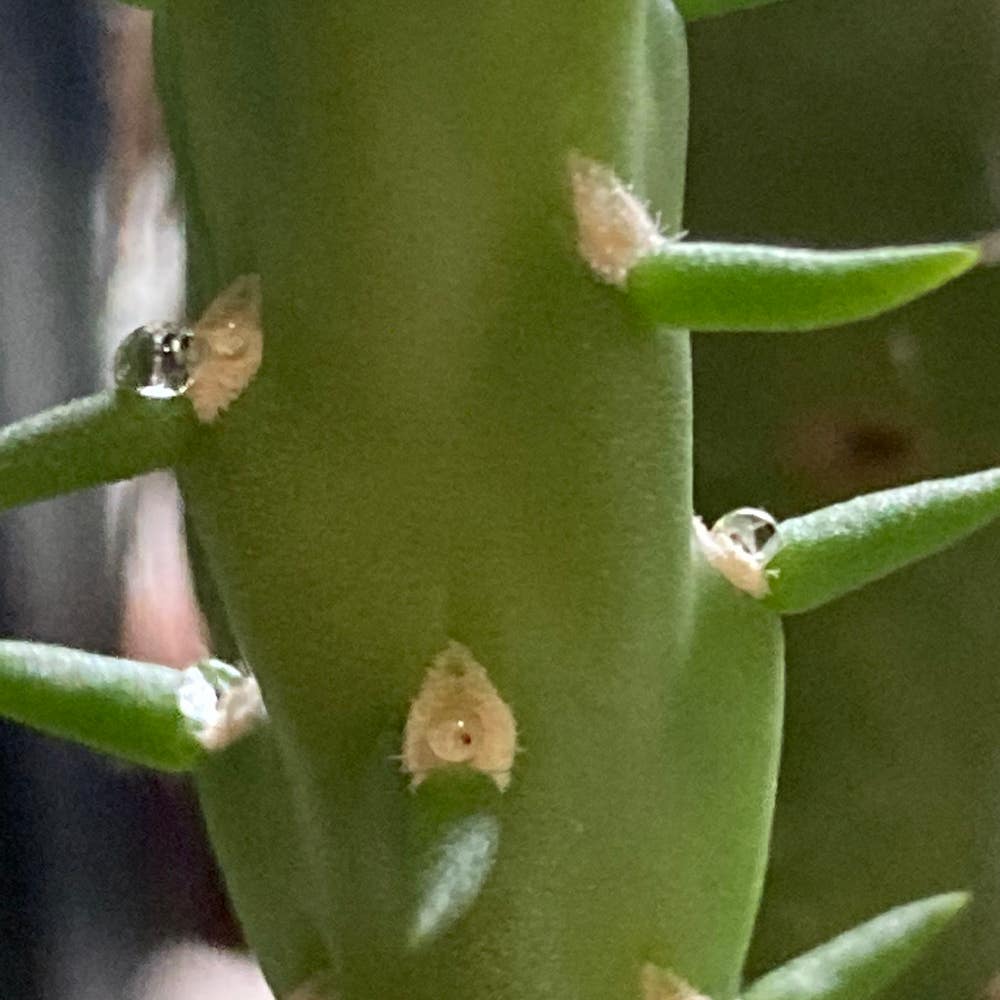
What Are The Bugs on My Miqueliopuntia miquelii? 🐛
Miqueliopuntia miquelii
By the Greg Editorial Team
Apr 13, 2024•4 min read
This article was created with the help of AI so we can cover more plants for you. May contain errors. See one? Report it here.
- Identify pests by signs like webs, sticky leaves, or white clusters.
- Eradicate with treatments like neem oil, alcohol, or beneficial nematodes.
- Prevent infestations with regular checks and a dry, healthy environment.
Spider Mites: The Tiny Terrors
🕷️ Spotting the Intruders
Spider mites are microscopic marauders, but their presence is betrayed by the webbing they leave behind. To identify them on your Miqueliopuntia miquelii, look for fine, silky webs, particularly beneath the leaves. The foliage may also exhibit a speckled or dusty appearance, a telltale sign of their sap-sucking antics.
🛡️ Winning the Battle
To evict spider mites, start by isolating your cactus. This prevents the critters from colonizing other plants. Remove webbed leaves carefully and dispose of them properly. Introducing predatory mites can be a game-changer for outdoor plants, as they naturally prey on spider mites. For indoor cacti, opt for a miticide or neem oil, ensuring you follow the application instructions to the letter. Always test any treatment on a small area first; we're going for pest control, not planticide. Regular monitoring and a healthy environment are your best bets in preventing a spider mite sequel.
Scale: The Sticky Foes
🐞 Unmasking the Camouflaged Pests
Scale insects on Miqueliopuntia miquelii are the ninjas of the bug world, blending in as bumps on your plant. Sticky leaves? That's their calling card. They secrete honeydew, leading to sooty mold. Watch for yellowing leaves and stunted growth, signs that scales are sucking the life out of your cactus.
🛡️ Natural and Chemical Shields
To fight off scale, think like a surgeon: remove them manually with a toothpick or a fingernail. For a full-scale invasion, alcohol and oil treatments are your best allies. Remember, cleanliness is next to buglessness—keep your plant pristine to prevent future sticky situations.
Fungus Gnats and Fruit Flies: The Soil Lurkers
🕵️ Detecting the Flyers
Buzzing around your Miqueliopuntia miquelii? You might be hosting fungus gnats or fruit flies. These pests are tiny but noticeable, especially when they take flight from the soil. Fungus gnats are dark, while fruit flies tend to be lighter and larger. Look for larvae in the soil, and adults that seem to celebrate when you water your plant.
Lifecycle clues include shiny trails on leaves and a sudden population spike. These pests love moist soil and decaying matter, which are signs you're overwatering or need to clean up plant debris.
🛡️ Ground Defense Strategies
Dry out the soil to disrupt the pest party. Let the top layer become dry to the touch between waterings. This makes the environment less inviting for egg-laying. Sticky traps work wonders for catching adult flyers.
Beneficial nematodes are like the secret service of pest control, targeting larvae without harming your plant. For a heavy infestation, consider repotting with fresh soil. And remember, cleanliness is your plant's best friend—remove decaying matter and keep those compost bins sealed.
Prevent future invasions by inspecting new plants before introducing them to your collection. Repair any window screen gaps to keep these uninvited guests out. With vigilance and these strategies, you can tell these pests to buzz off for good.
Mealybugs: The Fluffy Invaders
🐛 Finding the White Clusters
White, cotton-like clusters nestled in the nooks of your Miqueliopuntia miquelii are dead giveaways of mealybugs. These sap-sucking squatters leave behind a sticky mess, known as honeydew, which can lead to sooty mold. Yellowing leaves and stunted growth are your plant crying out for help.
🚫 Eradication Tactics
To evict these pests, dab them with alcohol or apply insecticidal soap. For a more thorough cleansing, neem oil can be your go-to. Prevention is about routine checks and keeping your plant's environment less inviting. Avoid over-fertilizing and maintain a dry setting to deter future fluffy invasions.
Special Mention: Unique Pests to Miqueliopuntia miquelii
🐜 Rare but Real Threats
While Miqueliopuntia miquelii doesn't often headline pest problems, it's not immune to them. Thrips may be one of these stealthy culprits, leaving behind mottled leaves as a calling card. Another potential invader is the cotton cushiony scale, which can be identified by its fluffy appearance and the sticky honeydew it secretes.
🛡️ Customized Countermeasures
To tackle these pests, isolation is step one—keep your cactus away from others to prevent a pest party. For thrips, a strong water spray can knock them off, while insecticidal soaps or neem oil treatments can be effective follow-ups. For scales, dabbing with alcohol-soaked cotton swabs may be necessary. And remember, a twice-yearly preventive treatment with a systemic insecticide can be a smart move to keep your Miqueliopuntia miquelii in solitary splendor.
⚠️ Safety First
This content is for general information and may contain errors, omissions, or outdated details. It is not medical, veterinary advice, or an endorsement of therapeutic claims.
Always consult a qualified healthcare professional before using any plant as food, medicine, or supplement.
Never eat any plant (or feed one to pets) without confirming its identity with at least two trusted sources.
If you suspect poisoning, call Poison Control (800) 222-1222, the Pet Poison Helpline (800) 213-6680, or your local emergency service immediately.
Spotted an error? Please report it here.
Keep your Miqueliopuntia miquelii pest-free 🐛 with Greg's personalized care plans that include pest prevention tips and timely reminders for plant health checks.