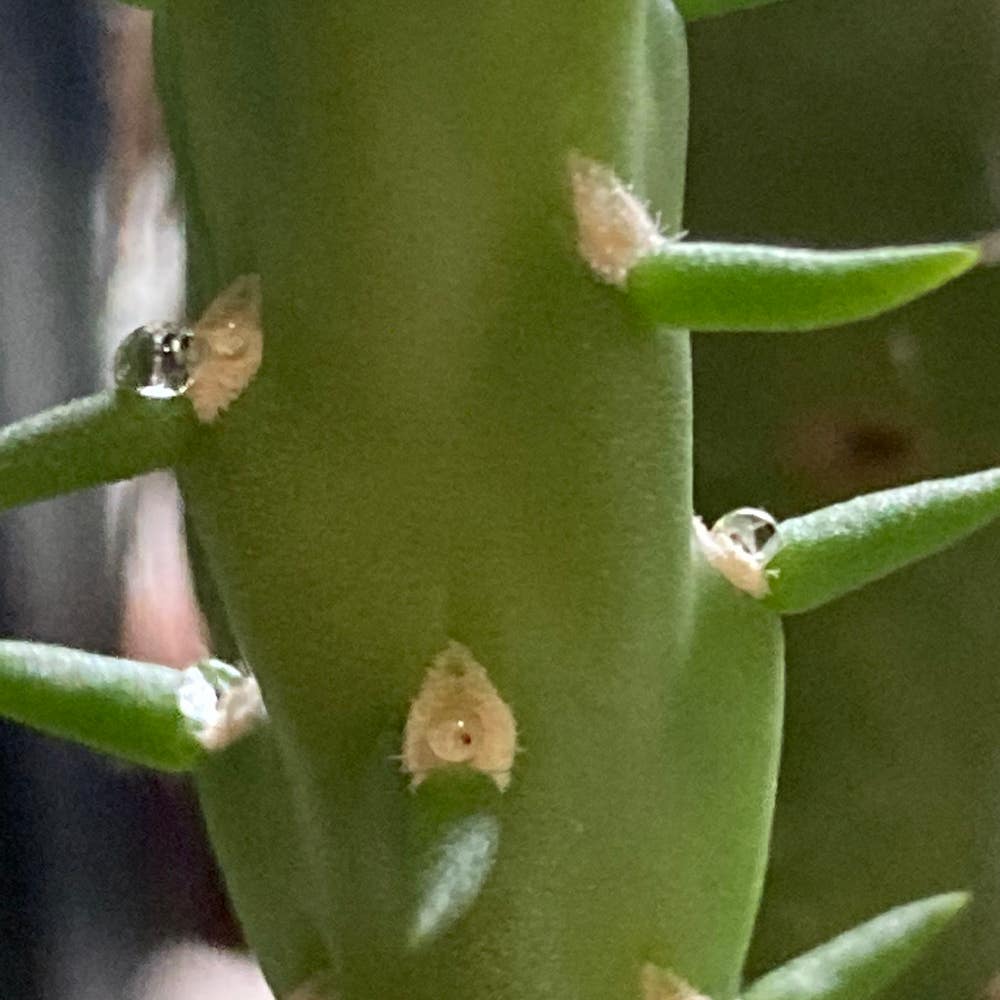
Why Are There Brown Spots on My Miqueliopuntia miquelii?
Miqueliopuntia miquelii
By the Greg Editorial Team
Apr 13, 2024•5 min read
This article was created with the help of AI so we can cover more plants for you. May contain errors. See one? Report it here.
- Brown spots signal distress; caused by pests, diseases, or environmental factors.
- Water and sun management are key; over/under-watering and sunburn can cause spots.
- Prevent spots with regular inspections, proper airflow, and seasonal fertilizing.
Spotting the Trouble: Identifying Brown Spots
🕵️ Spot Check: What Do They Look Like?
Brown spots on your Miqueliopuntia miquelii can be sneaky invaders. They range from tiny speckles to large blotches, with edges that might look like they were drawn by a shaky hand. The texture? It could be a crispy affair or a slimy mess. And let's not ignore the colors—brown with possible yellow or black warning halos. These spots are not just blemishes; they're distress signals from your cactus.
🕵️ Common Culprits: What's Causing the Spots?
The usual suspects in this botanical whodunit are pests, diseases, and environmental stressors. Pests are the party crashers, leaving behind webbing or overly moist soil. Diseases? They're the ones with the circular patterns and halos, ready to turn a spot into a full-scale invasion. And don't forget environmental stress—too much sun, improper watering, or extreme temperatures can make your cactus cry out in brown spots. Each has its own telltale signs, and it's your job to play detective.
Getting to the Root: Diagnosing the Cause
💧 Thirsty or Drowning? Water-Related Woes
Overwatering and underwatering are the Jekyll and Hyde of plant care. If your Miqueliopuntia miquelii is sporting brown spots, it's time to evaluate your watering routine. Shriveled leaves? Your cactus is parched. Mushy roots and a heavy pot? You've gone overboard with the H2O. To avoid the extremes, let the top inch of soil dry out before reaching for the watering can.
☀️ Too Much Sun? Sunburn and Heat Stress
Cacti love the sun, but they can get too much of a good thing. Sunburn shows up as crispy, brown spots on the areas most exposed to light. If your plant is looking more fried than tanned, it's time to dial back on the solar love. Provide some shade during the most intense hours, or consider a sunnier spot if it's showing signs of light deprivation like stretched growth.
🐛 Unwanted Guests: Pest and Disease Diagnosis
Pests and diseases are the party crashers of the plant world. Sticky residues or fine webs? Pests are feasting on your cactus. Fungal issues often start as small, circular spots. If they're soft, it's likely a watering issue, but if they're dry and widespread, consider fungal foes. Regular inspections are your best defense—catching these uninvited guests early makes all the difference.
The Recovery Plan: Treating Brown Spots
🚑 SOS: Saving Over-Spotted Succulents
Time is of the essence when your Miqueliopuntia miquelii sports unsightly brown spots. Immediate isolation is your first line of defense, preventing any contagion from spreading its chaos. Next, grab some sterilized shears and perform precision snips to remove the affected areas. Think of it as excising the bad to save the good. Dispose of these parts with care to avoid any unwanted replays.
For a homemade remedy, mix baking soda, water, and a smidgen of soap for a gentle, pH-balanced solution. Apply it to the base of your plant, avoiding the leaves like they're allergic to moisture. Keep a watchful eye on your cactus; new growth is a high-five signaling success, while persistent spots mean it's back to the drawing board.
🎭 Balancing Act: Adjusting Care to Prevent Spots
Adjusting your cactus care routine is like tuning a guitar—too tight or too loose, and the music just won't flow. Watering should be Goldilocks-perfect: not too much, not too little, just right. Let the soil dry slightly between waterings, ensuring it's moist but not waterlogged.
When it comes to light, your Miqueliopuntia miquelii wants to soak up the rays without the sizzle. Provide bright, indirect sunlight to avoid sunburn. And remember, nutrients are like spices—necessary but disastrous in excess. Stick to a balanced fertilizer, but only during the growth season, and even then, use it sparingly.
Lastly, don't underestimate the power of airflow. Good circulation is like giving your plant space to breathe, keeping those pesky fungal spores and other villains at bay. Keep these care tips in your back pocket, and brown spots will be nothing but a distant memory.
Prevention: Keeping Your Cactus Spot-Free
🌵 Best Practices: Ongoing Care to Avoid Brown Spots
Regular vigilance is key to maintaining a spotless Miqueliopuntia miquelii. Here's how to keep your cactus looking sharp without the unsightly brown spots.
💧 Water Wisely
Only water when the soil feels like a dry, forgotten desert. Overwatering is a no-go; it's the fast track to Fungusville. Adjust your watering schedule with the seasons—less is more when the temperature drops.
🌞 Sunlight and Shade: The Balancing Act
Your cactus loves the sun, but not too much. Find that sweet spot where it gets enough light without getting a sunburn. Think morning rays and afternoon siestas in the shade.
🐜 Pests: Keep 'Em Out
Regular check-ups are non-negotiable. Spot pests early, and show them the door with neem oil or insecticidal soap. Remember, cleanliness is your cactus's best friend—keep its home spick-and-span.
💨 Airflow and Temperature
Good air circulation is like a breath of fresh air for your cactus. Keep it comfy with consistent temperatures and a humidity level that doesn't scream tropical rainforest.
✂️ Pruning and Cleanliness
Dead or damaged parts? Snip them off. It's like removing split ends for plants. And sanitize those tools—don't let them be the Typhoid Mary of plant care.
🌱 Fertilize with Finesse
Feed your cactus a light, balanced meal of fertilizer during the growing season. Over-fertilizing is like force-feeding; it does more harm than good.
By sticking to these pro tips, your Miqueliopuntia miquelii will stay as spotless as your reputation as a plant whisperer.
⚠️ Safety First
This content is for general information and may contain errors, omissions, or outdated details. It is not medical, veterinary advice, or an endorsement of therapeutic claims.
Always consult a qualified healthcare professional before using any plant as food, medicine, or supplement.
Never eat any plant (or feed one to pets) without confirming its identity with at least two trusted sources.
If you suspect poisoning, call Poison Control (800) 222-1222, the Pet Poison Helpline (800) 213-6680, or your local emergency service immediately.
Spotted an error? Please report it here.
Prevent brown spots on your Miqueliopuntia miquelii by optimizing 🌵 its care with Greg's tailored watering and sunlight plans, ensuring your cactus thrives without the guesswork.