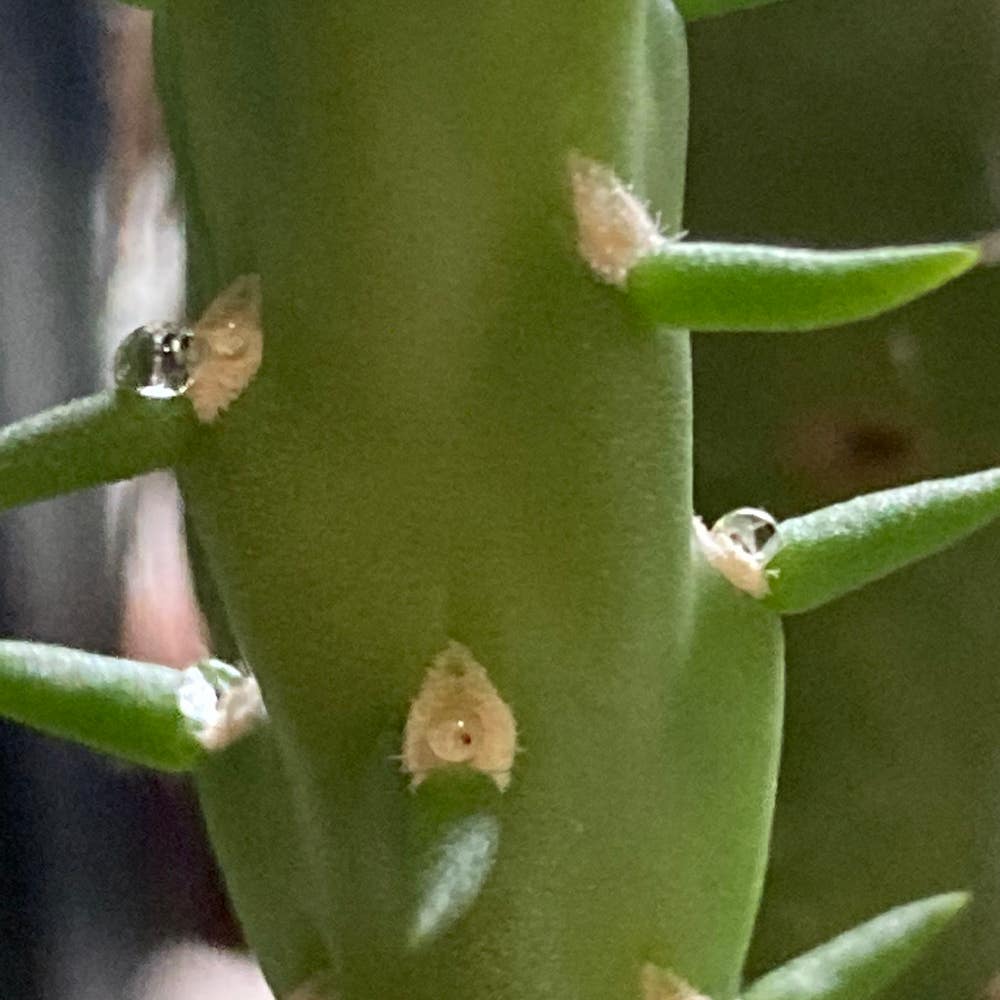
🌵 How and When Should I Cut Back My California Cholla?
Cylindropuntia californica
By the Greg Editorial Team
Feb 29, 2024•4 min read
This article was created with the help of AI so we can cover more plants for you. May contain errors. See one? Report it here.
Discover the secret to a thriving California Cholla with timely, expert pruning tips. 🌵✂️
- 🌵 Spring pruning encourages new growth in California Cholla.
- Safety first: Wear protective gear and use clean, sharp tools.
- Post-prune care: Water sparingly and monitor for new sprouts.
Timing Your Trims: When to Prune California Cholla
🌸 Seasonal Sweet Spots
Spring emerges as the prime time for pruning your California Cholla. It's when this spiky resident of your garden is all prepped to push out new growth. Pruning during the dormant season? Forget it; you're just asking for trouble.
Remember, weather can be a fickle friend. If you're in a zone where Mother Nature can't decide on a season, keep an eye on your plant, not the calendar. Adjust your pruning schedule to when your Cholla is coming to life, not when it's trying to catch some Z's.
🩺 Plant Health Check
Before you go snip-happy, take a moment for a quick health inspection. Healthy Cholla only, please. If it's looking a bit under the weather, hold off on the pruning.
Check for dead or damaged segments—these are your targets. They'll be tan, not green, and begging for a trim. Spotted rot? It's a no-brainer; cut it out before it spreads. And always, always start with a conservative cut. You can't glue those segments back on, after all.
Gear Up: Tools and Safety for Pruning California Cholla
🔪 Choosing the Right Tools
Sharp pruning shears are your first draft pick for precise cuts. When the going gets tough, lopping shears step in to handle the Cholla's thicker limbs. For the real gnarly parts, a hand saw is your best friend. Before you start, and after you finish, give those tools a good scrub with isopropyl alcohol or a bleach solution to prevent any nasty infections.
🛡️ Staying Safe
Think of thick gloves as your first line of defense against those spiky barbs. Safety goggles are a must—those spines have no respect for eyeballs. Don't even think about shorts and flip-flops; long-sleeved shirts, long pants, and closed-toe shoes are the dress code here. And if you're thinking about a cholla comb for those pesky spines that get everywhere, it's not the worst idea you've had.
The Pruning Process: How to Cut Back California Cholla
✂️ Making the Cut
Pruning a California Cholla is not a free-for-all. It requires precision. Wear gloves and use sharp garden shears. Start by identifying dead or damaged segments. Cut these close to the main stem, but leave a small portion to avoid damaging the healthy tissue.
🌵 Shape and Size Management
Aim to maintain the Cholla's natural form while controlling its size. Avoid over-pruning; it's not a topiary contest. Trim strategically to encourage growth in the desired direction, ensuring the plant remains balanced and doesn't become top-heavy.
🌵 Handling the Remnants
Post-trim, you're left with a pile of spiky remnants. Handle with care. These can be repurposed for propagation or disposed of safely to prevent accidental spread. Remember, the spines are formidable, so keep them away from pets and children.
After the Snip: Post-Pruning Care for California Cholla
🌵 Immediate Aftercare Steps
💧 Watering Wisdom
Water your California Cholla sparingly after pruning. Overhydration is a no-no; think of it as giving a cactus a bath when it just needs a sip.
🩹 Wound Care
Mist the cuts lightly. This encourages the plant to scar over and heal, much like a bandage on a scrape.
📈 Monitoring for Success
🌱 Growth Signs
Watch for new sprouts. These are your high-fives from nature, signaling a job well done.
🚨 Distress Signals
Keep an eye out for discoloration or wilting. If you spot these SOS signals, reassess your care strategy stat.
🌡️ Environmental Check
Ensure your Cholla isn't baking in the sun or shivering in the cold. The right environment is key to recovery.
⏳ Patience Pays
Remember, cacti aren't racehorses; they recover at a leisurely pace. Give your plant time to show signs of new life.
⚠️ Safety First
This content is for general information and may contain errors, omissions, or outdated details. It is not medical, veterinary advice, or an endorsement of therapeutic claims.
Always consult a qualified healthcare professional before using any plant as food, medicine, or supplement.
Never eat any plant (or feed one to pets) without confirming its identity with at least two trusted sources.
If you suspect poisoning, call Poison Control (800) 222-1222, the Pet Poison Helpline (800) 213-6680, or your local emergency service immediately.
Spotted an error? Please report it here.
Prune with precision 🌵 - let Greg remind you when it's the ideal time to cut back your California Cholla for healthy growth and perfect form.