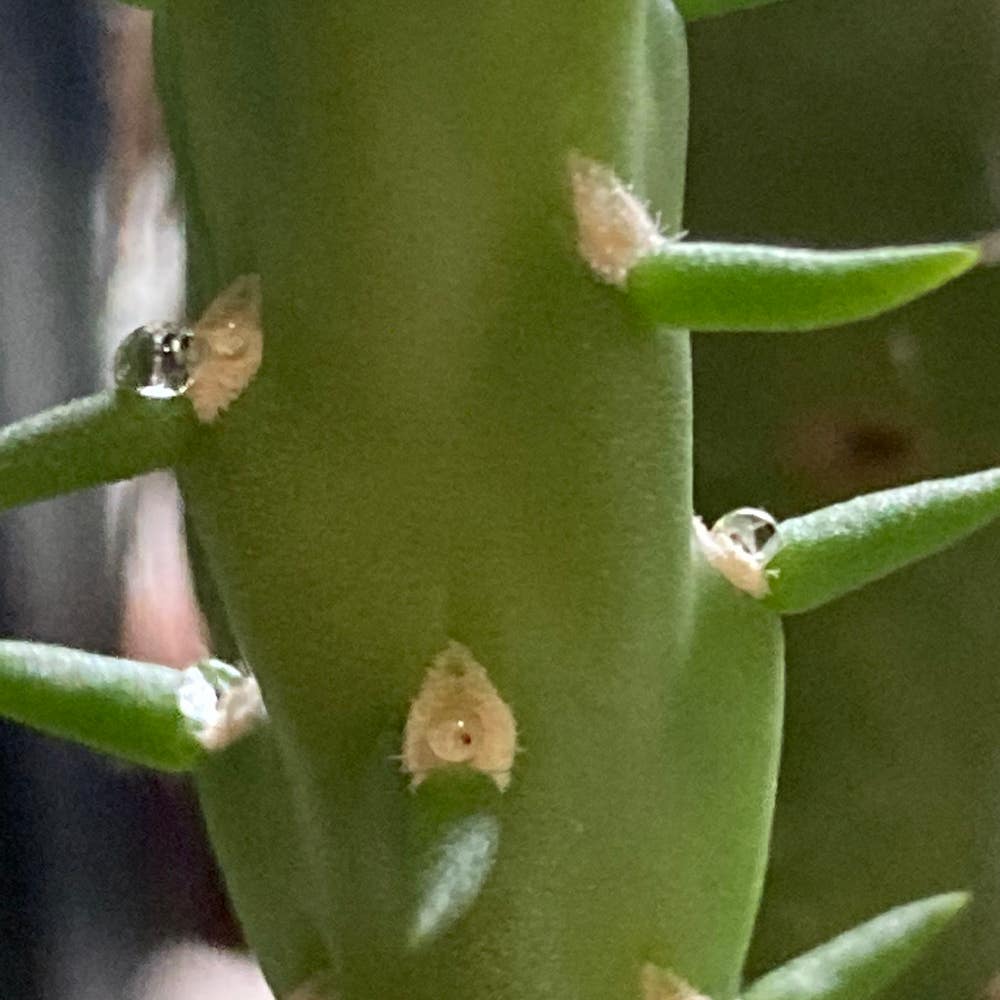
🌵 Why Are There Brown Spots on My California Cholla?
Cylindropuntia californica
By the Greg Editorial Team
Feb 29, 2024•4 min read
This article was created with the help of AI so we can cover more plants for you. May contain errors. See one? Report it here.
Uncover the secrets to a spotless California Cholla and keep your desert gem 🌵 thriving!
- Brown spots signal issues like sunburn, overwatering, pests, or fungi.
- 🌞🌵 Crispy or mushy spots indicate sunburn or overwatering, respectively.
- Regular checks and quick action prevent worsening of brown spots.
Spotting the Trouble: Identifying Brown Spots
🕵️♂️ Visual Clues to Look For
Brown spots on your California Cholla aren't just a cosmetic issue; they're a mystery waiting to be solved. These spots can vary from light tan to a deep, concerning brown. The texture is a tell-tale sign—crispy spots often suggest sunburn, while mushy ones hint at overwatering or disease. You'll find these blemishes anywhere from the center of the leaves to the edges, sometimes with a yellow halo that's practically shouting for help.
When to Worry
Not every brown spot should send you into a panic. However, if you notice an increase in the number or size of the spots, it's time to don your detective hat. Are the spots isolated, or are they throwing a full-blown takeover party? This will guide the urgency of your response. If you see a pattern—like spots consistently appearing on leaf tips—you might be dealing with a systemic issue rather than a one-off blemish.
Common Culprits: Causes of Brown Spots
💦 Too Much Love: Overwatering Woes
Overwatering can turn your California Cholla's tough love into a soggy mess. Dark spots that feel soft to the touch are your cactus crying out for a hydration break. It's a delicate balance; too much water and the roots can't breathe, leading to a classic case of root rot.
🌞 Sun Kissed or Sunburned?
Sunburn on your California Cholla looks like the plant version of a bad day at the beach—crispy and bleached. Remember, water droplets can magnify sunlight, so avoid misting before a sunny photoshoot. If the spots are on the sunniest side, it's a clear sign your cactus has had too much UV love.
🐜 Uninvited Guests: Pests and Pathogens
Pests like spider mites and thrips are tiny, but they leave big marks on your plant. A quick wipe might reveal a streak of bug juice—gross but true. Fungal infections are sneakier, with spots sporting yellow halos or a bullseye pattern. These uninvited guests thrive in damp conditions, so keep it dry and airy to avoid a fungal fiesta.
Fixing the Spots: Treatment Strategies
💧 Adjusting Your Watering Routine
Watering is a delicate dance with your California Cholla. Check the soil before watering—only proceed when it's dry. Early morning is prime time, allowing leaves to dry out and reducing the risk of fungal gate-crashers.
🌞 Creating a Sun-Safe Haven
Sunlight is great, but too much can lead to a cactus sunburn. Strategic shading is key. Use sheer curtains or relocate your Cholla to avoid the harsh midday sun. Gradual adaptation to brighter spots can prevent solar shock.
🐜 Dealing with Pests and Fungi
When pests or fungi crash the party, it's time to clean house. Prune affected areas with sterilized tools. Choose a fungicide wisely—copper or sulfur-based options are your go-to. Follow instructions to the letter and improve air circulation to keep the party fungi-free.
Keeping Spots at Bay: Prevention Tactics
🌵 The Right Spot for Your Cholla
Finding the ideal location for your California Cholla is crucial. It craves a spot that mimics its natural habitat—think bright, indirect light and ample breathing room. Crowding your cactus can lead to moisture buildup, which is a VIP pass for fungal issues.
🕵️♂️ Regular Check-Ups
Routine inspections are like a health MOT for your plant. Keep an eye out for early signs of pests or disease. Immediate action can prevent a full-blown infestation. Remember, a stitch in time saves nine.
🐜 Proactive Pest Control
Don't wait for pests to throw a party on your cactus. Preventative measures like neem oil or insecticidal soap can keep those uninvited guests at bay. And when it comes to watering, let the soil dry out completely between sessions—overwatering is akin to rolling out the red carpet for pests.
⚠️ Safety First
This content is for general information and may contain errors, omissions, or outdated details. It is not medical, veterinary advice, or an endorsement of therapeutic claims.
Always consult a qualified healthcare professional before using any plant as food, medicine, or supplement.
Never eat any plant (or feed one to pets) without confirming its identity with at least two trusted sources.
If you suspect poisoning, call Poison Control (800) 222-1222, the Pet Poison Helpline (800) 213-6680, or your local emergency service immediately.
Spotted an error? Please report it here.
Combat those troublesome 🌵 brown spots on your California Cholla with Greg's tailored advice on watering, shading, and pest control for a healthier plant.