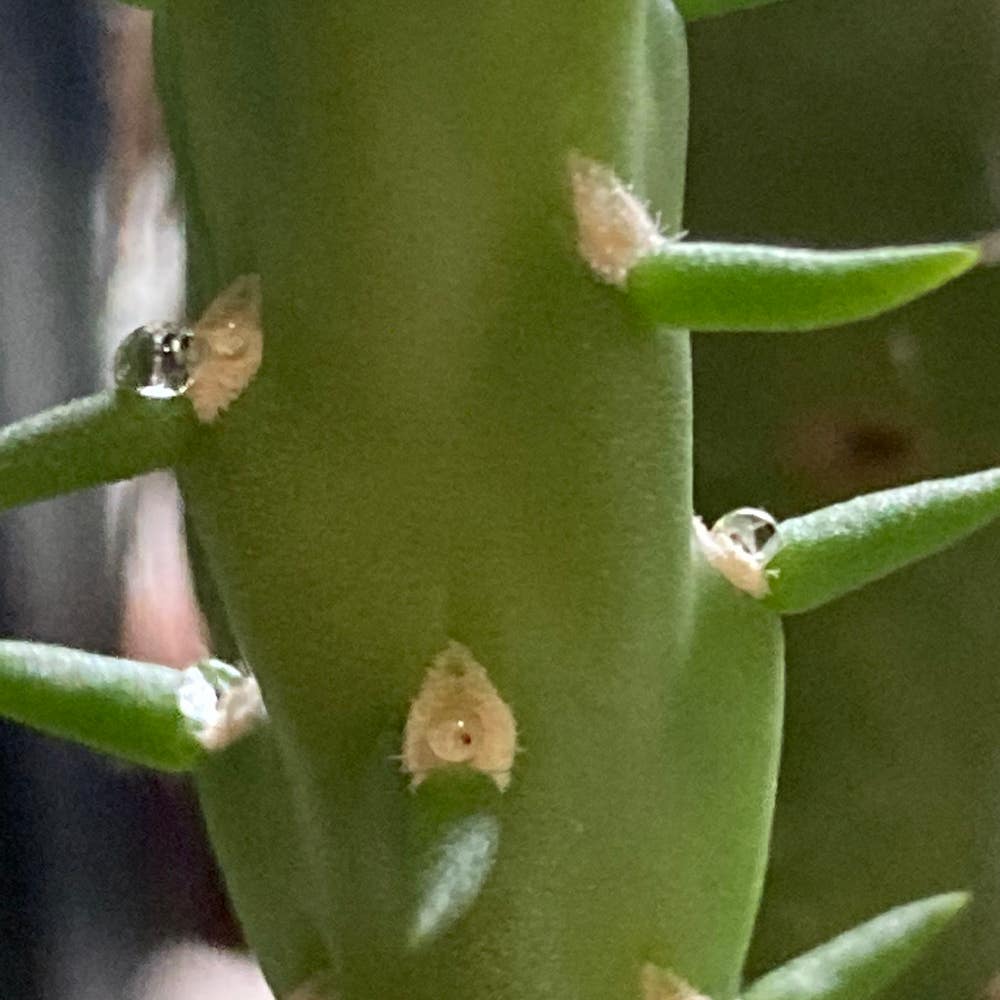
🌵 Humidity Needs for Your California Cholla
Cylindropuntia californica
By the Greg Editorial Team
Jul 21, 2024•4 min read
This article was created with the help of AI so we can cover more plants for you. May contain errors. See one? Report it here.
Master the desert's caress 🌵 for your Cholla's bloom with easy humidity hacks.
- 🌵 California Cholla thrives at 10-30% humidity, monitor with a hygrometer.
- 🌡️ Watch for dry stems or rot as signs of incorrect humidity levels.
- 💧 Adjust humidity with pebble trays or air circulation as needed for plant health.
California Cholla Humidity Basics
The California Cholla, a desert dweller, demands an understanding of its unique humidity needs to flourish.
🌵 Relative Humidity for Cholla
Relative humidity measures the air's moisture content relative to its capacity at a given temperature, a critical factor for the Cholla's well-being. Absolute humidity, while not the focus here, refers to the total moisture in the air.
🌿 Humidity's Role in Cholla Health
Humidity directly influences the Cholla's vital functions, such as transpiration. Incorrect levels can lead to physiological stress, manifesting in symptoms like stunted growth or susceptibility to disease.
Assessing Your Local Humidity
Knowing the humidity levels in your environment is crucial for the well-being of your California Cholla. Let's dive into the tools you'll need and the numbers to look for.
🌡️ Tools and Methods for Measuring Humidity
- Grab a hygrometer; it's your best bet for getting accurate humidity readings.
- Place the hygrometer near your cholla but away from direct sunlight or drafts, which can affect the measurement.
- Check the humidity at different times of the day to understand the fluctuations your plant experiences.
📊 Understanding the Typical Humidity Range
- California Cholla thrives in desert-like conditions, so aim for lower humidity levels.
- Compare your local readings to the ideal range for a cholla, which typically falls between 10% and 30% relative humidity.
🚨 Signs of Humidity Stress
- Watch for dry, shriveled stems or leaves, which indicate the air may be too dry.
- If you notice any rot or mushiness, the humidity could be too high for your cholla's comfort.
🕰 When to Take Action
- Adjust your humidity levels if you consistently see readings outside the 10% to 30% range.
- Take visual cues from your plant seriously; they're the first signs that your cholla isn't happy with its current situation.
Humidity Adjustment Techniques
Adjusting the humidity for your California Cholla is crucial for its well-being. Here's how to fine-tune the moisture in the air to meet your plant's desert-adapted needs.
🌵 Increasing Humidity
Creating the right environment for your California Cholla doesn't require a rain dance; it's about subtlety and understanding the plant's desert heritage.
- Grouping Plants: Place your Cholla near other plants to benefit from their collective transpiration, which slightly raises humidity.
- Pebble Tray: Set a tray with water and pebbles beneath your Cholla's pot, ensuring the pot is not submerged, to provide a gentle increase in humidity.
- Humidifier: Use a humidifier to maintain a consistent level of moisture in the air, but set it to a low level to avoid creating a tropical atmosphere.
🏜️ Decreasing Humidity
Sometimes, the air can be too moist for your Cholla's comfort. Here's how to dial down the dampness without turning your home into a desert.
- Air Circulation: Keep the air moving with a fan or by ensuring the plant isn't in a cramped space, to protect against mold and rot.
- Watering Routine: Allow the soil to dry out completely before watering again, which helps to control the ambient humidity.
- Soil Drainage: Ensure your Cholla's pot has proper drainage and the soil is well-draining to prevent excess moisture buildup.
Maintaining Ideal Humidity
Monitoring humidity is not just about checking off a task; it's about creating a stable environment for your California Cholla to flourish. Use a hygrometer to track the moisture in the air. This device will become as indispensable as a watering can in your plant care toolkit.
- Best Practices for Monitoring Humidity:
- Check humidity levels regularly with a hygrometer.
- Aim for consistency in the humidity levels to avoid stressing the plant.
- Observe your plant for signs of distress, which could indicate a need for humidity adjustment.
Creating the perfect humidity conditions for your California Cholla doesn't have to be complex. Use these straightforward methods to adjust the humidity as needed.
To Increase Humidity:
- Place your plant on a pebble tray with water, allowing evaporation to gently raise the moisture level.
- Group plants together to create a microclimate with higher humidity.
- Use a humidifier if necessary, but avoid creating an overly moist environment.
To Decrease Humidity:
- Ensure good air circulation around your plant to prevent moisture buildup.
- Avoid overwatering and ensure the soil has proper drainage.
- Move the plant to a less humid room if possible, or use a dehumidifier in extreme cases.
🌵 Remember, the goal is to mimic the California Cholla's native desert conditions—moderate humidity without extremes. Regularly adjusting your care routine based on the hygrometer readings and your plant's feedback will lead to a thriving California Cholla.
⚠️ Safety First
This content is for general information and may contain errors, omissions, or outdated details. It is not medical, veterinary advice, or an endorsement of therapeutic claims.
Always consult a qualified healthcare professional before using any plant as food, medicine, or supplement.
Never eat any plant (or feed one to pets) without confirming its identity with at least two trusted sources.
If you suspect poisoning, call Poison Control (800) 222-1222, the Pet Poison Helpline (800) 213-6680, or your local emergency service immediately.
Spotted an error? Please report it here.
Keep your California Cholla happy and hydrated 🌵 by using Greg to monitor humidity levels and get custom care reminders tailored to your unique environment.