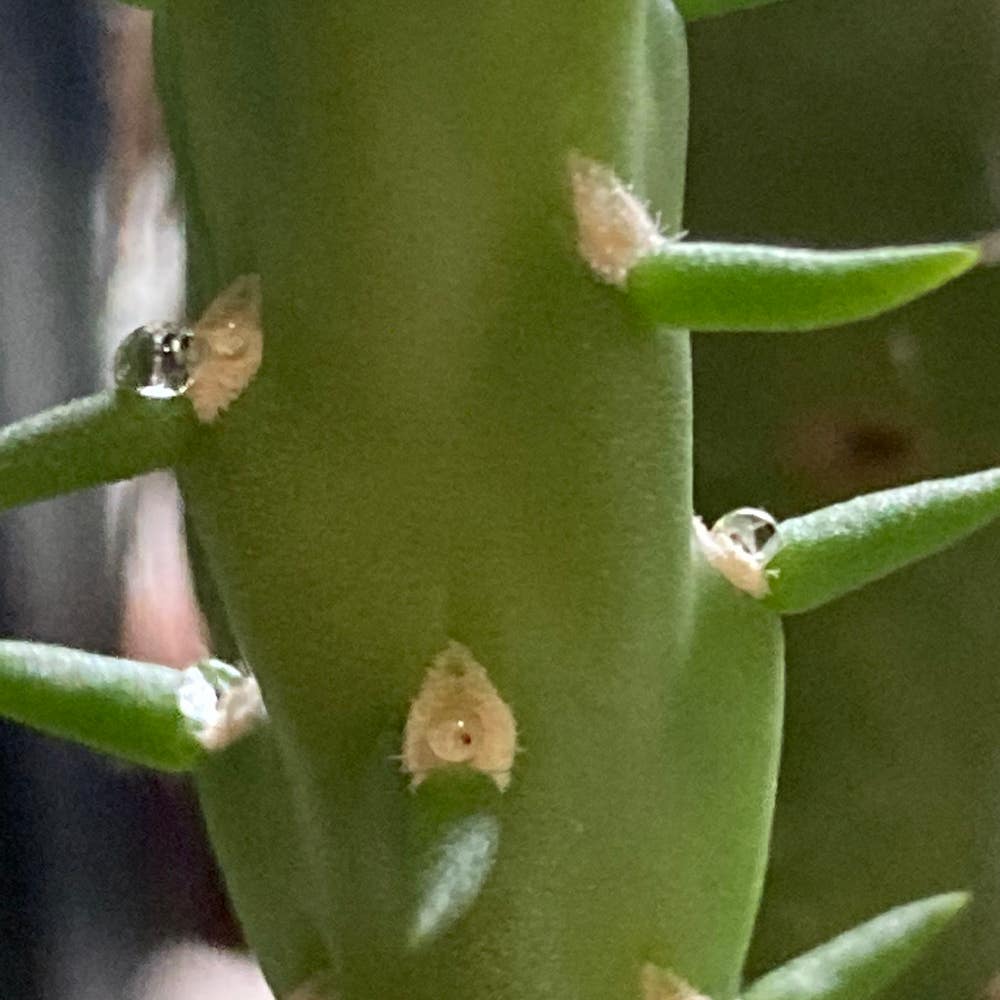
Why Are My California Cholla Leaves Curling?
Cylindropuntia californica
By the Greg Editorial Team
Feb 29, 2024•4 min read
This article was created with the help of AI so we can cover more plants for you. May contain errors. See one? Report it here.
Solve your Cholla's leaf curl mystery 🌵 and restore its desert glory with these targeted care tips!
- 🌞 Sun stress symptoms? Look for wilting or yellowing leaves.
- 💧 Water wisely to prevent over/underwatering-induced leaf curling.
- 🐜 Inspect regularly for pests like spider mites and aphids.
When the Sun's Too Much
🌞 Recognizing Sun Stress Symptoms
Wilting, leathery, or yellowing leaves are red flags for sun stress in California Cholla. Brown patches or a crispy texture? That's your plant on sunburn. Faded colors signal a surrender to the sun's intensity. If your Cholla looks like it's been left in a dehydrator, it's getting too much light.
🌴 Shady Solutions
Shade cloth is the Cholla's knight in shining armor against the sun's scorching rays. Consider relocating your plant to bask in bright, indirect light, away from the midday glare. If moving isn't an option, a sheer curtain can serve as a sunscreen. Remember, consistent temperatures without direct heat sources are key. When the mercury rises, preemptive action with shade can save your Cholla from a crispy fate.
Thirsty or Drowning? Balancing Water Needs
💧 Signs of Water Woes
Curling leaves on your California Cholla might be screaming for water or begging you to stop the deluge. Overwatering shows its hand with leaves that droop downwards, heavy with excess moisture. On the flip side, underwatering will have leaves curling upwards, trying to hold onto every last drop. Yellowing leaves often point to too much water, while brown, crispy tips are a telltale sign of thirst.
💦 Watering the Right Way
Consistency is key when watering your California Cholla. Forget the calendar; let the soil's moisture level be your guide. If the top inch feels like a forgotten desert, it's time to water. But if it's clinging to your finger like a lifeline, hold off on the H2O. Consider a moisture meter for a no-guess game plan. When you do water, go for a gentle rain approach, allowing for proper drainage. Adjust with the seasons—more in the heat of summer, less when it's cooler. Keep the soil moist, but never soggy or bone-dry, to keep those leaves perfectly flat.
Getting to the Root of Soil Issues
🌱 Soil Symptoms and Solutions
Curling leaves on your California Cholla might be shouting 'fix my soil!' Poor drainage is often the snitch, causing roots to suffocate. Check if water's hanging around like an unwanted guest; if so, unclog those drainage holes. A soil test isn't just for the nerds—it's your roadmap to what's missing. Yellow leaves with green veins? Could be an iron deficiency. Older, yellow leaves? Nitrogen might be playing hide and seek.
🌿 Feeding Your Cholla
Your Cholla's diet needs balance, just like your own. Overdoing nitrogen is like bingeing on fast food—quick growth, but weak. Calcium and boron are the unsung heroes, ensuring steady growth and a strong defense system. If you've been a little too generous with the fertilizer, give the soil a good flush. It's like hitting the reset button. Keep the soil pH slightly acidic to neutral; it's the bouncer deciding which nutrients get to party with your Cholla.
Bug Off! Dealing with Pests and Diseases
🕵️ Spotting Trouble
Pests and diseases can turn your California Cholla's leaves into a curling mess. Vigilance is key. Spider mites leave behind webbing and speckled leaves. Aphids suck the life out of your plant, causing leaves to curl and yellow. Fungal foes like powdery mildew leave a white, dusty residue. If you see any of these signs, it's time to take action.
🧼 Clean and Protect
To combat these invaders, cleanliness is your first line of defense. Wipe down leaves to remove dust and potential pests. Improve airflow to discourage fungal growth. When it comes to treatment, neem oil and insecticidal soap are your go-to for pests. Apply with precision to avoid missing any critters. For fungal issues, consider fungicides like copper or Mycostop, but always opt for eco-friendly options. Remember, overwatering is a no-go; it's a fungal party invitation. Keep the soil well-drained to avoid unwanted guests.
Keeping Leaves Lush and Flat
Maintaining healthy, curl-free leaves in California Cholla hinges on a few key strategies. Let's dive in.
🌱 Consistent Care Routines
Regularity is your ally. Establish a watering and fertilizing schedule that's as reliable as your morning coffee.
👀 Vigilant Plant Inspections
Keep an eye out like a hawk. Early signs of stress or pests can lead to leaf curling.
🌵 Soil and Sun Harmony
Pick a soil that drains like a dream and position your Cholla to bask in the sun without getting scorched.
🐜 Pest Control
Stay on top of pest management. Clean leaves deter unwanted guests, and prompt treatment keeps them at bay.
✂️ Pruning and Maintenance
Trim with precision. Remove dead or dying foliage to prevent issues and promote aesthetics.
🏜️ Environmental Stability
Mimic the desert's consistency. Avoid dramatic swings in temperature and humidity to prevent stress-induced curling.
🛡️ Proactive Measures
Monitor your Cholla's world closely. Adjust care with the seasons and always be ready to act on the first sign of trouble.
⚠️ Safety First
This content is for general information and may contain errors, omissions, or outdated details. It is not medical, veterinary advice, or an endorsement of therapeutic claims.
Always consult a qualified healthcare professional before using any plant as food, medicine, or supplement.
Never eat any plant (or feed one to pets) without confirming its identity with at least two trusted sources.
If you suspect poisoning, call Poison Control (800) 222-1222, the Pet Poison Helpline (800) 213-6680, or your local emergency service immediately.
Spotted an error? Please report it here.
Ensure your California Cholla thrives with unfurled leaves 🌵 by leveraging Greg's custom watering schedules and plant health monitoring for early pest detection.