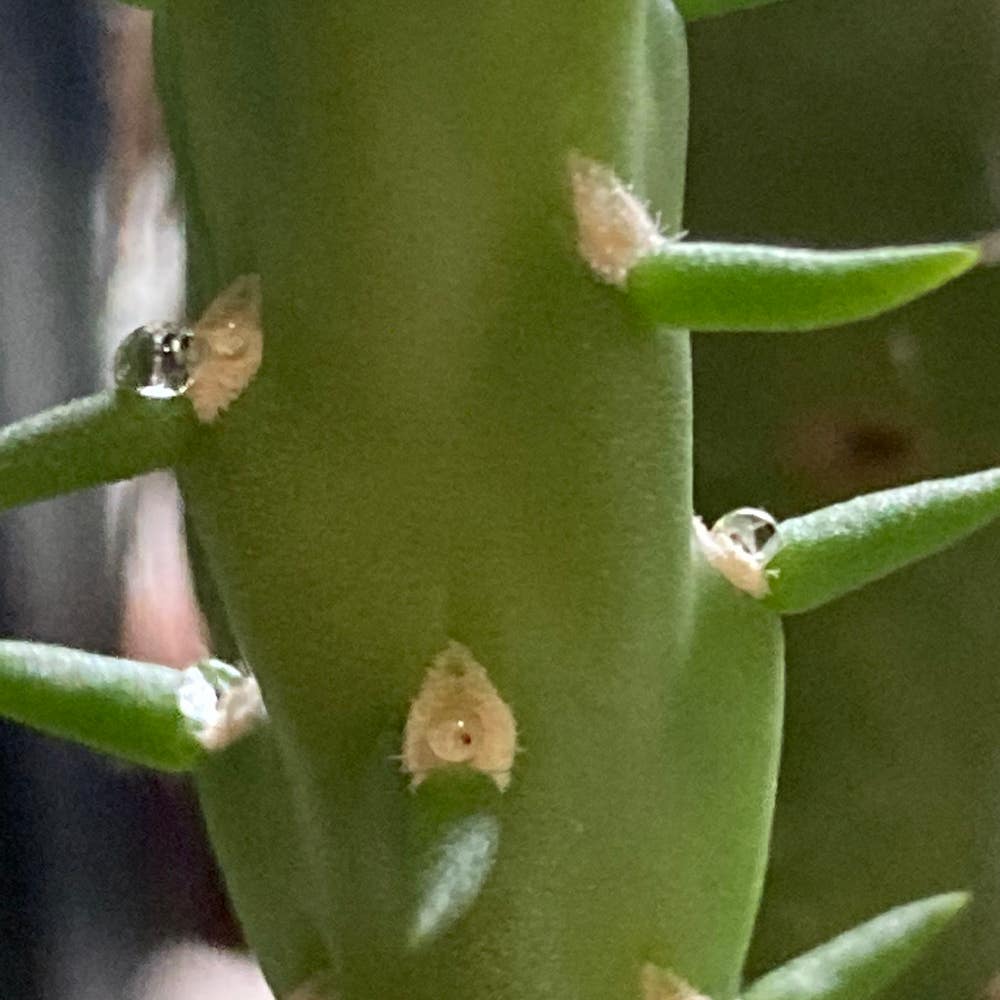
Common California Cholla Problems
Cylindropuntia californica
By the Greg Editorial Team
Feb 29, 2024•4 min read
This article was created with the help of AI so we can cover more plants for you. May contain errors. See one? Report it here.
Rescue your Cholla from peril 🌵 and ensure its vibrant survival with these crucial, easy-to-follow care tips!
- Over/under-watering? Soft stems, foul smells, or shriveled browning signal trouble.
- 🌞🌡️ Light and temperature balance is crucial; aim for 65-75°F and bright, indirect sunlight.
- 🕷️🍄 Pests and fungus threaten Cholla; use insecticidal soap and keep dry to prevent.
When Water Becomes a Foe: Over and Under-Watering
💦 Over-watering Hazards
Spotting the signs: Soft stems and foul smells
Over-watering turns your California Cholla into a soggy mess. You'll notice stems that feel like overripe fruit and a stench that's far from the fresh scent of nature. Black spots on the foliage? That's your Cholla waving a white flag.
Turning the tide: Soil and watering adjustments
Immediate action is needed to prevent a watery grave. Stop watering and check if the soil feels like a swamp. It might be time to repot with fresh, well-draining soil. Remember, your Cholla is not a fish; it doesn't need an aquarium.
🏜️ Under-watering Woes
Recognizing neglect: Shriveled stems and browning
Under-watering turns your Cholla into a desert relic. Look for stems that resemble raisins and a color palette that's more fall than spring. It's a clear sign your plant's thirst isn't being quenched.
Quenching the thirst: Hydration strategies for recovery
Reviving your parched Cholla requires a steady hand. Increase watering gradually, and ensure the soil gets moist but not drenched. Think of it as a careful dance between too much and too little, where the rhythm is just right.
Light and Temperature: The Balancing Act
🌞 Too Much Sun, Too Little Light
Faded colors and stunted growth are telltale signs your California Cholla is getting too much sun or not enough. It's a delicate dance to keep these desert dwellers content.
To find the ideal lighting conditions for Cholla, aim for a spot that mirrors their natural habitat. Bright, indirect sunlight is the sweet spot, avoiding the harsh midday rays that can scorch their skin.
🌡️ Temperature Tantrums
Chollas throw a fit when temperatures aren't just right, showing their displeasure through wilting and discoloration. They're not fans of change, preferring a stable and predictable environment.
To stabilize your Cholla's climate, maintain a consistent temperature range, ideally between 65-75°F (18-24°C). Keep them away from drafty spots and direct heat sources to avoid those temperature-induced mood swings.
The Unseen Enemies: Pests and Diseases
🐜 Pests on Patrol
🕵️ Identifying Common Cholla Pests
Your California Cholla might be playing host to stealthy critters. Look out for spider mites, mealybugs, and scale insects. Spider mites leave fine webs, mealybugs excrete a white fluff, and scale insects appear as tiny, waxy bumps. These pests are like tiny vampires, draining your Cholla's lifeblood.
🛡️ Safe Pest Control Measures
When it comes to evicting these pests, insecticidal soap or neem oil are your go-to bouncers. They're effective yet gentle on the environment. Remember to treat the entire plant, especially the undersides of leaves where pests throw their secret parties.
🍄 Fungal Fiascos and Mold Mayhem
🕵️ Detecting Mold and Fungus
Fungus and mold on your Cholla are like that moldy bread you forgot at the back of your fridge—unpleasant and smelly. Look for fuzzy growths or a musty odor. These are clear distress signals that your plant's health is compromised.
🚫 Fungicide Use and Environmental Control
When fungus crashes your Cholla's party, it's time to bring out the fungicide. But use it as a last resort—like calling the cops on a noisy neighbor. Prevention is better; keep your plant's environment clean and dry to prevent fungal gatecrashers. If you do resort to fungicides, follow the label to the letter to avoid collateral damage.
Root Rot: The Silent Killer
🔍 Decoding the Distress Signals
Root rot is the underground assassin of plants, often undetected until it's too late. Discolored roots and a stench of decay are the red flags of this condition. If the roots are more mush than firm, you've got trouble.
🚑 Rescue and Recovery: Root Care and Soil Management
When root rot strikes, it's time for some plant triage. Remove the plant from its pot and inspect the roots. Healthy ones should be firm and white, while rotten ones will be dark and squishy. Snip off the affected roots with sterilized shears. Repot in fresh, well-draining soil, and consider a pot with ample drainage. Adjust your watering habits; let the soil dry out between waterings. Prevention is key, so keep your eyes peeled for early signs and your watering can in check.
⚠️ Safety First
This content is for general information and may contain errors, omissions, or outdated details. It is not medical, veterinary advice, or an endorsement of therapeutic claims.
Always consult a qualified healthcare professional before using any plant as food, medicine, or supplement.
Never eat any plant (or feed one to pets) without confirming its identity with at least two trusted sources.
If you suspect poisoning, call Poison Control (800) 222-1222, the Pet Poison Helpline (800) 213-6680, or your local emergency service immediately.
Spotted an error? Please report it here.
Ensure your California Cholla overcomes every hurdle with Greg's personalized reminders 🌵, tailored to prevent over-watering, pests, and more, for a thriving desert gem.