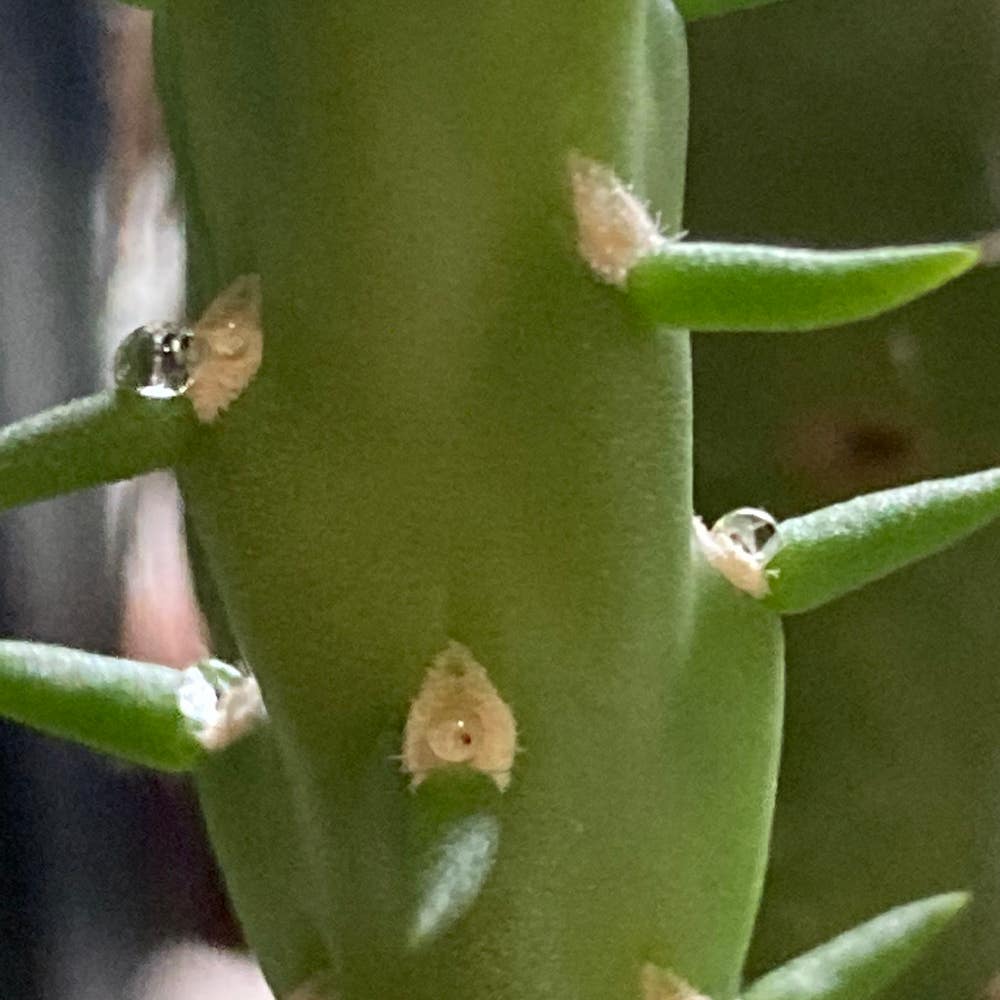
🌵 Why Are the Leaves on My California Cholla Turning Yellow?
Cylindropuntia californica
By the Greg Editorial Team
Feb 29, 2024•4 min read
This article was created with the help of AI so we can cover more plants for you. May contain errors. See one? Report it here.
Solve the mystery of your Cholla's yellow leaves 🍂 and bring back its lush green glory!
- 🌵 Overwatering and underwatering both cause yellow leaves; balance is key.
- 🐛 Pests and diseases need regular checks to prevent yellowing.
- 💧🌞 Proper watering, soil, and sunlight prevent yellow leaves.
Spotting the Trouble: Identifying Yellow Leaves
🚨 When Yellow Means Caution
Yellow leaves can be misleading; they're not always a sign of plant distress. It's natural for older leaves to yellow and drop, a dignified end to a life well-lived. But, beware when young leaves start looking sickly—it's a clear signal something's amiss.
Visual Clues and Patterns
Patterns in leaf yellowing are like secret messages from your Cholla. Uniform yellowing? Your cactus might be parched. Yellow with brown spots? Nutrient imbalance is likely the culprit. If new growth is rapidly yellowing, consider it an urgent cry for help.
Root of the Problem: Uncovering Causes of Yellow Leaves
💦 Too Much Love: Overwatering Woes
Yellowing leaves can scream overwatering. Roots, like teenagers, need their space—too much water and they're suffocating in their own home. Soggy soil is a red flag, and if your Cholla's leaves are throwing up the white flag of surrender, it's time to rethink your watering routine.
🏜️ Thirsty Roots: The Underwatering Connection
Conversely, underwatering turns your Cholla into a desert within a desert. Curling leaves and soil pulling a disappearing act from the pot's edge are your cue to water. Aim for a moist, not drenched, soil environment—think of it as giving your plant a steady sip, not a gulp.
🐜 Uninvited Guests: Pest Infestations and Disease
Pests and diseases are the party crashers no one wants. Spider mites and mealybugs can turn your Cholla's leaves yellow faster than you can say "bug off!" Diseases like root rot are also culprits, often sneaking in with overwatering. Keep an eye out for unwelcome guests and uninvited fungal plus-ones.
Turning Over a New Leaf: Treatment Strategies
💧 Drying Out: Fixing Overwatering
Overwatering your California Cholla can lead to root rot, a death sentence if not addressed. Cease watering immediately to let the soil dry. Gently unpot the plant and inspect the roots. Healthy roots are firm; discard any that are mushy. Sterilize your cutting tools before and after use to prevent the spread of disease. If root rot is present, trim away the affected parts and treat the remaining roots with a fungicide. Repot in fresh, well-draining soil and adjust your watering habits—less is often more.
🏜️ Quenching Thirst: Addressing Underwatering
Underwatered Cholla will have dry, wilted leaves. To revive, water deeply and ensure the entire root ball is moistened. Then, let the soil dry out completely before the next watering. This "soak and dry" method mimics the natural desert conditions the Cholla is accustomed to. Monitor the plant's response over the following weeks and establish a more consistent watering routine to prevent recurrence.
🐜 Pest Control: Eradicating Infestations
Pests and diseases can turn Cholla leaves yellow. Inspect regularly for signs of infestation, such as unusual spots or insects. Isolate affected plants to prevent spread. Remove and destroy any severely infested parts of the plant. For mild cases, use Neem oil or insecticidal soap as directed. Encourage beneficial insects that prey on pests. Fungal issues require fast action; apply a recommended fungicide and improve air circulation around your Cholla. Remember, prevention is key—maintain plant hygiene and avoid overwatering to keep pests and diseases at bay.
Staying Green: Prevention Tips
💧 Perfecting the Watering Technique
Finding the watering sweet spot is crucial to prevent yellowing. Consistency is key; establish a routine that factors in your Cholla's needs and the local climate. Use tools like moisture meters to check soil moisture, or trust the classic finger test—moist but not soggy is what you're aiming for.
🌱 Soil and Sunlight: Setting the Stage
Well-draining soil is a must; think of it as your plant's foundation. A mix of cactus soil and perlite or coarse sand is ideal. For sunlight, your Cholla craves bright but indirect light. Too much direct sun can lead to yellowing, so find a spot that's just right.
👩🔬 Regular Check-Ups: Monitoring Plant Health
Be a plant detective. Keep an eye out for early signs of distress, such as subtle changes in leaf color or texture. Regular monitoring can help you catch issues before they turn serious, ensuring your Cholla stays vibrant and green.
⚠️ Safety First
This content is for general information and may contain errors, omissions, or outdated details. It is not medical, veterinary advice, or an endorsement of therapeutic claims.
Always consult a qualified healthcare professional before using any plant as food, medicine, or supplement.
Never eat any plant (or feed one to pets) without confirming its identity with at least two trusted sources.
If you suspect poisoning, call Poison Control (800) 222-1222, the Pet Poison Helpline (800) 213-6680, or your local emergency service immediately.
Spotted an error? Please report it here.
Keep your California Cholla's leaves sunshine-bright 🌞 with Greg's timely watering reminders, catching those yellow-warning signs early for a perpetually perky cactus!