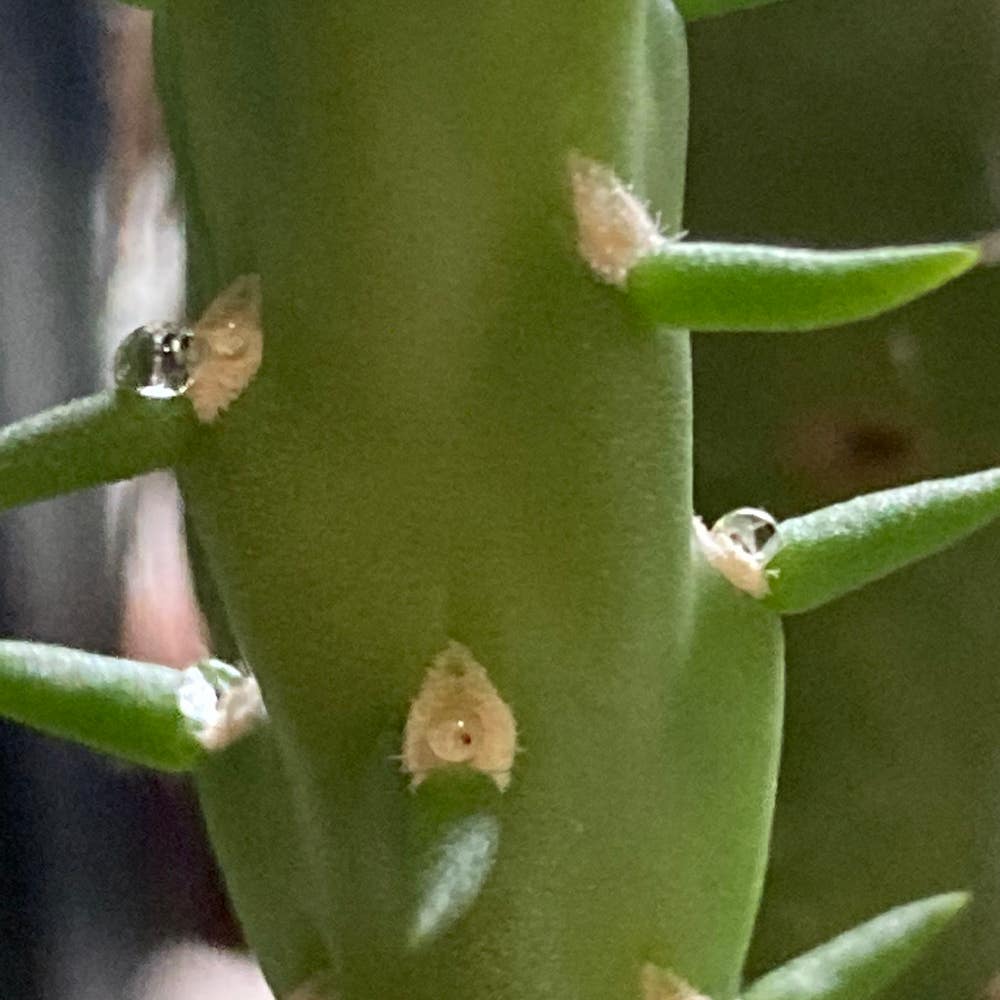
Black Spots on My California Cholla Leaves
Cylindropuntia californica
By the Greg Editorial Team
Feb 29, 2024•5 min read
This article was created with the help of AI so we can cover more plants for you. May contain errors. See one? Report it here.
Banish black spots 🕵️♂️ and safeguard your California Cholla's health with these essential care tips! 🌵
- Black spots signal distress; inspect leaves, especially undersides, for early detection.
- Fungi and insects are common causes; use fungicides and insect repellents carefully.
- Prevent with environment control, like air circulation and proper watering.
Spotting the Trouble: Identifying Black Spots
In the quest to maintain a healthy California Cholla, black spots are the equivalent of a red flag on your plant's foliage. These spots may begin as tiny specks, less than ⅛ inch in diameter, but don't be fooled by their modest start.
🔍 Visual Inspection
Dark centers with lighter, sometimes yellowish edges are telltale signs. They might look like a bullseye, which is not a prize but a problem.
🌌 Beyond the Surface
Texture matters. If the spots feel raised or sunken, or worse, slimy, it's a clear distress signal from your plant.
🎲 Distribution and Pattern
Randomness is the name of the game with black spots. Unlike the plant's natural, uniform patterns, these spots are more like unwanted party crashers on the leaf's surface.
🕵️♂️ Early Detection
Catch these spots early, and you're in for an easier fix. Think of it as intercepting a typo before it's too late. Regular leaf check-ups are your best defense.
🎯 Spot Characteristics
Keep an eye out for spots with dark margins or concentric rings. These aren't just blemishes; they're symptoms of an underlying issue that needs your attention.
🍃 Location, Location, Location
Start your search on the undersides of leaves. It's a favorite hideout for these pesky invaders, and catching them here can prevent a full-blown breakout.
Remember, when it comes to black spots, being a proactive plant parent is key. Keep your eyes peeled and your detective hat on! Details matter.
Uncovering the Culprits: Causes of Black Spots
🍄 Fungal Foes: The Most Common Culprits
Fungi are the usual suspects when it comes to black spots on California Cholla. These microscopic invaders thrive in moist conditions, turning overwatering into an open invitation. Seiridium and Botryosphaeria canker are particularly notorious, causing lesions that can lead to branch dieback. To spot these fungal foes, look for powdery or circular lesions on the leaves.
🐜 Bug Bites and Plant Plights: When Insects are the Issue
Insects can also be to blame for black spots. Spider mites and fungus gnats are tiny but mighty, leaving behind telltale signs of their sap-feeding sessions. If you notice a sticky residue or sooty mold, it's time to inspect your plant for these uninvited guests.
🌿 Environmental Stress Signals: How Conditions Can Cause or Exacerbate Black Spots
Your plant's environment can send it into distress, manifesting as black spots. Excessive light or heat can burn leaves, while cold drafts paired with overwatering can spell disaster. It's crucial to strike a balance in temperature, humidity, and watering to keep your California Cholla spot-free.
The Fix: Treating Black Spots on California Cholla
🍄 Fungus Among Us: Choosing the Right Fungicide
Fungicides are the plant's knights in shining armor against the fungal onslaught. Start with a neem oil or baking soda solution—they're the gentle giants. If these don't cut it, escalate to fungicides containing chlorothalonil or mancozeb. Remember, the label is your bible; follow it to the letter.
🔍 Application Tips
When applying fungicides, think of yourself as a sniper—precision is key. Cover every leaf, top and bottom, and stick to a regular treatment schedule. Rotate your fungicides to outsmart any resistant fungi.
🐜 Evicting Insects: Safe and Effective Pest Control
Insects can be the secret agents of black spot chaos. If bugs are your culprits, neem oil doubles as an insect repellent. But avoid using it in direct sunlight to prevent leaf burn. For a more targeted approach, insecticidal soaps or horticultural oils can be effective, but always test a small area first.
🌿 Environmental Tweaks: Adjusting Care
Sometimes, it's not you, it's the environment. Improve air circulation and keep foliage dry—fungi despise a drafty and dry dance floor. Water in the morning so the sun can dry the leaves, and always aim for the base to avoid wetting the foliage.
Adjusting Care to Clear Up Black Spots
If black spots persist, scrutinize your watering practices. Overwatering is like throwing a pool party for fungi. Let the soil dry out between waterings. And when it comes to soil, ensure it's well-draining—think of it as the plant's comfortable bed, dry and cozy.
Keeping Spots at Bay: Prevention Strategies
🕵️ Routine Checks: What to Look for During Regular Inspections
Inspect regularly, like it's part of your morning ritual. Look for early signs of distress such as wilting, discoloration, or the dreaded black spots. Early detection is key; it's the difference between a quick fix and a drawn-out battle.
🌿 Creating the Ideal Environment: Tips for Spot-proofing Your Plant's Home
Air circulation is crucial; think of it as your plant's personal space that needs to be respected. A gentle breeze, not a hurricane, should pass through the leaves. Water wisely—aim for the base to keep the foliage dry and happy. Use a moisture meter if you're not confident; it's like a trusty sidekick for your watering can.
🌡️ Environmental Balance
Keep humidity and temperature in check. Use a hygrometer to monitor moisture levels; adjust with a humidifier or dehumidifier as needed. Think of it as the thermostat for your plant's comfort zone.
🧼 Cleanliness and Quarantine
Sanitation is non-negotiable. Clean your tools like you're prepping for surgery to prevent spreading any pathogens. Quarantine new plants like they're fresh off a plane from a far-off land—better safe than sorry.
✂️ Pruning and Potting
Prune with sterilized shears to stop the spread of black spots. Dispose of affected foliage like it's hazardous waste. When potting, use clean or new pots to avoid unseen threats lurking in the dirt.
By implementing these strategies, you're not just preventing black spots; you're setting the stage for a thriving, resilient California Cholla.
⚠️ Safety First
This content is for general information and may contain errors, omissions, or outdated details. It is not medical, veterinary advice, or an endorsement of therapeutic claims.
Always consult a qualified healthcare professional before using any plant as food, medicine, or supplement.
Never eat any plant (or feed one to pets) without confirming its identity with at least two trusted sources.
If you suspect poisoning, call Poison Control (800) 222-1222, the Pet Poison Helpline (800) 213-6680, or your local emergency service immediately.
Spotted an error? Please report it here.
Eradicate black spots on your California Cholla and keep it thriving with Greg's custom care alerts 🌵, ensuring you catch every spot and get expert advice when you need it.