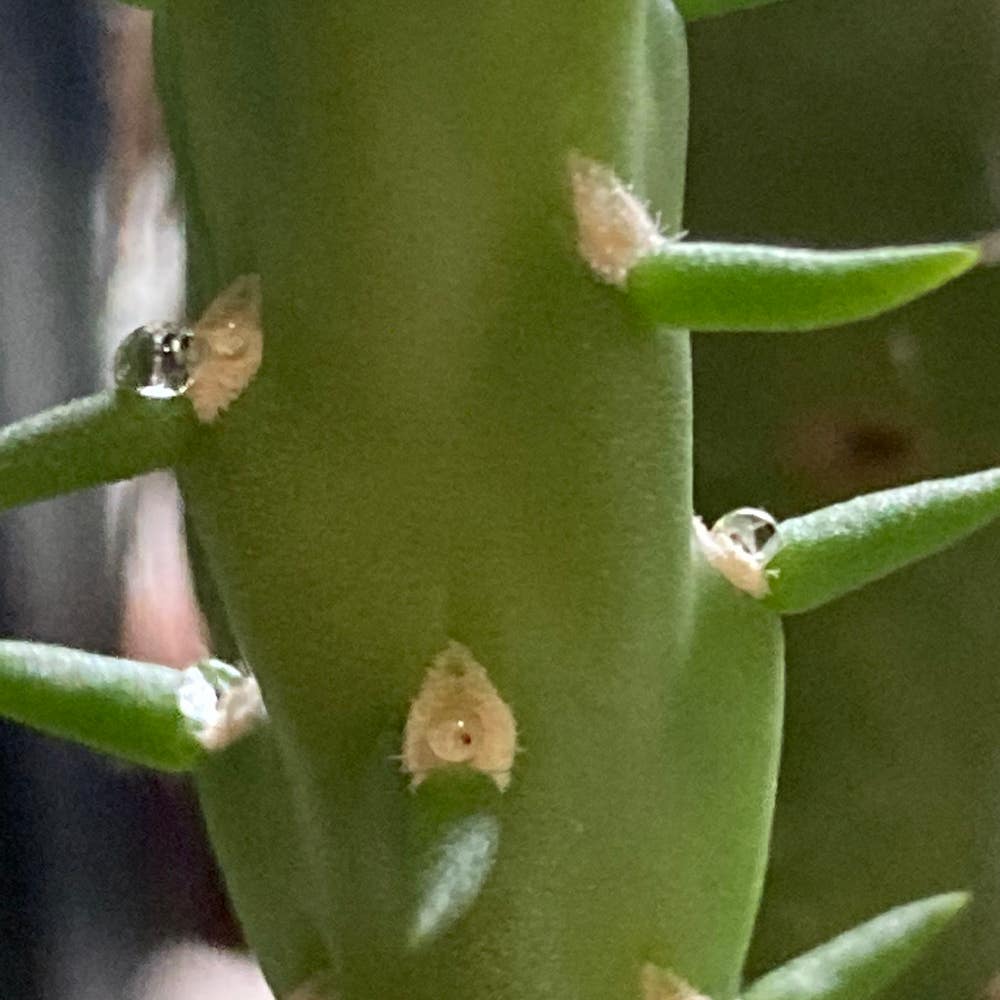
🌵 Why Is My California Cholla Dropping Leaves?
Cylindropuntia californica
By the Greg Editorial Team
Feb 29, 2024•6 min read
This article was created with the help of AI so we can cover more plants for you. May contain errors. See one? Report it here.
Prevent your California Cholla's distress 🌵 by mastering the art of perfect plant care!
- Water wisely: let top inch of soil dry before watering.
- Bright, indirect light and stable temps keep leaves attached.
- Inspect and clean regularly to prevent pests and diseases.
Pinpointing the Culprits Behind Leaf Drop
💧 Water Woes: Too Much or Too Little
Signs of Underwatering and Overwatering in California Cholla
Wilting leaves on your California Cholla? Underwatering may be the issue. Look for leaves that resemble yesterday's neglected salad—crispy and sad. On the flip side, overwatering leads to a different kind of tragedy. Yellowing leaves and a stem that feels like a squishy banana are telltale signs. Overwatering is not a kindness; it's a one-way ticket to root rot city.
🎭 Balancing Act: Finding the Right Watering Rhythm
Getting the watering right is like nailing the perfect coffee-to-cream ratio—it's essential. Let the top inch of soil dry out before you water again. Think of it as a soil moisture test—if it sticks to your finger, it's a no-go. Adjust your watering schedule with the seasons; your Cholla's thirst in the summer is not the same as in winter. It's a simple equation: less light, less water.
🌡️ Environmental Stress: When Conditions Aren't Just Right
The Effects of Temperature Extremes and Sunlight on Leaf Retention
If your California Cholla is dropping leaves like hot potatoes, it might be feeling the heat—literally. Temperature extremes are a no-no. Too hot, and your plant's leaves will crisp up like bacon; too cold, and they'll drop off faster than your New Year's resolutions. Sunlight is another beast. Too much direct light and your Cholla's leaves might get a sunburn worse than a tourist at the beach.
🌵 Adapting Care to Match the California Cholla's Comfort Zone
Creating a cozy habitat for your Cholla is like setting up the perfect Netflix binge environment—comfort is key. Aim for that Goldilocks zone of bright, indirect light. Gradually acclimate your plant to new conditions; it's not a fan of surprise moves. Keep the temperature consistent, because your Cholla has no chill when it comes to sudden changes.
Battling Bugs and Blights
🐛 Pests: Unwanted Guests that Trigger Leaf Drop
The California Cholla cactus is a magnet for certain pests that can cause its leaves to drop. Mealybugs, spider mites, and scale insects are the usual suspects. These pests are like tiny vandals, sucking sap and leaving behind a sticky residue known as honeydew. This goo can attract sooty mold, further stressing your plant.
To combat these pests, start with a 70% isopropyl alcohol solution. Apply it with a cotton swab or spray directly onto the affected areas. For persistent problems, insecticidal soaps or neem oil can be effective. Remember, regular inspections are key to catching these critters early.
🦠 Diseases: Fungal Foes and Bacterial Baddies
Fungal and bacterial diseases can sneak up on your California Cholla, leading to leaf drop. Fungal diseases like rust and leaf spot manifest as unsightly blemishes on leaves, while bacterial issues can cause wet, mushy spots.
Prevention is your best defense. Ensure good air circulation and avoid wetting the foliage. If you spot signs of disease, prune the affected areas with sterilized tools. For fungal issues, a fungicide may be necessary. In the case of bacterial problems, remove the affected parts and consider a copper-based bactericide. Always isolate the sick plant to prevent the disease from spreading to your other green buddies.
Feeding Finesse: Nutrients Needed to Nix Leaf Drop
💎 The Role of Essential Minerals in Leaf Health
Your California Cholla is silently begging for a balanced diet. Just like skipping breakfast can ruin your day, missing out on key nutrients like nitrogen, phosphorus, and potassium can cause your plant's leaves to peace out. Micronutrients like iron and manganese are the unsung heroes, playing backup to the lead nutrients but just as vital for a show-stopping performance.
🌱 Tailoring Your Fertilization Strategy
Soil testing is like swiping right on the perfect fertilizer match. It's the first step in avoiding the tragic leaf-drop love story. Once you've got the dirt on your dirt, it's time to get selective. Choose a balanced fertilizer and apply it with the precision of a sushi chef—too much and you're in nutrient burn territory, too little and you're not giving your plant the full experience. Remember, overfeeding is the equivalent of binge eating; it does more harm than good.
🌍 Soil Testing: A Plant's Health Check-Up
Think of soil testing as your plant's annual physical. It reveals what's missing in the soil's diet, so you can supplement accordingly. This isn't a one-size-fits-all situation; tailor your approach based on the test results to avoid the buffet effect of over-fertilization.
🌿 Fertilization Techniques: The Art of the Feed
Fertilizing isn't just about throwing food at the problem. It's an art form. You want to nourish for resilience, not just for show. A light hand is key—think of it as seasoning, not smothering. And if you're in a pinch, foliar feeding can be the quick fix your plant needs, like an energy shot on a sleepy Monday morning.
🌐 Long-Term Nutrient Strategies
Consistency is your best friend when it comes to fertilization. A balanced approach not only prevents current leaf drop but also sets the stage for long-term health. And don't forget about pH levels and electrical conductivity; they're the bouncers at the club, ensuring only the right nutrients make it to the party.
Proactive and Protective Care Strategies
💧 Watering Wisdom: Quenching Thirst Without Drowning
Crafting a watering schedule that keeps leaves on is more art than science. Consistency is key, but so is adaptation to the seasons. Less is more in winter; summer demands a more generous pour. Use tools like moisture meters or the trusty finger test to strike the right balance. Remember, overwatering is as harmful as neglect.
🌿 Creating a Cozy Habitat
Adjusting light and temperature to prevent environmental stress-induced leaf drop is about understanding your plant's comfort zone. Bright, indirect light is the sweet spot; direct sun can be too harsh, and low light can lead to a lackluster plant. Temperature stability is crucial—avoid placing your cholla near drafty windows or heat sources that could cause dramatic fluctuations.
🦠 Vigilance Against Villains
Routine inspections and cleanliness are your first line of defense against pests and diseases. Quarantine new plants to prevent introducing new threats. Keep the area around your plant clean and ensure good air circulation. If you spot trouble, act fast—remove affected leaves with precision to prevent the spread. Remember, a healthy plant is less inviting to pests, so keep that watering can in check and the soil well-drained.
⚠️ Safety First
This content is for general information and may contain errors, omissions, or outdated details. It is not medical, veterinary advice, or an endorsement of therapeutic claims.
Always consult a qualified healthcare professional before using any plant as food, medicine, or supplement.
Never eat any plant (or feed one to pets) without confirming its identity with at least two trusted sources.
If you suspect poisoning, call Poison Control (800) 222-1222, the Pet Poison Helpline (800) 213-6680, or your local emergency service immediately.
Spotted an error? Please report it here.
Prevent your California Cholla from dropping leaves by letting Greg craft a season-smart watering schedule 🌵, ensuring your spiky friend thrives in any environment.