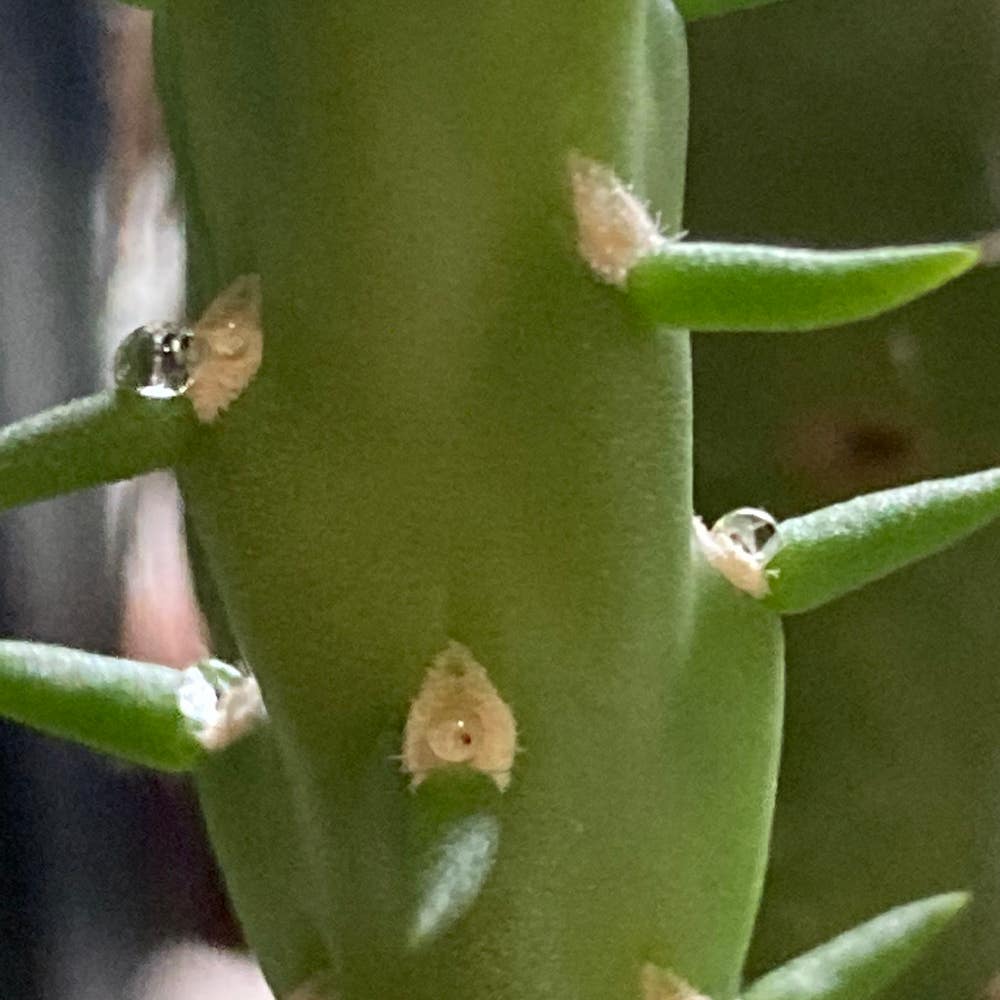
Why Are My California Cholla Leaves Falling Over?
Cylindropuntia californica
By the Greg Editorial Team
Feb 29, 2024•3 min read
This article was created with the help of AI so we can cover more plants for you. May contain errors. See one? Report it here.
Prevent your Cholla's slump 🌵 with proven tips for perfect plant posture!
- Overwatering and underwatering both lead to droopy Cholla leaves.
- Soil mix matters: Use cactus-friendly soil with sand, perlite, and peat moss.
- Consistent care: Water deeply, let soil dry, and ensure proper sunlight and temperature.
Pinpointing the Culprits Behind the Tumble
💦 Overwatering Overload
Soggy soil is the archenemy of the California Cholla's posture. Overzealous watering can lead to a droopy, yellowing plant, a victim of its owner's aquatic affection. Root rot sets in when roots are more submerged than sipping, compromising the structural integrity of the leaves.
🏜️ Underwatering Underestimation
Conversely, underwatering your Cholla is like sending it on a thirst quest. Leaves may curl and discolor, signaling a desperate need for hydration. Crispy edges and a soil that's drier than a stand-up comedian's wit are telltale signs of neglect.
🚰 Soil Drainage Drama
Waterlogged roots are a silent scream for better drainage. If your Cholla's pot feels like a swamp, it's time for a soil mix intervention. Amend the soil with gritty materials that disdain water, ensuring your plant's roots have the firm foundation they crave.
First Aid for Your Floppy Cholla
🚰 Rescuing Overwatered Cholla
Stop watering immediately. Your Cholla's roots are not swimming enthusiasts. Check for yellowing stems or a mushy base—classic SOS signals. If present, gently remove your Cholla from its pot and inspect the roots. Snip off any black or soft roots with sterilized shears. Let the plant air out a bit before repotting in fresh, well-draining soil.
💧 Quenching the Thirsty
For the Cholla that's been left high and dry, it's hydration time—but don't turn it into a pool party. Submerge the pot in room temperature water, ensuring the liquid doesn't touch the leaves. Once the soil is moist, let it drain thoroughly. Watering should be as regular as your morning coffee, but only when the soil is bone-dry.
🌱 Soil Surgery
If your Cholla's soil is more bog than desert, it's time for an intervention. Mix a cactus-friendly potting soil with sand, perlite, and a touch of peat moss. Consider adding a layer of gravel at the pot's base to boost drainage. When repotting, think of it as a fresh start for your Cholla—new soil, new outlook.
Keeping Your Cholla Upright
💧 Watering Wisdom
Maintaining the uprightness of your California Cholla starts with a watering routine that's just right. Overwatering is a no-go; it's the fast track to droopy despair. Instead, water deeply and allow the soil to dry out completely before the next session. Use a soil moisture meter to eliminate guesswork. Remember, these plants are more camel than fish.
🌱 Soil and Sunlight Synergy
Your Cholla's foundation is as important as its hydration. Aim for a soil mix that's one part grit, like perlite or coarse sand, to prevent water retention. Sunlight is your Cholla's best friend, but too much can lead to a sunburned slump. Position your plant to soak up the morning rays and shield it from the harsh afternoon sun. It's all about that sweet spot of light and shade.
🌡️ Temperature and Transitions
Chollas don't take kindly to sudden changes. Keep temperatures consistent; they prefer a balmy 70 degrees Fahrenheit and can handle a chill down to 50 degrees. If you're moving your plant, maintain its south-facing orientation to avoid a sunburned shock. And when the mercury dips, consider a heat lamp or wrapping pots to keep your spiky friend from freezing. It's like giving your cactus a cozy blanket—minus the fluff.
⚠️ Safety First
This content is for general information and may contain errors, omissions, or outdated details. It is not medical, veterinary advice, or an endorsement of therapeutic claims.
Always consult a qualified healthcare professional before using any plant as food, medicine, or supplement.
Never eat any plant (or feed one to pets) without confirming its identity with at least two trusted sources.
If you suspect poisoning, call Poison Control (800) 222-1222, the Pet Poison Helpline (800) 213-6680, or your local emergency service immediately.
Spotted an error? Please report it here.
Revive your drooping California Cholla with Greg's custom watering schedules and soil mix tips 🌵, turning those frowns upside down without the guesswork.