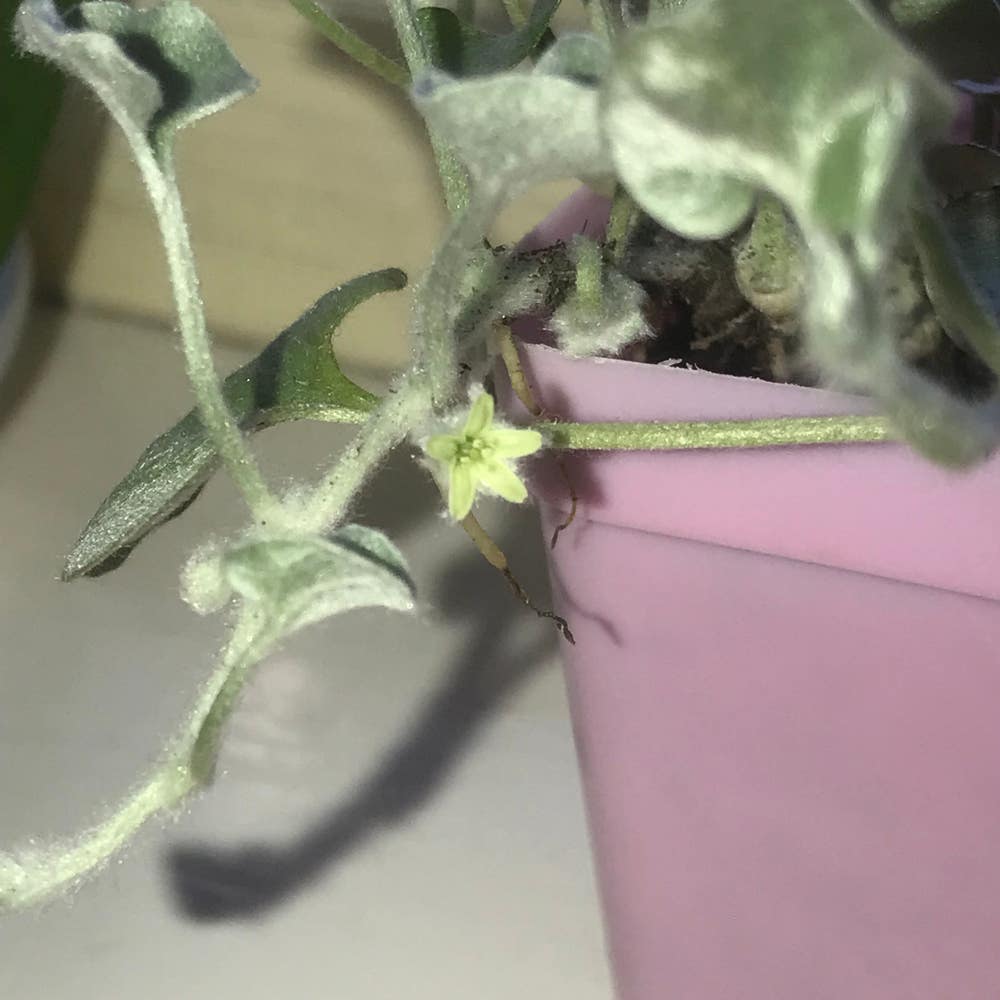
What To Do About Bugs on My Silver Ponysfoot? 🐛
Dichondra argentea
By the Greg Editorial Team
Jun 18, 2024•8 min read
This article was created with the help of AI so we can cover more plants for you. May contain errors. See one? Report it here.
- Identify pests early: Webbing, bumps, flies, or white fluff on Silver Ponysfoot.
- Natural remedies work: Neem oil, insecticidal soap, and predatory insects help.
- Prevent with vigilance: Inspect regularly, isolate new plants, and avoid overwatering.
Identifying Common Pests on Silver Ponysfoot
Silver Ponysfoot may be easy to care for, but it's not immune to the advances of pesky pests. Here's how to spot the uninvited guests:
🕷️ Spider Mites
Look for webbing on leaves and stems, a classic sign of these critters. They're tiny, so grab a magnifying glass to see these red or brown dots. Affected leaves may show discolored spots and turn yellow.
🐞 Scale Insects
These pests masquerade as brown or black bumps on your plant. They hide under a waxy shell and can be scraped off by hand. If you see sticky honeydew or sooty mold, scale insects might be the culprits.
🦟 Fungus Gnats/Fruit Flies
If you're seeing small black flies around the soil or leaves, you might have fungus gnats. They're weak fliers and their larvae munch on roots, leaving behind silky webs on the soil surface.
🐛 Mealybugs
These fluffy white pests leave sticky deposits on Silver Ponysfoot. They look like tiny white blobs and can cause leaves to yellow.
Keep an eye out for other freeloaders like aphids or whiteflies. They can show up unannounced and throw a party at your plant's expense. Regular inspections during your watering routine can save you from a full-blown bug bash.

Addressing Spider Mite Infestations
🕷️ Recognizing the Enemy
Spider mites are tiny terrorists to Silver Ponysfoot, leaving a trail of silvery dots or stippling on leaves. Look for their signature delicate webs under leaves or in stem corners. Brown spots and leaf holes? That's them munching through.
💥 Hit Them Where It Hurts
Isolate your plant to stop the spread. Prune the infested areas and bid them farewell in the trash, not compost. Cleanliness is your ally; disinfect the area and your hands post-operation.
💦 Shower Power
Water is a simple but mighty weapon. Give your plant a shower, focusing on the leaf undersides. It's like a pest eviction notice.
🌿 Organic Arsenal
Neem oil and insecticidal soap are your go-to natural remedies. They're like bouncers at the club, keeping the riff-raff out.
🦗 Predatory Reinforcements
Deploy predatory mites like Phytoseiulus persimilis. They're the good guys, munching on spider mites like snacks.
🔁 Repeat Offenders
Spider mites breed like there's no tomorrow, especially in warm weather. Repeat treatments are your best bet for a mite-free existence.
Prevention: A Lifestyle
Keep your Silver Ponysfoot debris-free and well-aerated. Overwatering is a sin; soggy soil is a spider mite rave. Stay vigilant, inspect regularly, and be ready to act at the first sign of trouble.

Tackling Scale Insects
🐞 Recognizing Scale on Silver Ponysfoot
Scale insects are the undercover agents of the pest world, often mistaken for harmless bumps on your Silver Ponysfoot. Armored and soft-shelled types can be found masquerading as part of the plant, ranging in color from black to yellow. Early signs of an invasion include leaf discoloration and sticky honeydew residue, which can lead to sooty mold.
🔄 Understanding Their Lifecycle
Armored scale insects are tougher, with a hard shell, and don't produce honeydew, so no sooty mold. These critters can be prolific, with several generations a year, and some can even overwinter on your plants. Soft scale, on the other hand, are the main culprits indoors, secreting honeydew and inviting sooty mold and ants to the party.
🚪 Control Strategies
When it comes to evicting these pests, physical removal can be oddly satisfying. Grab some masking tape and go to town picking off those domes and crawlers. For the stubborn ones, a homemade spray of fermented nettle or a mix of oil, soap, and alcohol can be your DIY pest control.
🚧 Prevention Tips
Inspect new plants like a detective at a crime scene before they cross your threshold. Regular plant check-ups during routine care can catch scale insects before they settle in for a feast. And if you're feeling particularly eco-warrior, enlist some predatory insects like lady beetles to keep those scales in check naturally.
Remember, the best offense is a good defense. Keep your Silver Ponysfoot clean, and don't let those sneaky scales set up shop.

Managing Fungus Gnats and Fruit Flies
🐜 Identifying the Culprits
Fungus gnats and fruit flies are the uninvited guests of the plant world. These tiny black flies buzz around Silver Ponysfoot like they own the place. Look for them skulking around the soil and base of the plant. Fruit flies, those slightly larger nuisances, prefer your rotting fruit bowl but will crash the plant party if given a chance.
🦟 Eradication Tactics
Yellow sticky traps are the equivalent of fly roach motels—they check in but don’t check out. Letting the soil go Sahara-dry between waterings can be a game-changer, as it tells gnats their spa days are over. Beneficial nematodes are like microscopic hitmen, taking out gnat larvae with ruthless efficiency.
🚫 Prevention Tips
Overwatering is a no-go. Your potting mix should be a well-draining haven, not a swamp. Keep your plant quarters clean to avoid offering a buffet of decaying matter. Inspect new plants like a detective—any sign of these pests should have you on high alert.
🆘 When Desperation Hits
If you're losing the battle, a hydrogen peroxide soil drench is like calling in the SWAT team—effective, but handle with care. Insecticides are the nuclear option, best saved for when all else fails. Remember, with great power comes great responsibility—use them sparingly and wisely.
🌿 The Organic Farmer's Secret Weapon
BTI, or Bacillus thuringiensis var. Israelensis, is the organic farmer's ace up the sleeve. Available under names like "Gnatrol," it's a biological warfare agent that targets larvae without collateral damage to your plants. An ounce can treat a small army of Silver Ponysfoot, making it a potent ally in the gnat war.
Combating Mealybugs
🐛 Signs of Mealybug Presence
White, cottony masses; that's your first clue. Mealybugs are the uninvited guests that turn your Silver Ponysfoot into their personal buffet. They often camp out in leaf axils or under leaves. If your plant's growth has stalled or leaves are dropping, suspect these sap-suckers.
💉 Recommended Treatments
Rubbing alcohol is your go-to weapon. Apply it with a cotton swab directly on the pests. It's a bit like playing whack-a-mole, as you'll need multiple rounds to declare victory. For a broader attack, mix 1 part alcohol with 1 part water, add a squirt of dish soap, and spray in the cooler hours to avoid leaf burn.
🚫 Habits to Deter Mealybugs
Prevention is about cleanliness and vigilance. Keep your Silver Ponysfoot debris-free and check regularly for stowaways. Overwatering is a no-go; it's like sending out a party invite to pests. And remember, isolation is key—mealybugs are notorious hitchhikers, so keep infected plants quarantined.
Dealing with Other Pests
🐜 Aphids and Whiteflies: The Sap-Suckers
Aphids are tiny critters that prefer the underside of leaves, often green but can sport a variety of colors. They're like the vampires of the plant world, sucking sap and leaving plants weakened. Whiteflies, on the other hand, are the stealthy ninjas, resembling tiny moths and wreaking havoc mostly during the warm parts of the day.
🕵️ Spotting the Culprits
Look for sticky honeydew or a black sooty mold on your Silver Ponysfoot; these are telltale signs of sap-feeders at work. Aphids might appear as small, pear-shaped insects, while whiteflies will scatter in a cloud when disturbed.
🛡️ Control Measures: Get Tactical
For aphids, a strong water spray can knock them off your plants. Whiteflies hate a good blast too, but they're a bit more persistent. Insecticidal soaps or horticultural oils can be effective; they're like the bouncers at the club, showing these pests the door.
🧼 Prevention: Keep It Clean
Regularly inspect your Silver Ponysfoot for early signs of infestation. Introducing natural predators like ladybugs or lacewings can be like having your own personal pest control army. And remember, cleanliness is next to godliness; keep your plant area tidy to reduce pest attraction.
☢️ When to Go Nuclear
If you're facing an insect apocalypse, it might be time for organic pesticides. But use these as a last resort; think of them as the plant equivalent of a flu shot—necessary sometimes, but not something to rely on for everyday health.
Integrated Pest Management (IPM) for Silver Ponysfoot
IPM is a holistic approach to pest control that combines various strategies to maintain pest populations below damaging levels. It emphasizes sustainable practices that are less harmful to the environment.
🌱 Cultural Controls
Rotate your Silver Ponysfoot with other plants to disrupt pest life cycles. Ensure optimal growing conditions; a healthy plant is less susceptible to infestation.
🛠️ Physical and Mechanical Controls
Regularly inspect plants and remove pests by hand when possible. Use barriers like row covers to physically keep pests away from Silver Ponysfoot.
🐞 Biological Controls
Encourage or introduce natural predators such as ladybugs or lacewings, which feed on common pests. Avoid broad-spectrum pesticides that can harm these beneficial insects.
🧪 Chemical Controls
When necessary, opt for targeted, organic pesticides like neem oil or insecticidal soap. Always follow label instructions and apply as a last resort.
🕵️ Monitoring and Maintenance
Keep a close eye on your plants. Early detection means easier management. Record your observations to track pest trends and adjust your IPM strategies accordingly.
Remember, IPM is not about total eradication but managing pests effectively while minimizing harm to the environment. It's a smart, responsible way to protect your Silver Ponysfoot and the world around it.
⚠️ Safety First
This content is for general information and may contain errors, omissions, or outdated details. It is not medical, veterinary advice, or an endorsement of therapeutic claims.
Always consult a qualified healthcare professional before using any plant as food, medicine, or supplement.
Never eat any plant (or feed one to pets) without confirming its identity with at least two trusted sources.
If you suspect poisoning, call Poison Control (800) 222-1222, the Pet Poison Helpline (800) 213-6680, or your local emergency service immediately.
Spotted an error? Please report it here.
Keep your Silver Ponysfoot thriving and pest-free 🌿 with Greg's regular inspection reminders that help you spot and stop bugs in their tracks!